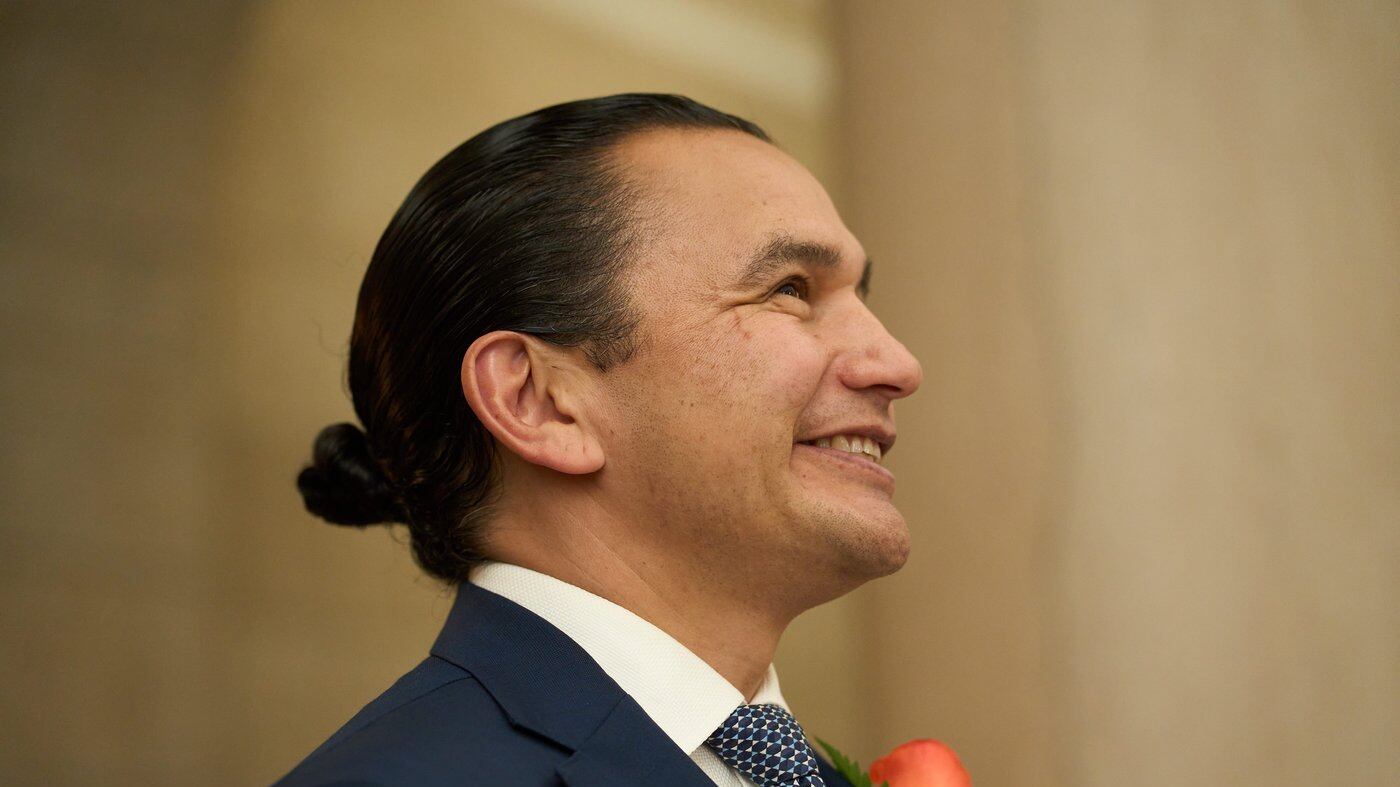
Manitoba Premier Wab Kinew continues to top Canada’s premier approval rankings, while political discontent appears to be growing with his western counterparts.
According to new findings from an Angus Reid Institute survey released Thursday, Kinew scored a 62 per cent approval rating with respondents, which is the equivalent of three-in-five giving his performance a thumbs up. That’s up slightly from the last survey in March.
Kinew is the only premier in the country to score a majority endorsement, Angus Reid said, with a 12-point advantage over any other provincial leader.
Angus Reid notes the results come on the heels of Kinew’s public sparring with Alberta Premier Danielle Smith over her government’s duty to consult Indigenous groups in a sovereignty referendum.
“Kinew has also broken with the enthusiasm shown by some other premiers for large-scale data centre projects, coming out against a proposed facility in Manitoba,” the Angus Reid Institute wrote.
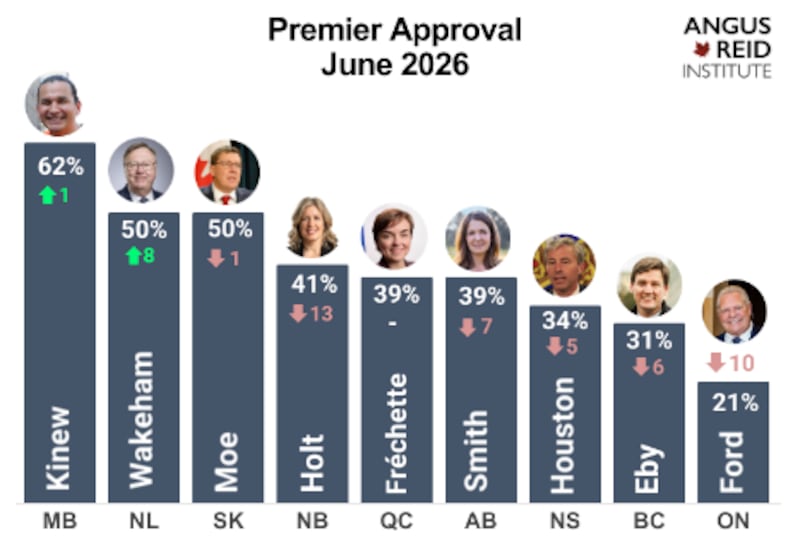
Meanwhile, Smith is one of three premiers to fall to personal approval rating lows. The Alberta leader dropped to 39 per cent, down from 46 per cent from the last survey results.
Ontario’s Doug Ford and British Columbia’s David Eby similarly saw their approval rankings dip by 10 per cent and six per cent, respectively.
Rounding out the top three behind Kinew is Newfoundland’s Tony Wakeham, who rose eight per cent to a 50 per cent approval rating, and Saskatchewan’s Scott Moe, down slightly by a percentage point, with half of respondents approving of his performance.
Meanwhile, new Quebec Premier Christine Fréchette begins her term with about two-in-five in the province approving of her performance or 39 per cent.

The Angus Reid Institute conducted the online survey between May 7 and 11 with a randomized sample of 1,803 Canadian adults.
They were drawn from a large-scale online panel developed to include folks in each of the 343 federal ridings in Canada and representative of the Canadian population by age, gender, family income, economic status and education.
A probability sample of this size carries a margin of error of plus or minus two percentage points 19 times out of 20, the institute said.

