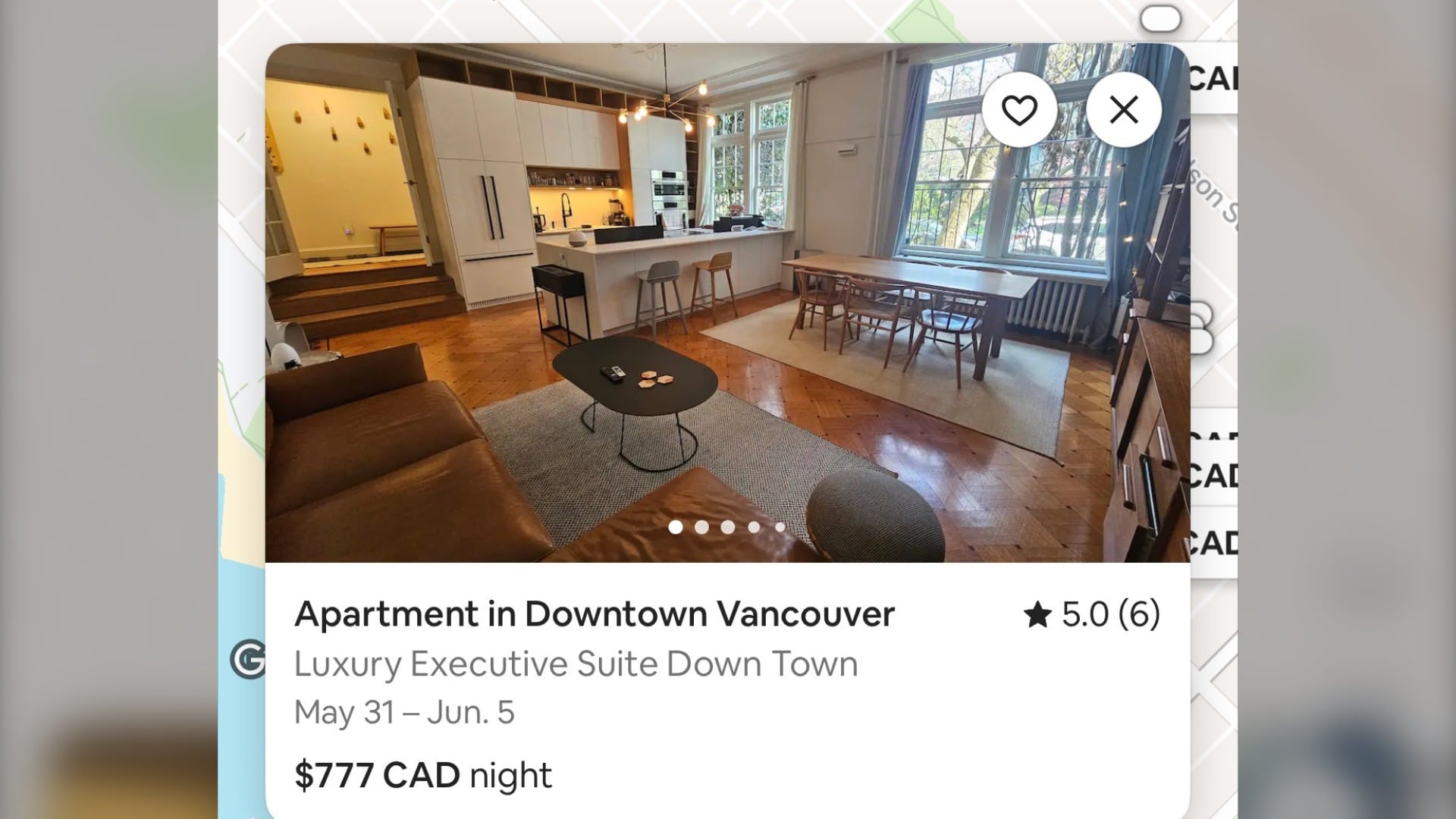
The B.C. Financial Services Authority has issued another consumer alert about Matthew Kuras, the former licensee it has accused of short-term rental fraud.
The regulator’s latest warning comes as the owners of a downtown Vancouver condo speak to CTV News about the experience they had renting their home to Kuras in 2024.
The new consumer alert, issued Wednesday, follows a June 4 notice that warned the BCFSA had received complaints “alleging that Kuras is making demands for payments of additional fees and is withholding rent payments.”
That warning also alleged that Kuras has been “conducting property management services under his unlicensed company, MetroVan Realty,” which does business as MetroVan Realty Property Management.
Wednesday’s new consumer alert indicates the BCFSA has “received new information” suggesting that Kuras “may be operating” under the new business name “Vancouver Property Management Solutions – Rockport Management,” which is “associated with the same corporate address previously linked to his activities.”
“Rockport Management is not licensed under the Real Estate Services Act, and Kuras remains unlicensed and not authorized to provide real estate services in B.C.,” the alert reads.
“BCFSA is also aware that online search results for Rockport Management appear to include reviews and images previously associated with Kuras, which may create confusion for consumers.”
The regulator says its allegations are still under investigation and “have not been tested at a hearing.”
CTV News has attempted to contact Kuras for this and previous stories, but has never received a response from him.
‘False pretences’
Kuras has been under investigation for months over allegations that he tenanted five properties in Vancouver “under false pretences” and rented them out on short-term rental platforms like Airbnb without their owners’ knowledge or consent.
The BCFSA also accuses him of “advertising real estate without the owner’s knowledge and authorization,” falsifying contractual documents, exposing homeowners to fines and making a false or misleading statement in a document related to a licensing renewal application.
These allegations have not been proven, and the regulator says its investigative efforts have been hampered by Kuras’ refusal to share tax documents and other personal information with investigators.
Kuras was issued $27,000 in administrative penalties and ordered to produce the documents within 10 days last November, but he has made a variety of efforts to overturn those orders.
The BCFSA has not shared the addresses of the five properties it alleges Kuras rented under false pretences, and the regulator declined to confirm it was investigating addresses CTV News found in Residential Tenancy Branch decisions involving Kuras.
As CTV News has previously reported, two of the tenancies in the RTB decisions appear to have overlapped, with one running from January 2023 until Kuras was evicted for nonpayment of rent in August of that year, and the other running from March through October of the same year.
Another RTB decision saw Kuras evicted from a condo on Alberni Street in August 2024, again for non-payment of rent. That tenancy began in April 2024, the same month Kuras signed an agreement to rent Janko and Bojana Jerinic’s condo on Nicola Street.
‘I don’t think he ever visited the place’
Janko and Bojana spent years remodelling their unit in the heritage building near Pendrell Street in Vancouver’s West End.
When they relocated to Barcelona for work in spring 2024, there was no question that they would hold onto the property they had worked so hard to make their home.
The couple hired a property management company, with the goal of renting their unit fully furnished and not having to ship their belongings to Spain or put them in storage. It was the management company that found Matthew Kuras.
“He was sort of a known person in the industry and he is a licensed (real estate agent), a licensed property manager,” Janko said.
“Him being who he is sort of, like, added to his credibility, I suppose, in their eyes. They were very happy with this outcome of being able to find a tenant that they themselves felt they could trust and who raised no questions whatsoever.”
In hindsight, the couple said, Kuras’ apparent lack of interest in things like building storage lockers and space for his personal belongings inside the unit makes sense. Within days, they started hearing from their former neighbours about strangers using their unit.
“It’s a small building,” Bojana said, explaining that there are only 25 units, and the couple’s was the first ever to be rented out, rather than owner-occupied.
“It’s a very tight-knit sort of community.”
Soon, a neighbour confronted one of the strangers using Janko and Bojana’s unit.
“He thought that it was rented by a woman,” Bojana said. “He couldn’t even recall the name of the woman. He didn’t know how to respond when she was asking questions … It was all really strange.”
From her new home in Barcelona, Bojana began searching Airbnb for signs that her Vancouver condo had been turned into a short-term rental. It took a few hours of clicking through all of the listings in the neighbourhood, but sure enough, she found herself looking at photos of her own furniture.
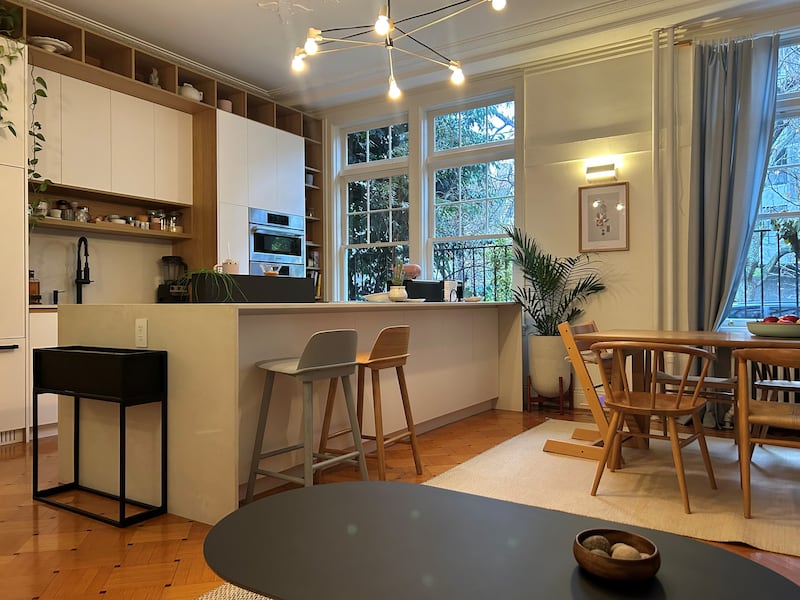
The Airbnb “host” behind the listing was identified as “Chelsea,” and the user had several other properties listed in the neighbourhood. That led the couple to suspect Kuras had done this before, or was part of a larger group conducting the alleged fraud.
“I don’t think he ever visited the place after he received the keys,” Bojana said.
Airbnb responds
While it was their property management company that found Kuras as a tenant, the Jerinics hold no ill will toward the company, which they still work with today.
When Kuras failed to pay his first month’s rent, the property management company was quick to help the couple through the eviction process at the RTB. By late May, they had secured an order of possession and a monetary order for $5,600 against Kuras.
A later RTB decision in their favour resulted in another monetary order worth more than $3,600. To date, the Jerinics say, Kuras has not paid any of the more than $9,000 he owes them
The couple was also able to quickly work with their neighbours to change the locks on the building, interrupting the flow of short-term rental guests. Bojana said the Airbnb listing showed bookings scheduled months into the future.
Janko and Bojana recognize that they were lucky to be able to secure an eviction as quickly as they did. Like many British Columbians on both sides of the landlord-tenant divide, they’ve heard their share of RTB horror stories.
For Janko, the fact that Kuras was a licensed real estate professional added “insult to injury” during the process. Kuras lost his licence last month when he was fired by his employer TRG – The Residential Group Realty.

Bojana wondered why a licensed professional would feel comfortable running a scam of the type Kuras has allegedly helped orchestrate.
“I think there is something in the system that’s not functioning if someone who knows that system that well is so comfortable behaving like this,” she said.
The couple also placed significant blame for their experience on Airbnb.
The rental agreement Kuras signed, a copy of which the Jerinics shared with CTV News, contains a clause prohibiting use of the unit for “any illegal, unlawful, commercial, political, or business purposes.”
Short-term rental hosts are required by the City of Vancouver to have a business licence, and provincial legislation that took effect on May 1, 2024, limits property owners to operating short-term rental accommodations in their primary residences and on one secondary suite on the same property.
Tenants are allowed to list their primary residences on short-term rental platforms with their landlord’s permission.
Janko and Bojana aren’t sure how the Airbnb host was able to convince the platform they had the legal authority to operate a short-term rental in the Nicola Street condo. They don’t understand why Airbnb didn’t contact them, as the legal owners, to verify whether they had given permission to their tenant to list the property on the platform.
The couple was also unimpressed with Airbnb’s response when they notified it of what was happening.
“They were somewhat sympathetic in a very bland, corporate way,” Janko said, adding that the company asked him to write a letter outlining his concerns, which Airbnb would share with the host responsible for the listing.
“To this day, we don’t really know if Airbnb felt any responsibility or felt that they were under pressure to take the listing down,” he said.
The listing was eventually taken down, but not as quickly as the couple would’ve liked.
Asked to comment on the case and outline the steps it takes to verify that listings are legitimate, Airbnb referred CTV News to its community standards, terms of service and ground rules for hosts, which require hosts to comply with local laws and obtain necessary permissions before hosting.
“While issues of this nature are rare, our team reviews reports and takes appropriate action, when needed,” the company said in a statement.
“When this was first reported to us in 2024, we removed the listing and permanently banned the host from our platform.”
Airbnb said questions about enforcement of the City of Vancouver’s business licence requirement should be directed to the city.
Regulator’s advice for Kuras clients
In both its latest consumer alert and its original warning, the BCFSA advised clients of Kuras and his unlicensed companies not to make any payments to him.
“Tenants are advised to work directly with their landlord property owners, and to contact BCFSA if they have information about Kuras’ activities,” the alerts read.
In its latest alert, the regulator also notes that consumers who have experienced financial losses as a result of their dealings with Kuras may be eligible to apply to the BCFSA’s Real Estate Special Compensation Fund.
The fund “may provide compensation in cases involving misappropriation, fraud, or failure to account for funds in connection with real estate services,” the regulator said, noting that “eligibility criteria, time limits and payment caps apply.”

