Warning: This story mentions suicide
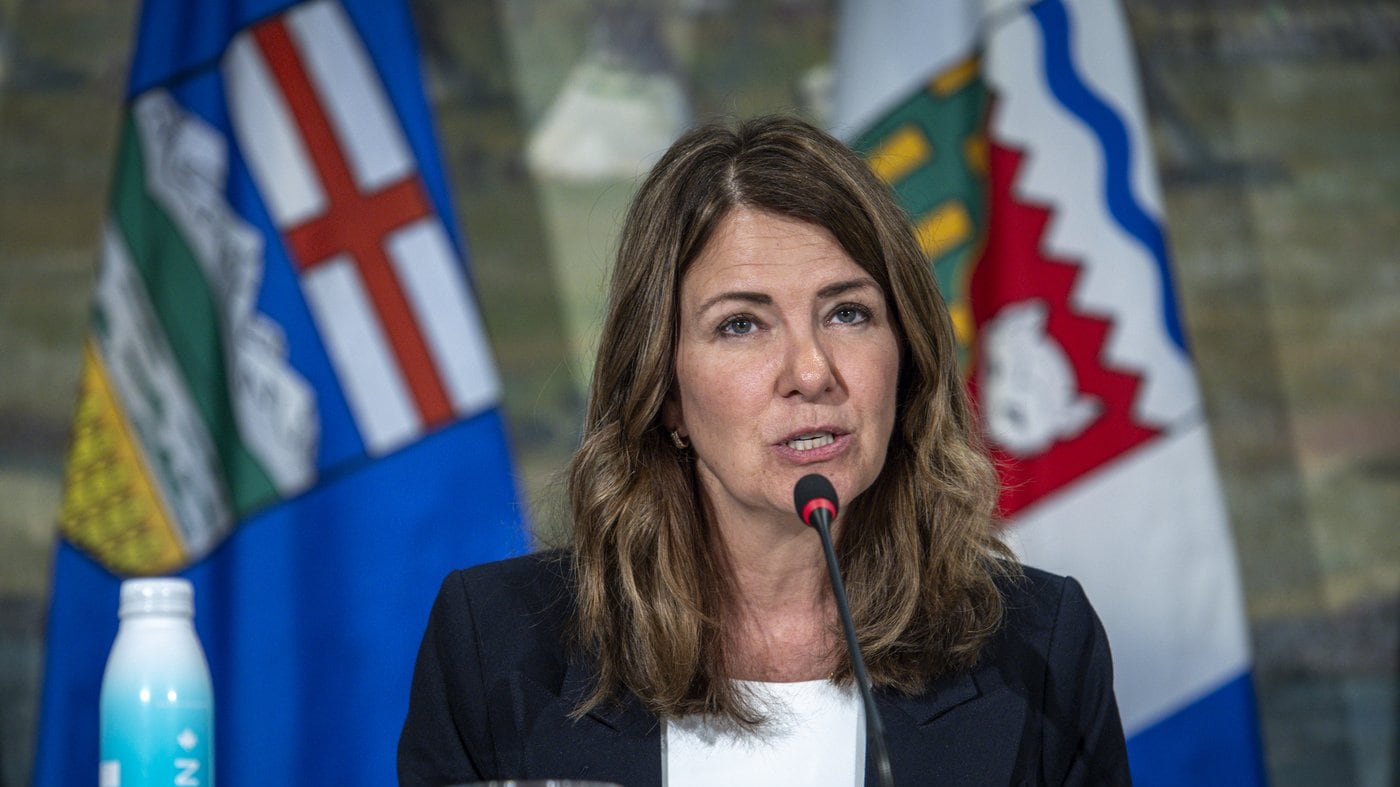
Alberta Premier Danielle Smith defended her province’s revised program to assist the severely disabled Saturday, saying that it’s trying to serve the needs of more disabled Albertans than than it used to while continuing to provide maximum benefits to the severely disabled.
One day after a story about Bruce Johnson, a critic of changes to the province’s disability support system who appears to have taken his own life, Smith addressed a caller on her Saturday radio program Your Province, Your Premier who alleged that the AISH program had been changed by AI software, putting the benefits of 80,000 Albertans in the hands of a computer.
“It’s always very sad when somebody [Johnson] is in that state of despair—and I think we just need to give the family some time and privacy to manage their loss,” Smith said.
Johnson, 57, said in his final written message that Alberta’s planned move from the Assured Income for the Severely Handicapped (AISH) program to the Alberta Disability Assistance Program (ADAP) had intensified his anxiety, stress and depression in the weeks leading up to his death.

“The Alberta Government kicked me in the teeth with the introduction of ADAP,” Johnson wrote.
In another passage, he says ADAP was “just something that has finally pushed me to end everything.”
Transition to ADAP
Starting July 1, most Albertans receiving AISH will be moved to ADAP unless they fall into exempt categories, including those aged 60 and older, individuals with severe and profound developmental disabilities, people living in continuing care homes and those receiving palliative or terminal care.
Under AISH, individuals receive up to $1,940 a month, but those who will now transition to ADAP will take home $200 less a month — $1,740.
Smith said the $200 provincial reduction is made up by the federal government, which every AISH applicant must also apply for.
Under the revised ADAP structure, there are three tiers of recipients: severely disabled who are unable to work, those who can work and earn up to $45,000 a year before it impacts their benefits and those who can work but need Medicare to qualify for pharmaceutical coverage.
“We had a long transition period (from AISH into ADAP) because we wanted to give people time to apply for the federal disability amount and we’ve always had in our programs that if you’re going to apply, you have to apply for all incomes from all sources,” Smith said.
“So the federal government is trying to get all of the other provinces up to the level [of financial support] that we already surpass,” she said.
“The other provinces are challenging them to have a combined amount of $1831 [per month],” she said. “Our combined amount is $1941.”
She told a second caller that the province has allocated funding to create incentives for companies to hire ADAP recipients who are able to work.
“We’ve got $185 million that we are giving to different social agencies – I visited one down in the Brooks area that has a three-year funding arrangement so that they can assist in exactly that," she said.
Smith said no one’s eligibility is determined by AI.
“These decisions are made by human beings, not by computers,” she said, “but there’s going to be three different avenues to give to tailor and give the person the type of support they need.”
Uncertainty
Johnson said that he was concerned he was going to be forced to participate in employment programs and job searches despite believing he was incapable of maintaining stable employment because of longstanding mental health challenges.
“From everything I’ve read about ADAP, I’m going to be required to participate in ‘employment supports’ and look for work, or face losing ADAP financial support,” Johnson wrote.
“I’ve already tried all that. There is no point in trying anymore.”
A second AISH recipient said the revision of the program has created uncertainty and fear that they will be re-categorized.
“The uncertainty and requirement to go get a job under the ADAP program is not possible for so many people,” artist and playwright Elaine Lee said.
When asked about Johnson’s death, Lee said she also believes some recipients feel overwhelmed by the changes.
“This person who took his own life just felt like he was at a dead end,” she said.
“And that’s actually how I feel.”

Opposition calls transition a ‘disaster’
Alberta NDP Leader Naheed Nenshi said reports surrounding Johnson’s death should prompt the government to reconsider the transition.
“Our thoughts are with family and friends and loved ones, but with all Albertans living with disability,” Nenshi said.
“I want to reach out to Albertans living with disability, saying you matter.”
Nenshi accused the government of treating people with disabilities as “expendable” and said the transition has created significant anxiety for recipients.
“This whole thing is a disaster,” he said.
“You can’t play with people’s lives like this.”
Nenshi argued many Albertans living with disabilities are already struggling with rising costs and uncertainty.
“How are you supposed to live?” he said.
“It’s time to stop this transition.”
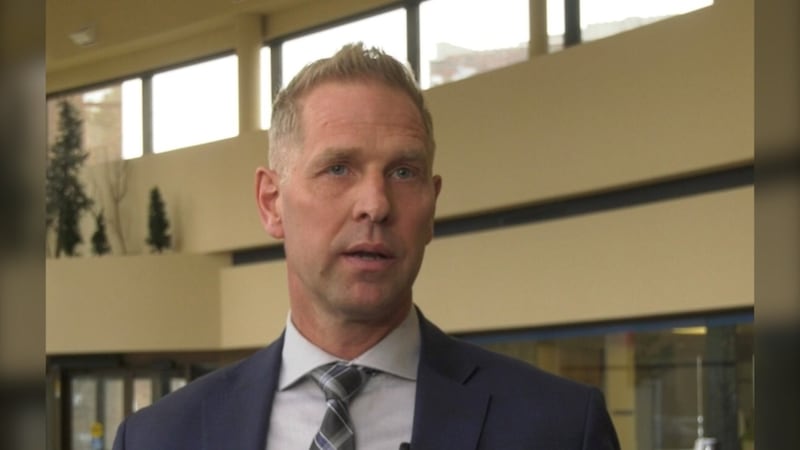
Alberta’s Minister of Assisted Living and Social Services, Nathan Neudorf, also issued a statement following Johnson’s death.
“Every life lost to suicide is a tragedy,” the statement said.
“Our thoughts are with the friends, family and community who are grieving this loss. We recognize that those struggling with thoughts of suicide are facing profound mental health challenges and need compassion and support.”
If you or someone you know is in crisis or struggling with mental illness, here are some resources that are available.
Canada Suicide Crisis Helpline (Call or text 988 or visit 988.ca)
Centre for Addiction and Mental Health (1-800-463-2338)
Kids Help Phone (1-800-668-6868)
If you need immediate assistance call 911 or go to the nearest hospital.
With files from CTV Calgary’s Mark Villani

