The valve wouldn’t turn.
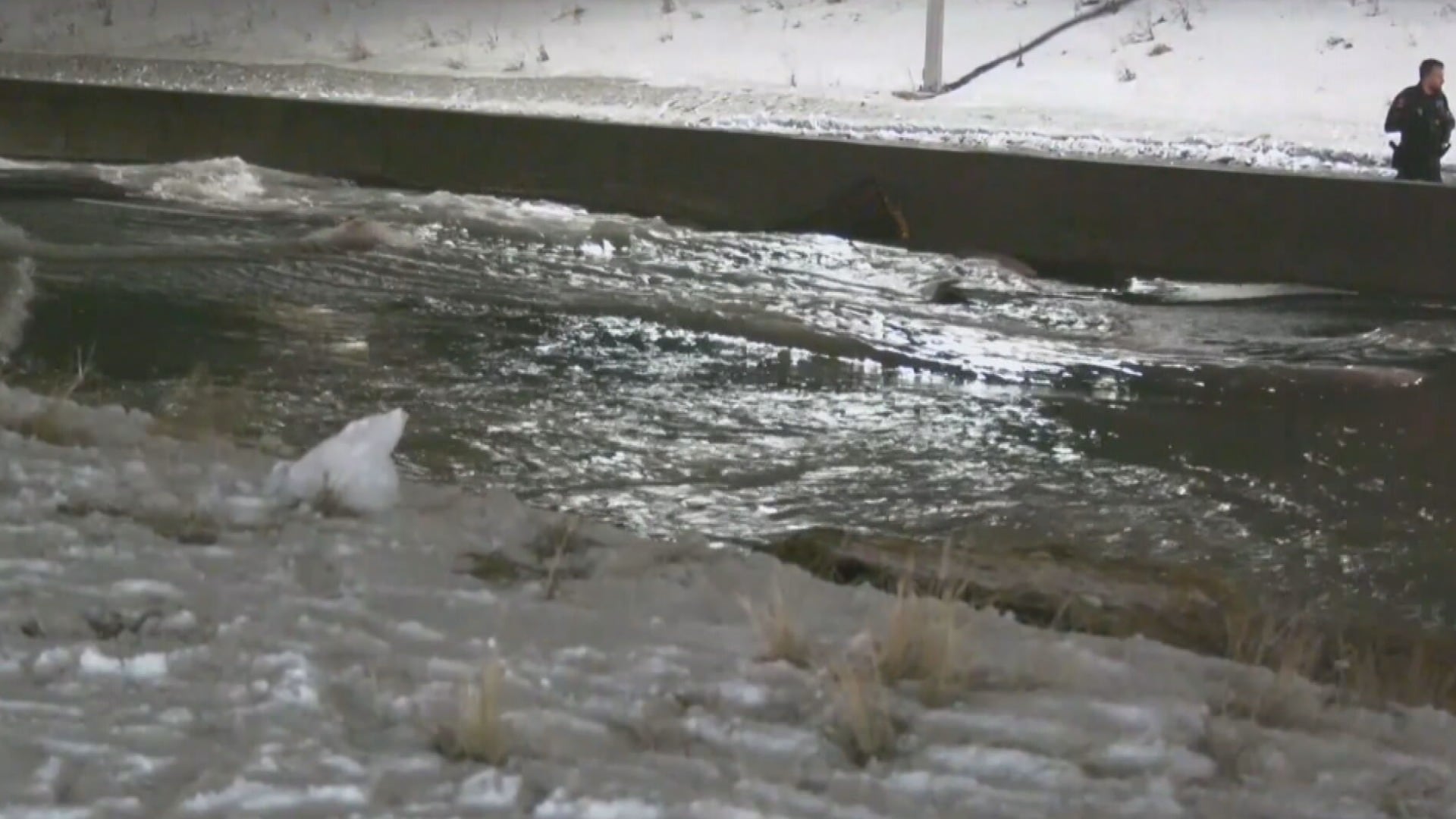
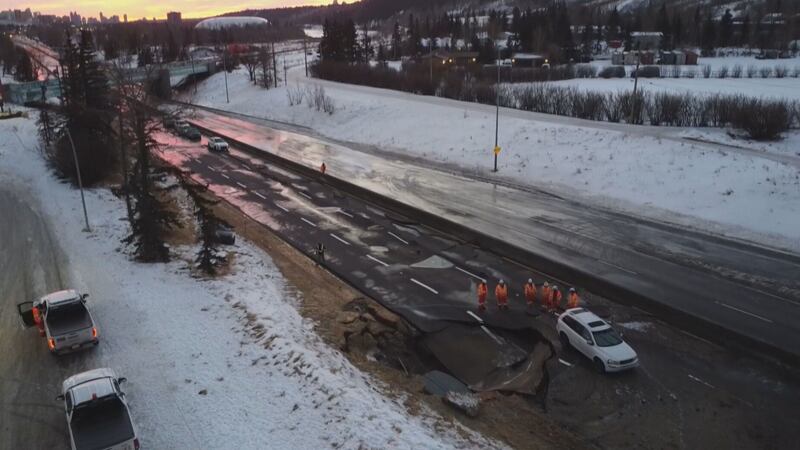
Water billowed up from under the road in northwest Calgary again the night of Dec. 30, 2025.
A vehicle was sent into the air by the force of the aged, ailing Bearspaw feeder main rupturing a second time.
It landed with a thud next to the hole, which continued to bleed city water.
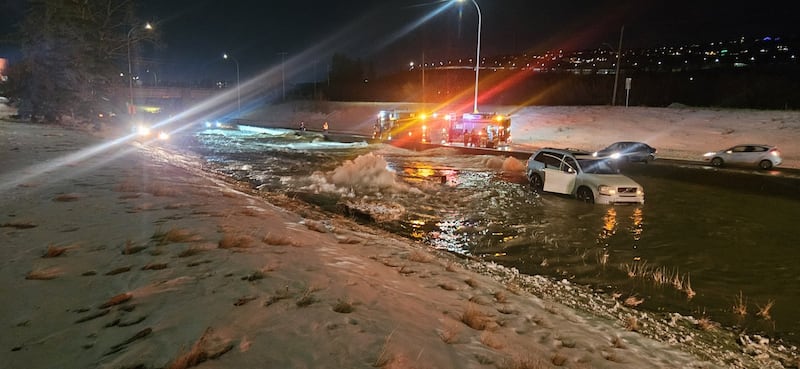
Flooding rose nearly as high as the road’s median, and the windows of multiple vehicles—all now stranded.
And somewhere below ground, several kilometres away in a small concrete chamber, the mechanism to stop the flow was broken.
Sclater Paterson, operational performance and drinking water distribution lead for the city, said a fast decision would’ve been made.
As a city crew struggled to turn off the tap, he said, their supervisor would’ve told them, “Next valve down the line. Go.”
And they would’ve scrambled another several kilometres.
“We knew (that valve) was brand new,” Paterson told CTV News.
“We need to stop this—just stop it at that one.”
Paterson said his people knew right away the main broke, but that it shouldn’t have happened without the city seeing it coming.
“It was without warning,” he said.
“We had put systems in place to try to give us some level of warning.”
‘Stop the bleeding’
The main break occurred near the Sarcee Trail/16 Avenue N.W. interchange, a few blocks from the last one in summer 2024.
Seemingly endless water flowed off the road, taking over pathways and continuing into the park.
People climbed out of and atop their cars and trucks and the 911 calls followed quickly and in quantity.
Paterson’s phone started ringing as he unpacked luggage from Christmas vacation.
“First of all, you’re thinking, ‘Is everyone OK? Did anyone get hurt?’” he said.
“The second thing is, ‘Here we go again.’”
Paterson said the first priority that night was to “shut things off” and “get things isolated.”
“Stop the bleeding,” he said.
“Stop the water, because it causes a lot of damage.”
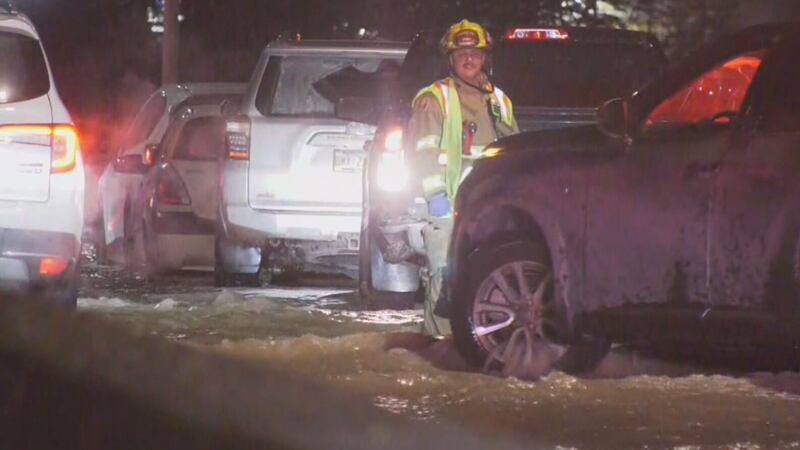
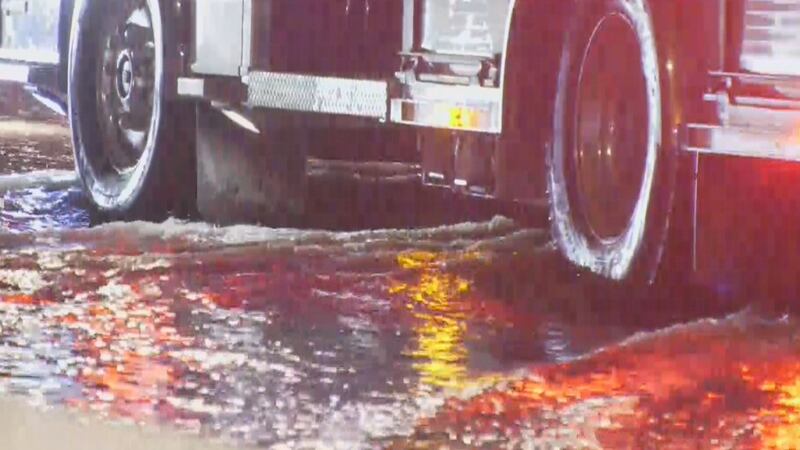
On 16 Avenue, one vehicle floated down the road while a family with special-needs children was trapped inside another.
Someone else was navigating the crisis on a broken leg.
Police shuttered roads over an area of size and had a helicopter in the air, lighting up the secured perimeter.
Fire department rescue teams suited up to set about saving more than a dozen people with fast-fill inflatable rafts and ropes.
And city crews got better-versed in water woe as they worked to turn off the tap.
‘All it is, is a valve’
Valve chambers are everywhere.
They’re under Calgary’s streets and parks, all of them underground.
Some are several feet down; others, a dozen.
Some can be accessed from above with what’s called a valve rod; others, you have to go down there.
“All it is, is a valve,” Paterson said.
“You’re opening something to open the water and you’re closing something to close it.”
Kind of like a tap, he said, “except they’re a lot bigger.”
Though the one valve was stuck, the next one worked.
Elsewhere, one of the city’s two water treatment plants cycled down, while the other was ramped up to cover the gap.
‘A bigger event’
Flow through the main was stopped within an hour.
It would’ve been another couple of hours before water stopped coming out of the gape on 16 Avenue.
Longer for all the water on the street to drain away.
There were no bodies and no injuries reported.
Paterson said ending the deluge was just the start.
In the immediate aftermath, Paterson said figuring out which residents and businesses would need to boil water and issuing that advisory was the next priority.
“We sat there looking at all our maps pretty late into the night,” he said.
It ended up being Montgomery, Parkdale, Point McKay and West Hillhurst.
The Calgary Emergency Management Agency (CEMA) was also notified.
Sue Henry, CEMA’s chief, said it was evident “very, very quickly that it was a bigger event.”
She said CEMA’s meant to “bring the right people together” for higher-level co-ordination as plans are made and executed.
“You know you have a number of Calgarians that are impacted,” she said.
“Not only Calgary, but a number of other partners that have water service delivery from Calgary.
“It hits you that it’s quite significant.”
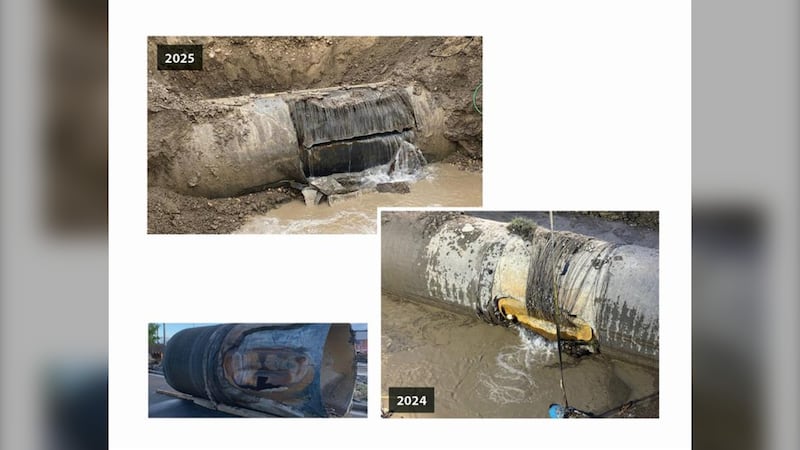
After the first main break, a local state of emergency was declared.
Water use restrictions were put in place.
The city carried out 29 repairs along the Bearspaw line, with the work completed by November 2024.
A little more than a year later, after the second break, the emergency operations centre (EOC) doors opened again.
And water use restrictions were put in place again.
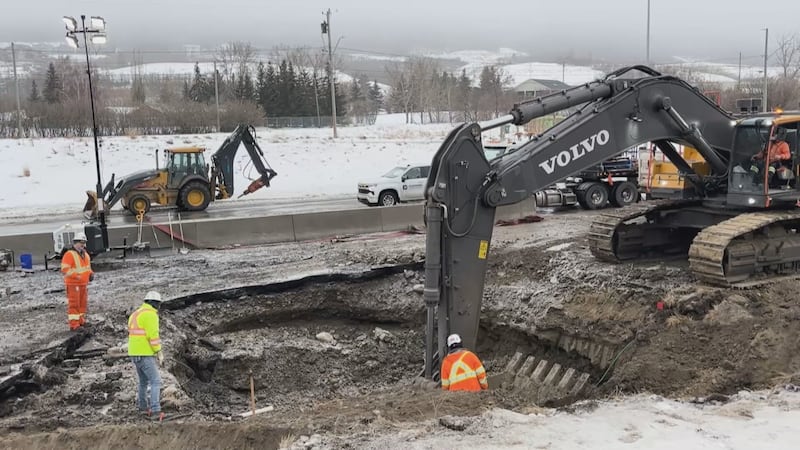
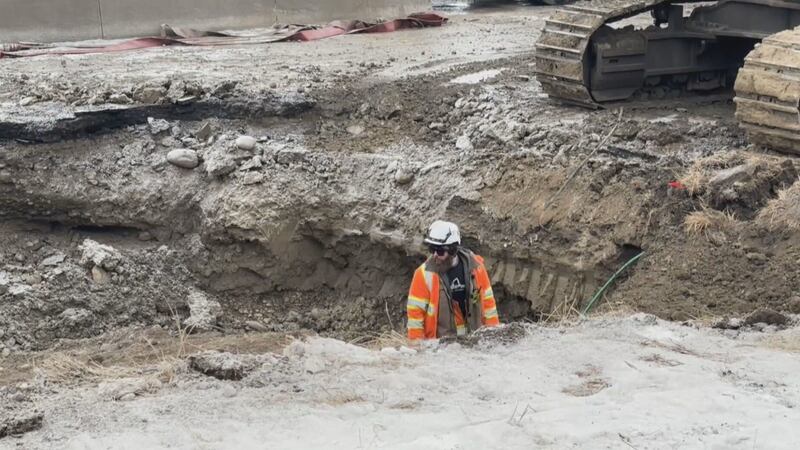
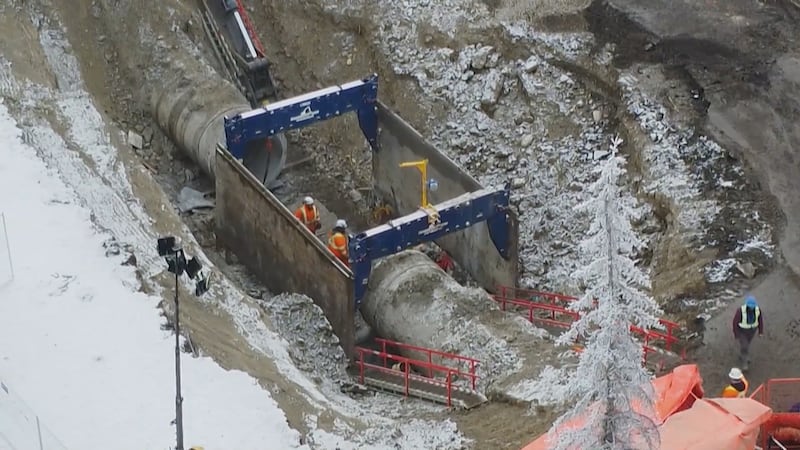
Boots and excavators hit the ground.
Parts were hauled out or sourced.
Work began on repairing a length of a pipe large enough to walk through.
This time, it took weeks, not months.
“You could see it from the first time to this time,” Paterson said.
“We were more efficient with the resources and able to get things done quicker.
“We understood better what had to be done.”
‘Bring the public on the journey’
Henry said asking Calgarians to again sacrifice their water usage as repairs took place was tough.
She said it was also necessary.
Residents across the city were asked to skip showers.
Loads of dishes and laundry, too.
They were asked for fewer toilet flushes.
“If it has to do with life safety, I have to ask it,” Henry said.
Calgary could sustain roughly 485 million litres of water usage per day before having enough for hospitals and firefighting would become a question mark.
Every Calgarian was asked to reduce usage by about 30 litres daily.
Henry said CEMA opted to “bring the public on the journey.”
Near-daily updates came with illustrated reminders featuring a toilet, a shower and a laundry machine.
Henry said most people “don’t have a visual understanding of what that amount of water is.”
“I was surprised at how much water Calgarians use,” she said.
“I was surprised at the simple strategies we could ask for that could actually save enough water.”
‘Holding your breath a bit’
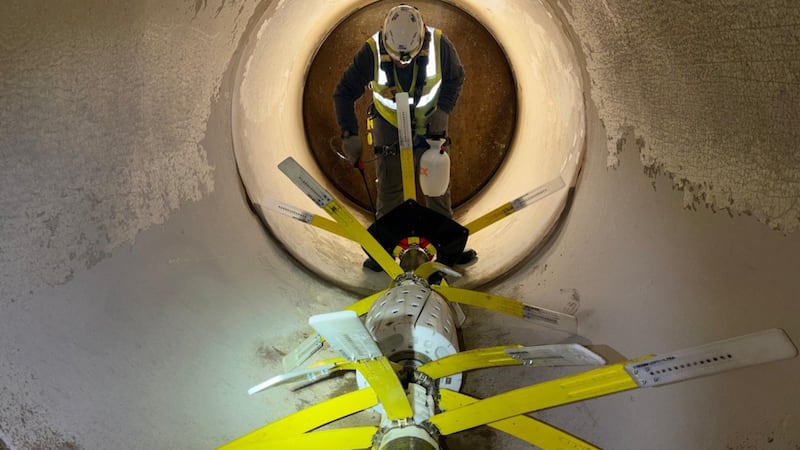
In weeks, the city was ready to fill the main, test the water and finally turn on the pumps.
“We were able to hit our schedule pretty well on the mark,” Paterson said.
“We were very close to what we thought we could hit.”
Repressurizing, Paterson said, is “definitely one of the riskiest times.”
“Steady state is the best, meaning if you can just hold the same pressure in the line, it’s going to work the best,” he said.
“Any time they depressurize and repressurize, there’s definitely risk—I would say you’re holding your breath a bit.”
Police have said their No. 1 objective was to maintain public safety if putting the main back in service caused it to rupture somewhere else.
That required an evacuation plan.
Which required plans for staffing and deployment, communications, traffic management and more than likely air operations.
Calgary Fire and EMS were on alert while repairs were carried out, with the latter bringing in extra resources from Edmonton to support that.
CEMA would’ve been stood down and the EOC shuttered once water service was restored.
Henry said that benchmark “takes the life safety risk out of the current situation.”
But as additional work to maintain and ultimately replace the line continues, Henry said CEMA is “still staying very ready, should something occur.”

