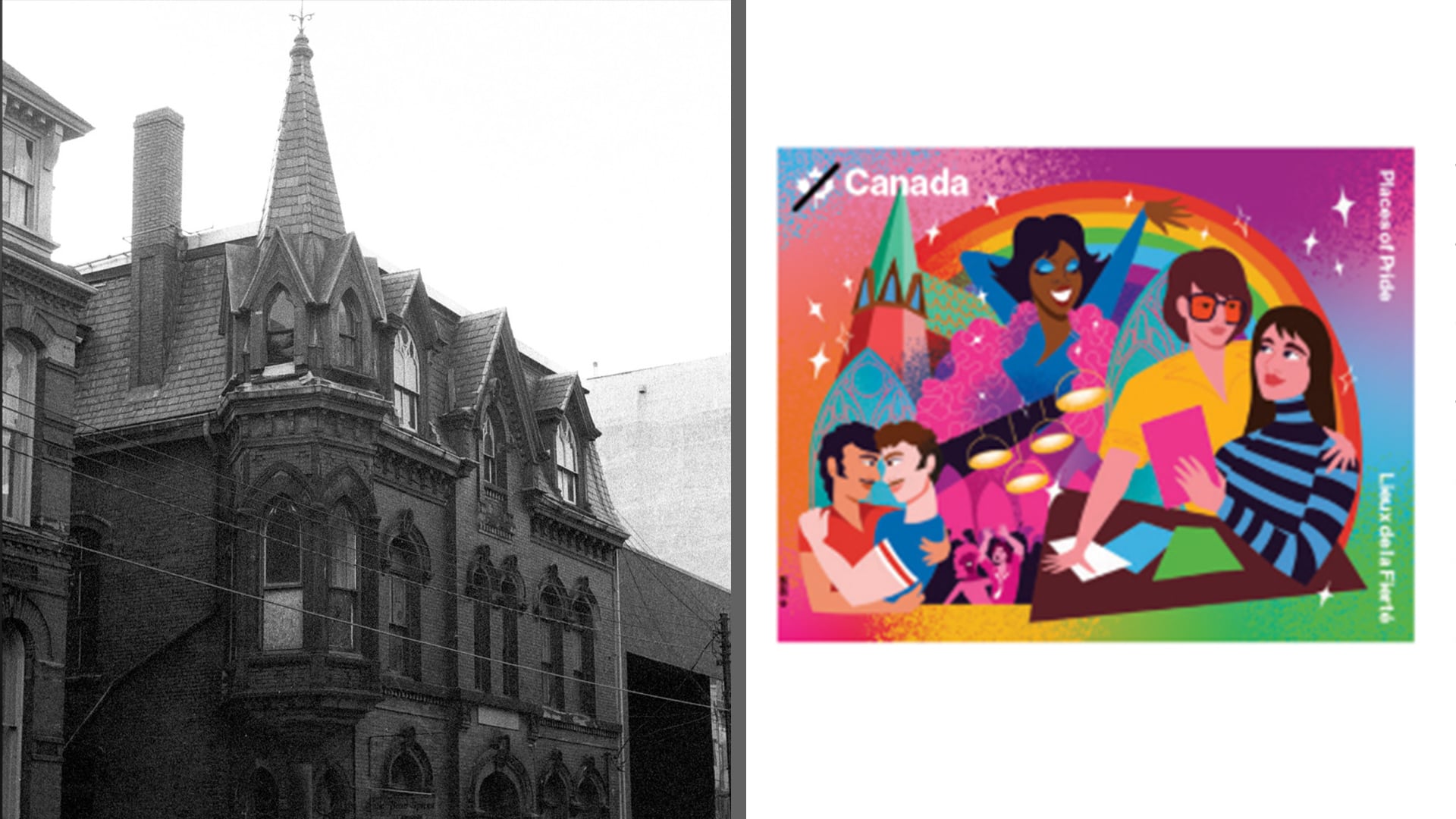
Canada Post has unveiled a new four-stamp series for Pride Month, commemorating places and events that shaped queer history in Canada.
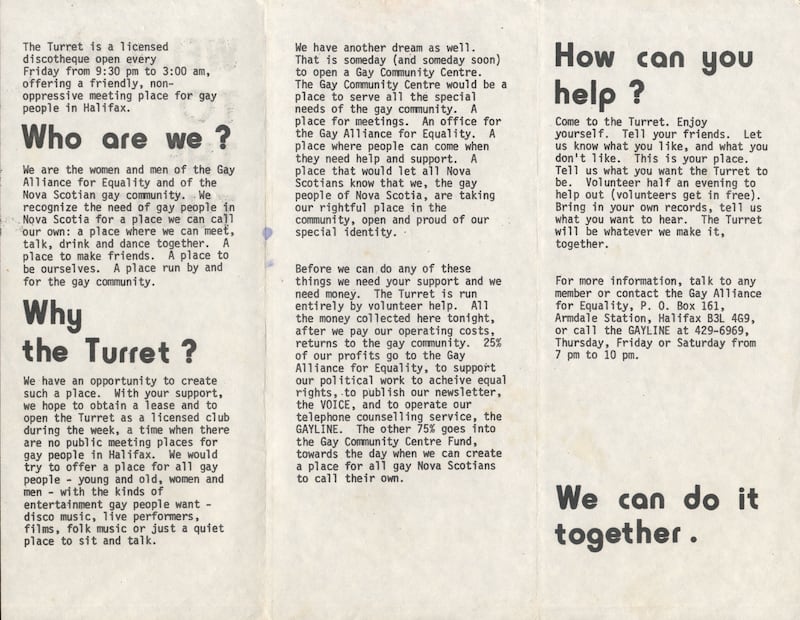
Featured on one of the “Places of Pride” stamps is The Turret, a former nightclub in downtown Halifax from 1976 to 1982.
In planning the stamp collection, Canada Post consulted with Dartmouth-based author and historian Rebecca Rose.
“I’ve always been a queer and trans history nerd,” she says.
Rose has done years of research in Nova Scotia, including for a 2019 book, “Before the Parade: A History of Halifax’s Gay, Lesbian, and Bisexual Communities (1972-1984).”
When Canada Post asked her about an event or place for its collection, one location stood at the top of her list.
“There was no real question that it had to be The Turret,” she says. “When I wrote ‘Before the Parade’ and I spoke to folks that were around and active in the ‘70s, they just lit up when they spoke about The Turret. Everyone.”
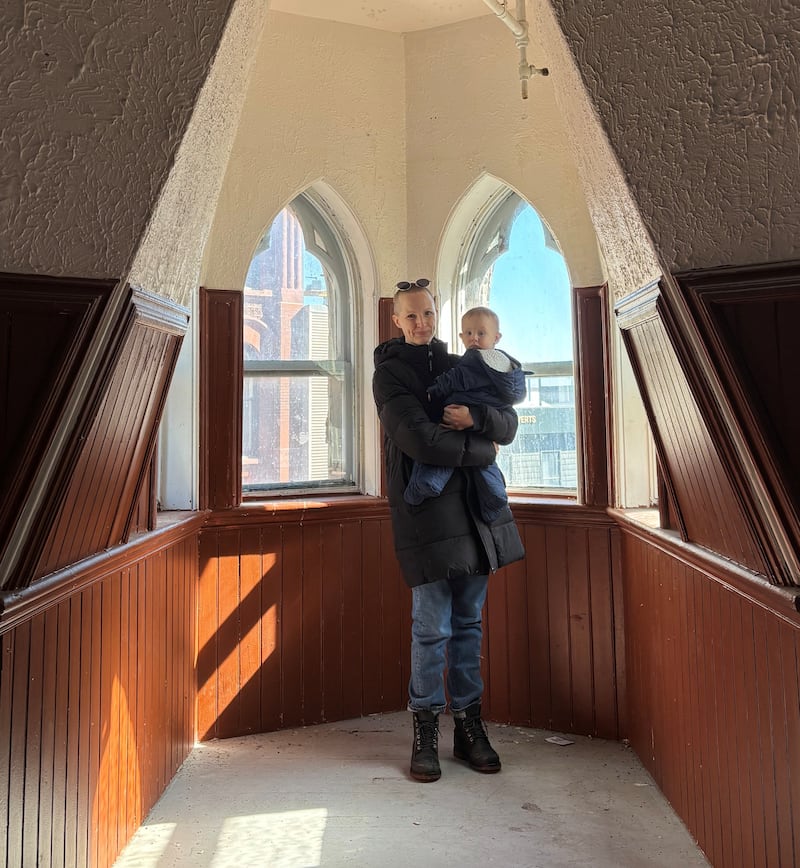
The building, located at 1588 Barrington St., is known today as Turret Arts Space and was home of the Khyber Centre for the Arts from 1995-2014. It was erected in 1888 as a Church of England institute, featuring Victorian Gothic features and, of course, a turret
“People talk about looking up and seeing it and knowing it was a gay bar and knowing that it was there for them when they got the courage to go in,” says Rose.
Inside the club, people from all aspects of Nova Scotia’s 2SLGBTQ+ community called The Turret home. At the top of a winding staircase was a dance floor of parquet wood that would bounce when enough people were moving on it.
The main club space had ceilings nearly 13 feet tall, a DJ booth inside the turret, and an elevated platform became the perfect place for a stage.
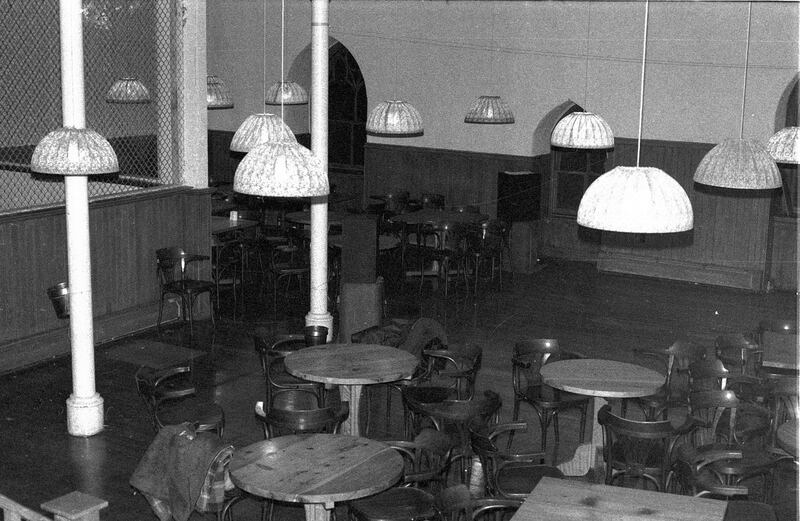
They hosted drag performances, talent shows and played the latest from Diana Ross and Abba with hits like “We are Family” becoming an anthem.
Robin Metcalfe, writer, activist and archivist, used to frequent The Turret. He was also a chair of the Gay Alliance for Equality (GAE), the community group that operated the club, so he’d take payment at the door and help organize events.
“We really identified it with the community, that ‘We are Family,’” he says.
“It was very important to be able to meet other queer people and form friendships, build relationships, build community in a space where we didn’t have to hide who we were.”
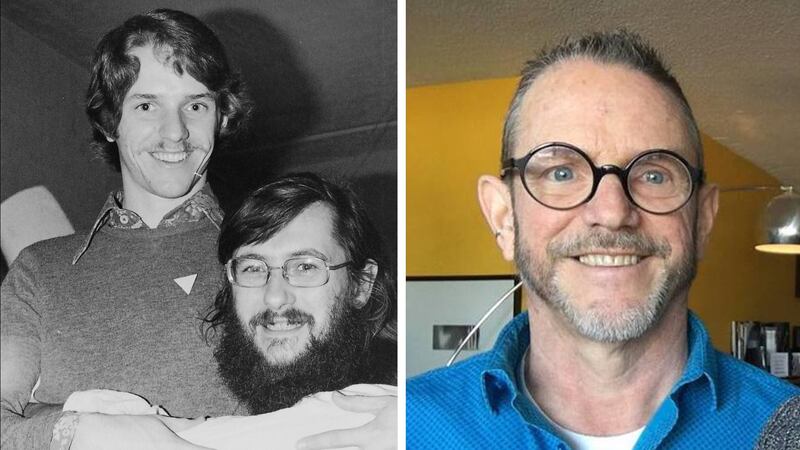
Metcalfe, who lived as an openly gay man in the 1970s, points out there weren’t any protections for them under the Human Rights Code. At the time, a person could be fired, refused service or have their children taken away based on their sexuality.
“I was kicked out of the Heidelberg for dancing with another man. So, you really couldn’t show affection or be visibly gay. Many spaces didn’t even accept us at all,” says Metcalfe.
He says people would be outed publicly, with their names and addresses splashed on newspapers. “Queer-bashing” and violent assaults were frequent, so nights out at The Turret would start closer to the early hours of the morning when the streets felt safer.
“It was a life-threatening time for queer people and having a safe space was a lifesaver.”
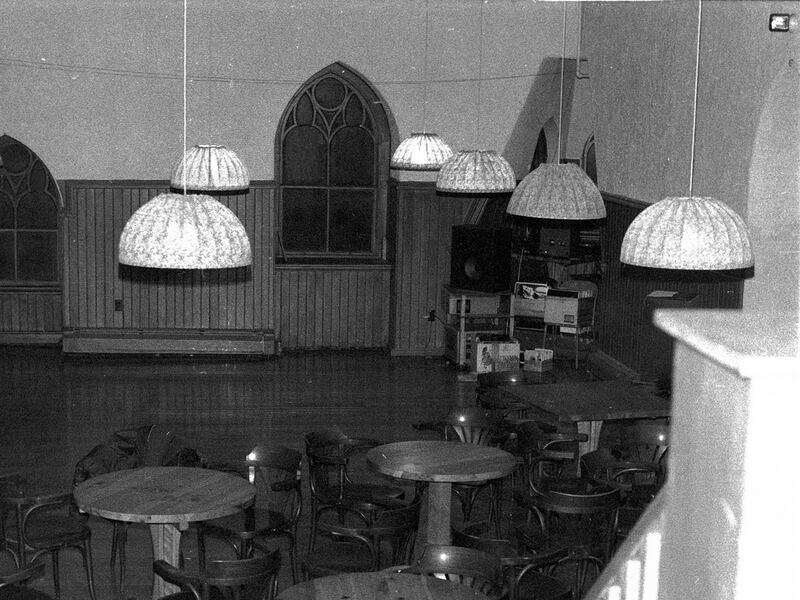
Metcalfe says Chris Shepherd, the DJ at the time, spotted assaults down on the street from the turret window of his booth.
“He at least on one occasion stopped the music and announced that there was a queer-bashing going on downstairs and 50 people went down the stairs to the street to confront them,” Metcalfe recalls.
Emerald Gibson also remembers Shepherd. Gibson introduces himself to people as “Ezzie,” the name of his drag persona that has stuck around after 50 years, given to him by the DJ.
“We called it home,” says Gibson, who performed lip-syncs on stage as Ezzie many times at The Turret. “It’s not a community, it’s a family.”
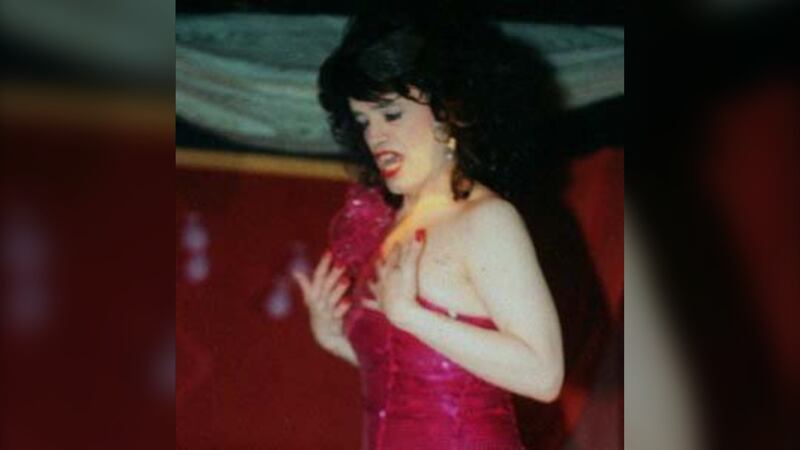
The GAE was making money from the profits of the club and wanted to give back to the community by hiring local DJs, hairdressers and performers.
Gibson remembers getting ready with other drag queens, touching up their makeup and wigs backstage with help from local hairdressers.
He also ran the Alternate Book Store — the only gay bookstore east of Montreal at the time — on the second floor of the building.
The bookstore was a tight space with novels and magazines like the Body Politic, a queer activism publication Metcalfe wrote for.
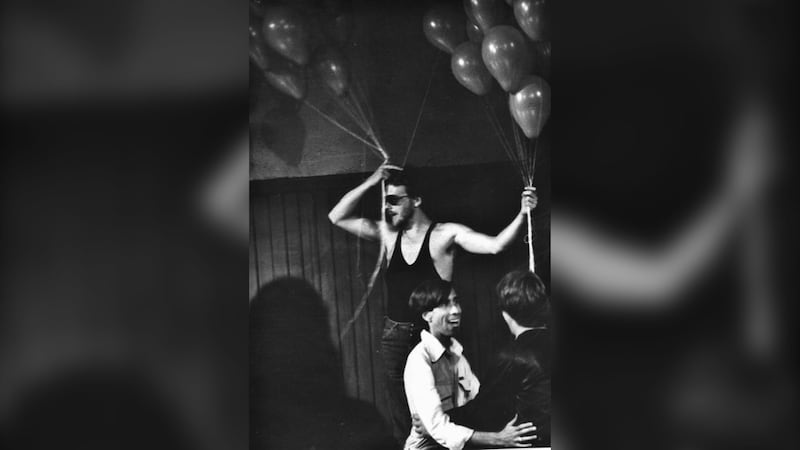
Gibson worked there during the day, and with access to the whole building, he’d practise his drag numbers on the stage of the empty club upstairs.
While The Turret wasn’t the first gay bar in Halifax, it was the first community-run gay bar, and was unique in that it was frequented by queer men and women.
Being community-run, if clubgoers had any issues with the music or decor they could bring it up at monthly meetings and have their say.
Metcalfe recalls a controversial purple tile installation in the men’s washroom.
“People didn’t like the colour so they came to the meeting, and we had a bit of a constitutional crisis,” he laughs.
The first night they hosted a dance at The Turret, Metcalfe says he knew they’d created something special upon seeing the diverse lineup waiting to get in.
“It was clear the people had a hunger that was being met by this social space, and it was a really good night,” he says.
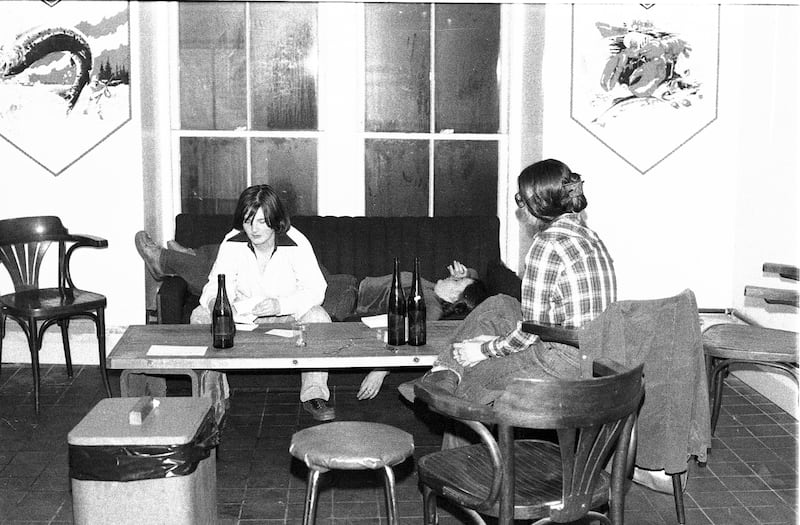
“What’s exciting about us getting a stamp for The Turret, people can recognize just how special and unique The Turret was,” says Rose, whose interest in Halifax’s queer history began after several coffee dates and conversations with Metcalfe.
Gibson says he’s looking forward to getting his hands on one of the new stamps.
“I miss the family we had there, the camaraderie,” he says.
He runs a Facebook group called Turret Memories with more than 150 members where they share photos and connect.
He says he aims to keep the memories alive of the people they’ve lost along the way, including Shepherd, who died in November 2025.
“It’s important that we don’t relegate The Turret and spaces like it to history,” says Rose. “Right now, there’s a fight to keep The Turret (building) in the community and I think that’s incredibly important.
“The Turret is really our last chance to make sure that one of the spaces that was so central to the community and to gay activism in this province remains accessible to the public.”
For more Nova Scotia news, visit our dedicated provincial page

