MONTREAL – Calls have grown louder for a wide-ranging independent inquiry in the wake of allegations of racist and degrading acts by a night shift unit of the Montreal police in a culturally diverse neighbourhood.
Community leaders advocating for Black youth across Quebec say the trust has been broken and that only an inquiry can lead to transparency.
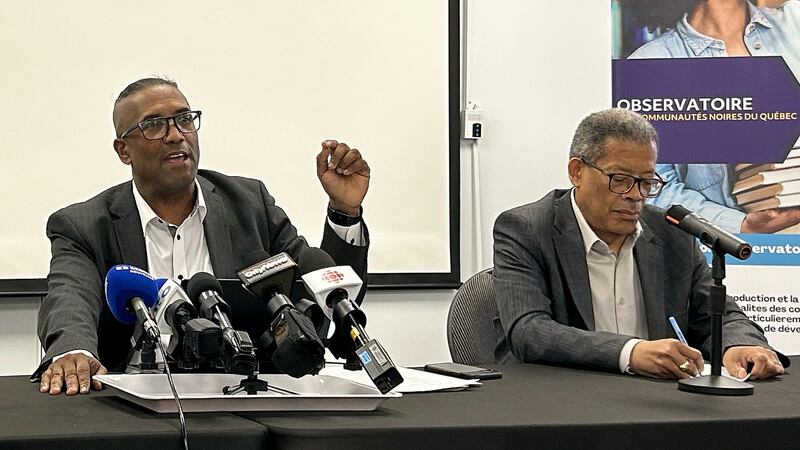
“We believe what happened in Montreal-North is not unique. We believe it is endemic,” said Afro Youth Summit vice-president Alix Adrien. He called for an inquiry that would include all police forces in Quebec that have been condemned of racism in policing, including the Longueuil police south of Montreal.
“Who can guarantee that this did not happen elsewhere?” asked Edouard Staco, president of the Afro Youth Summit.
Allegations of racism and reports that officers encouraged others to target certain minority groups, as well as cut off dreadlocks of some of the suspects to keep as trophies, surfaced as the Montreal police chief Fady Dagher called a late-night news conference on June 12. He says other police officers had spoken out, sparking an investigation.
Sixteen officers from Station 39, in the heart of the culturally diverse area of Montreal-North, are now the target of that investigation. Two of them have been suspended, three others have been placed on administrative duties and the rest of the night shift unit, made up of several young male officers with only a few years of service, have been relocated to other neighbourhoods.
The Quebec government says no course of action has been ruled out, but that for now, an independent observer has been assigned to oversee the police investigation.
“Racism is a cancer, a dangerous cancer and it needs to be eliminated,” said Coalition Avenir Quebec (CAQ) Member of the Quebec National Assembly Christopher Skeete. “I understand that tensions are high, people want action. Action is happening and we are going to see this through all the way.”
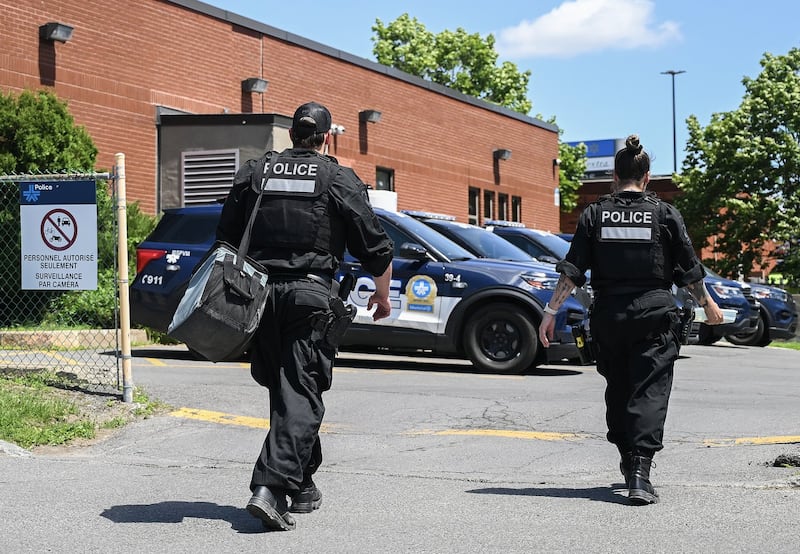
But many in Montreal-North say successive governments have promised to address the issue before and have come up short. Chants of “shame on you” echoed in front of station 39 on Monday, as hundreds of demonstrators gathered to demand transparency.
“We are literally here only because other police officers told on the police,” said one protestor. “But the people from this neighbourhood have been saying the same thing since 2008.”
The 2008 police shooting and killing of 18-year-old Fredy Villanueva in a park in Montreal-North sparked tensions between minority groups and police that escalated for years. Since then, there have been a series of reports into racism within the police force, including one in 2019 that found Black and Indigenous people were four-to-five times more likely to be stopped by police.
A follow-up report in 2023 concluded little had changed, despite recommendations to boost training and hiring of more officers from visible minority groups.
Sociology professor Mariam Hassaoui was one of the co-authors of those reports. She told CTV News that several alarm signals were ignored, and so was a recommendation that police suspend arbitrary police traffic stops that many experts say contribute to racial profiling.
The Supreme Court is now reviewing a Quebec court ruling on these random stops.
“We cannot invoke ignorance or surprise,” said Hassaoui. “We cannot say this was an isolated case.”
“If our recommendations had been accepted, had been adopted,” she added, “it is likely something like this would not have happened.”
Black youth community leaders said Tuesday that the events are traumatizing for many in the community and that it is imperative to act, so that the divide between police and youth does not continue to grow.

