Starting next month, the Alberta government will offer some citizens relief from the high cost of living.
Speaking to reporters in Calgary on Wednesday, Premier Danielle Smith said starting July 1, nearly 3.4 million Albertans would be eligible for a one-time payment of $100.
Dubbed the Alberta Energy Rebate, the payment is available to Albertans over the age of 18 who have filed a tax return and have a household income under $225,000. Those on supports like Assured Income for the Severely Handicapped (AISH) will get the rebate automatically.
The rebate comes instead of the province reducing its tax on gasoline at the pumps, since reductions in gas taxes don’t ensure savings flow to all consumers, Smith said.
“Our government recognizes that families are feeling the pinch, which is why we’re taking action to put more money back in their pockets,” Smith told reporters.
“This approach will ensure elevated oil revenues deliver real benefits to Albertans, benefits that don’t disappear at the pumps.”
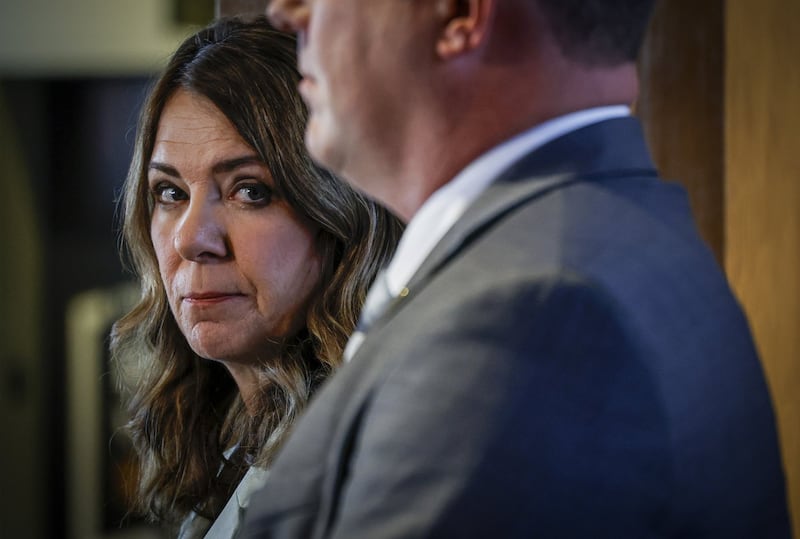
Smith says the payment ensures money gets into the hands of families facing rising costs for any expenses in their daily lives, whether that be housing, food, utilities or transportation.
The rebate comes after the war in Iran has caused gas prices to skyrocket and choke consumers at the pumps.
Those soaring gas prices ultimately boosted the bottom line for Alberta’s oil-powered economy.
The province projected a $9.4-billion deficit two days before the war began, which was largely tied to low oil prices sitting at an average price of US$60.50 per barrel of West Texas Intermediate.
Finance Minister Jason Nixon noted that price averaged over $90 between May 18 and June 15, which triggers the province’s fuel tax relief program.
It’s not the first time the Alberta government has pledged direct cheques to residents when energy prices were high.
In 2006, then-premier Ralph Klein’s government sent $400 payments to all Albertans, which ran a bill of $1.4 billion for the province.
But those payments came during a markedly different economic landscape for Alberta, when the province was debt free and rolling in surplus revenue.
Klein said at the time that Albertans deserved a direct share in the province’s oil wealth. But Alberta’s most recent February budget expected taxpayer-supported debt will soar to $109 billion.
Alberta Finance Minister Jason Nixon told reporters what became known as “Ralph bucks” shouldn’t be compared to the new payouts because one cheque could turn into multiple quarterly payments.
“The government of the day was not doing something based on fuel tax,” he said.
He added that every quarter, the government, under its own law, needs to provide relief if oil reaches an average at or above $90 per barrel.
But the new rebate, Nixon said, will Albertans across the board will see more savings, since the savings will go to those who don’t drive.
More needed to address affordability: Nenshi
As Smith says the one-time $100 payment will offer relief to families that are struggling, the leader of Alberta’s opposition NDP says there needs to be a more sustained effort to address affordability woes.

“These one-off (payments) are not solving the affordability crisis of Alberta,” Naheed Nenshi told reporters on Wednesday at an unrelated press conference ahead of Smith’s announcement.
“The premier needs to understand that people are facing tough times, that the world she lives in — a world where she gets a larger housing allowance than people living on AISH get to get through the entire month — is not the world most Albertans are living in."
Nenshi for months has been calling on the UCP to drop the fuel levy to make life more affordable for Albertans.
Economically questionable, politically popular
Moshe Lander, an economist at Concordia University who served as Alberta’s senior economist during the Klein-era payments, said direct cash rebates often make more political sense than economic sense.
“It was a very interesting lesson learned that good politics and good economics don’t necessarily mix,” Lander said.
At the time, he said government economists argued the money could have been used in other ways, including tax reductions that would have delivered longer-term economic benefits.
Instead, Klein’s government opted for direct payments that Albertans still remember two decades later.
“The idea of everybody running to the mailbox and getting like a cheque from Uncle Ralph was a highly attractive idea for a politician,” Lander said.
While Lander said direct payments are a more efficient way of delivering affordability relief, there’s still the question of whether the government should be issuing rebates while forecasting a deficit.
Instead, he suggested the pledge may be driven by politics as much as economics.
“How do we satisfy everybody? Let’s just give them a bunch of money and hope that this is buying popularity,” he said.
“I don’t think this is life-changing wealth. If your affordability issues hinge on 400 Dani dollars or something, you’ve got much bigger problems that aren’t being addressed.”
With files from The Canadian Press

