A new book examining far-right extremism in Canada argues the movement has evolved dramatically in the past decade, shifting from small, organized groups to a broader network fuelled by social media, conspiracy theories and political grievances.
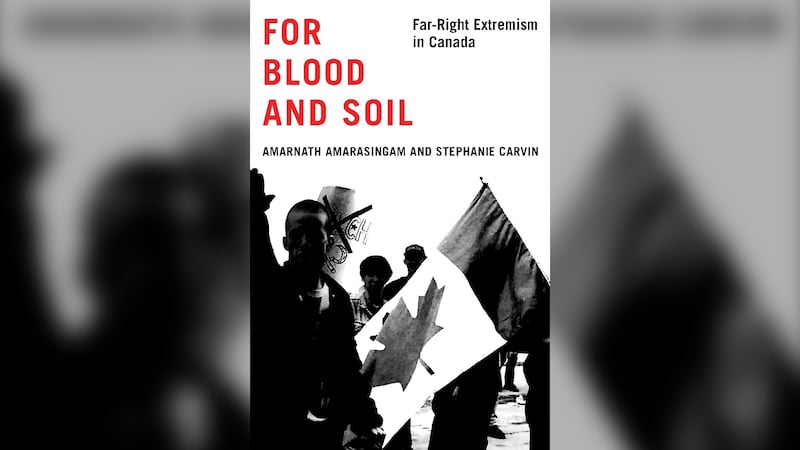
In For Blood and Soil: Far-Right Extremism in Canada, researchers Stephanie Carvin and Amarnath Amarasingam trace the movement’s development through some of the country’s most significant violent incidents, including the 2017 Quebec City mosque shooting and the 2021 attack on a Muslim family in London, Ont.
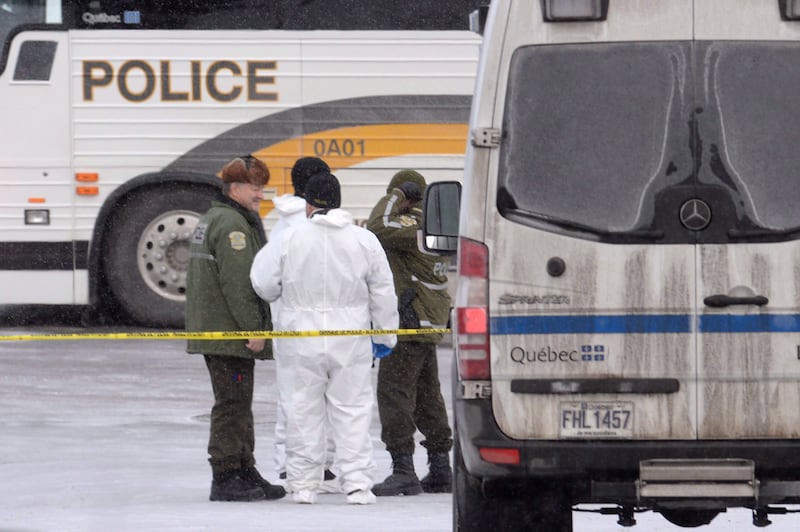
The book opens with a detailed account of the Quebec City attack, in which six Muslim worshippers were killed and 18 others injured when a gunman opened fire inside the city’s Islamic Cultural Centre.
The authors argue the attack marked a turning point in Canada’s understanding of far-right extremism, exposing the potential for online radicalization and anti-immigrant rhetoric to inspire deadly violence.
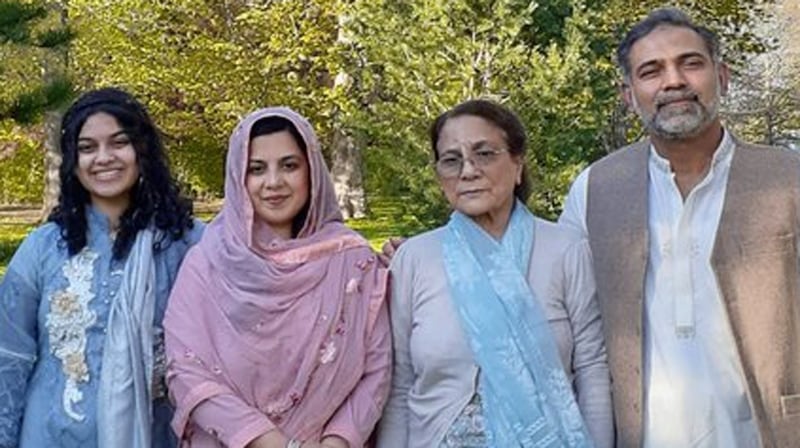
The book contrasts that case with the 2021 London attack, in which four members of the Afzaal family were killed after being struck by a pickup truck while out for an evening walk.
Nathaniel Veltman, who was convicted in 2023, became the first person in Canada found guilty of terrorism-related murder in a jury trial involving far-right extremism.
The authors say the differing treatment of the two cases reflects a broader shift in how authorities view ideologically motivated violent extremism.
Carvin said one of the book’s central arguments is that Canadians need to recognize the movement as a domestic problem, rather than attributing it primarily to foreign actors.
“The far right exists in Canada. It definitely has international links, but we need to kind of take ownership of this problem and understand that no, it’s not just the U.S. No, it’s not Russia. It’s Canada. It’s Canadians,” she said in an interview with CTVNews.ca.
The book argues that concerns about far-right violence intensified following a series of political developments in the mid-2010s, including the election of U.S. President Donald Trump, the election of Prime Minister Justin Trudeau, Canada’s resettlement of Syrian refugees and debate surrounding Motion M-103, which condemned Islamophobia.
According to the authors, these events helped unite segments of the far right, including anti-immigration activists, neo-Nazi groups, anti-government movements and militia-style organizations.
The researchers also examine the role of online platforms in spreading extremist narratives and conspiracy theories.
Carvin said the internet has dramatically lowered the barriers to accessing extremist content.
“Anyone who opens up their social media is probably going to be exposed to some far-right narrative right now,” she said.
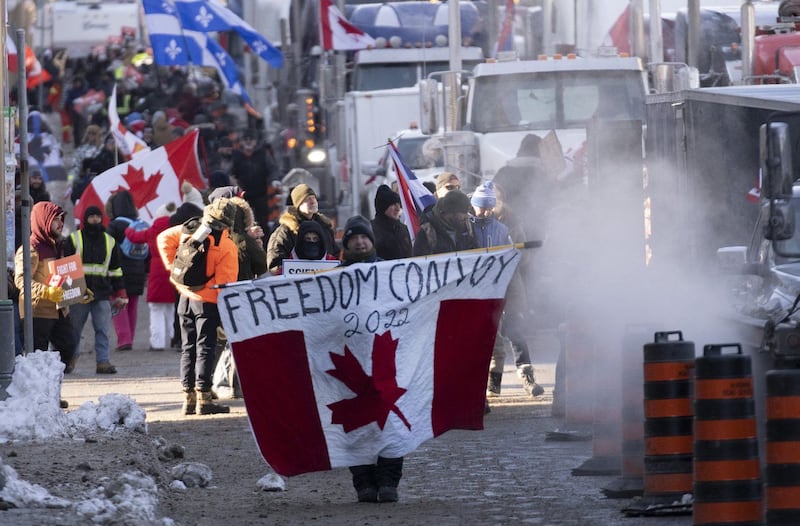
The authors argue that shift became particularly visible during the 2022 Freedom Convoy protests in Ottawa.
While the authors stress that most convoy participants were not extremists, they argue many were willing to embrace narratives and conspiracy theories that had circulated for years within far-right online communities.
The book describes the convoy as both a demonstration of the movement’s ability to mobilize large numbers of people and a recruiting opportunity for extremists seeking new audiences.
Carvin said the convoy is often incorrectly viewed through the lens of foreign interference.
“One of the narratives coming out of the 2022 convoy protests was that this was a Russian operation,” she said. “This was not a foreign interference operation. This was a movement that has long-standing origins in Canada, and it was basically planned by Canadians, orchestrated by Canadians and carried out by Canadians.”
Rather than viewing the far right as a collection of isolated organizations, the authors suggest it is increasingly characterized by overlapping beliefs that combine anti-government sentiment, racism, xenophobia, conspiracy theories and other grievances.
“It’s very hard to define the far right, just simply because to a certain extent, it is a kind of soupy collection of grievances that are often personally driven,” Carvin said, adding extremism in Canada can be traced back generations.
“One of the things that really stuck out to me as we were researching this book is the extent to which so many of these narratives that exist today, actually, you can trace back 100 years,” she said. “It’s very often, just the same kind of narratives repackaged.”
Carvin said the persistence of those ideas suggests the issue is unlikely to disappear anytime soon.
“If we can judge by history what the trajectory is, is that these narratives will continue to be propagated by individuals,” she said.
“And now it’s easier than ever, given social media, given AI and its ability to generate propaganda messages and do so very, very quickly. This is gonna be a real challenge for us in the years ahead.”
Carvin said Canada has taken steps to address extremism, though she acknowledged the challenges involved.
“We do have a number of centres across Canada which are funded by the Canada Centre (for Community Engagement and Prevention of Violence) which help to channel people who may have been going down the wrong path to find a way out,” she said.
She said the approach is more connected to public health than law enforcement, with programs aimed at preventing people from becoming radicalized and helping others leave extremist movements.
But she said many of those initiatives face ongoing funding pressures.
“The problem is scaling these programs up, providing funding, sustainable funding over the long term,” Carvin said.
The book is published by McGill-Queen’s University Press.

