Warning: Graphic content
OTTAWA – Mitchell Tremblay was 11 when he first felt he wanted to die.
He says he “would chicken out” at every attempt.
Now 43, says he still feels he wants to die, “sometimes.” He has spent about half his life in terrible conditions on the street, with seven bouts of homelessness in Toronto and Guelph, Ont. About five years ago, while sleeping on the floor of a mouldy basement apartment, he began to beg for MAID – medical assistance in dying. He saw it as an escape.
He shares a long list of diagnoses and conditions with CTV News: major depressive disorder since he was 16, borderline and histrionic personality disorders, post-traumatic stress disorder, social anxiety, generalized anxiety, and, more recently, agoraphobia and bulimia.
But he was never eligible for the procedure. Now, in the wake of a special parliamentary committee’s recommendation against MAID when mental illness is the sole underlying condition, he feels torn – the option of medically-assisted death could serve as a last resort, but also one that people may opt for because other kinds of support aren’t accessible.
“Seventy-five per cent of me thinks this is a win, that we’re going to be saving lives. That people, you know, would choose MAID to escape from their mental illnesses, since there isn’t support,” he told CTV News from his Guelph apartment, where he considers himself lucky to live with low rent.
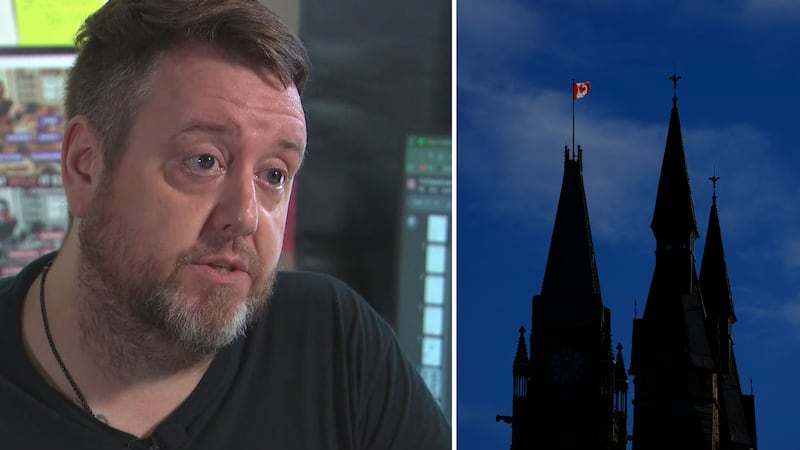
“There’s a lot of hesitancy in me as well, though. … This is taking my escape off the table. It’s what’s made me feel safe, it’s what’s made me advocate.”
Tremblay wants “every single tier” of government to work on better supports for people with disabilities, people living in poverty, and the overlap of those in both camps. He pushes for basic income and better disability plans. After rent, his own Ontario disability payments leave him with about $10 a day for food and personal effects.
“When things are tough, and when you have no hope, when you feel like you are absolutely worthless, you feel like you want to die,” he said. “And the big problem with MAID is that someone will do it for you.”
Claire Elyse Brosseau has a less nuanced take on the committee’s recommendation.
She is part of a legal fight with the advocacy group Dying with Dignity. They argue that barring MAID for people with mental illness is a breach of the Canadian Charters of Rights and Freedoms. She also filed an emergency motion with the Ontario Superior Court of Justice last month, seeking an exemption in her own case.
Brosseau has been open about her decades-long struggle with bipolar disorder, among other mental disorders.
“I’d like to ask the committee members if they think they’ve left people like me better off?” Brosseau wrote in a statement provided to CTV News Wednesday night.
“Consider what it does to people when society repeatedly tells us we aren’t qualified to speak about our own suffering. We are people who already struggle with worthlessness, hopelessness, stigma, shame and self-doubt. The government and this committee are reinforcing exactly the things many of us are already fighting.”
Brosseau and Dying with Dignity Canada argued the testimony of people like her with lived experience of mental illness were not taken well enough into account. The committee’s chair has pushed back on that claim.
“We followed the rules of committees in determining who would become a witness,” Marcus Powlowski said following the report’s tabling in Parliament Wednesday afternoon.
“The committee has made it clear that their perception of people living with mental illnesses cannot be changed, because they refuse to sit in a room and listen to people like me,” Brosseau wrote.
Dying with Dignity Canada CEO Helen Long told CTV News she is “really disappointed” in the committee’s report, saying it’s “yet another blow” for what she describes as a very small group of people who have been waiting for access to MAID for mental health.
“It continues to say that your mental illness and the suffering is not the same as someone suffering from physical illness,” Long said.
Opposition heard throughout committee testimony
The majority of witnesses who testified were opposed to the expansion of eligibility. One of them was Inclusion Canada’s Krista Carr.
“MAID for mental illness is an expansion of an already discriminatory system that very much, even further, endangers the lives of persons with disabilities,” Carr told CTV News Wednesday.
Like Tremblay, Carr believes targeting “external factors” like the lack of disability supports, poverty and housing problems can help.
“We’ve become so focused on this idea that we want to help people die with dignity, we’ve completely lost the fact that, what about helping them live with dignity?” Carr said.
“There are far too many people not getting the supports they need to live with dignity, and death should not be the response to that.”
Tremblay faces a new stressor: an eviction threat this summer from the Guelph apartment that’s let him feel “relatively safe.”
“I’m terrified. I won’t survive it this time. I’m too old,” Tremblay said, describing how his trauma “comes speeding back so quickly” and can leave him overwhelmed.
That terror leaves him upset to think how MAID is now potentially off the table.
“I get angry and I get scared, and I see that in a lot of the people that I’m talking to every day on social media,” he said. “There isn’t any kind of a solution for it, other than more support.”
At the same time, Tremblay wants to share a message of hope. He feels the national conversation may be shifting toward giving vulnerable people more of that support, citing April comments from new federal NDP Leader Avi Lewis around a broken system, with some choosing MAID “out of desperation.”
“We need hope as a community,” Tremblay said.

