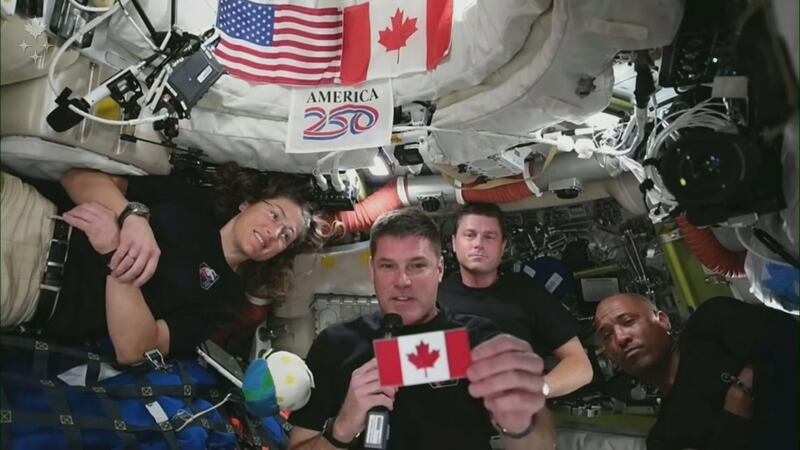
On April 1, the Artemis II mission lifted off from the Kennedy Space Center in Florida, marking humanity’s first return to the moon in more than 50 years.
Of the four-person crew, only one person aboard was not American, Canadian Space Agency Astronaut Jeremy Hansen. The 10-day mission captivated the entire globe as the astronauts orbited Earth, travelled to the moon, conducted a lunar flyby and returned to Earth, before splashing down in the Pacific Ocean.
From concerns he experienced while in outer space to the scenes that left him speechless and what he hopes for Canada’s role in future space exploration, Hansen sat down with CTV News London for a one-on-one interview.
Here’s what he wanted Canadians to know about the historic lunar mission.
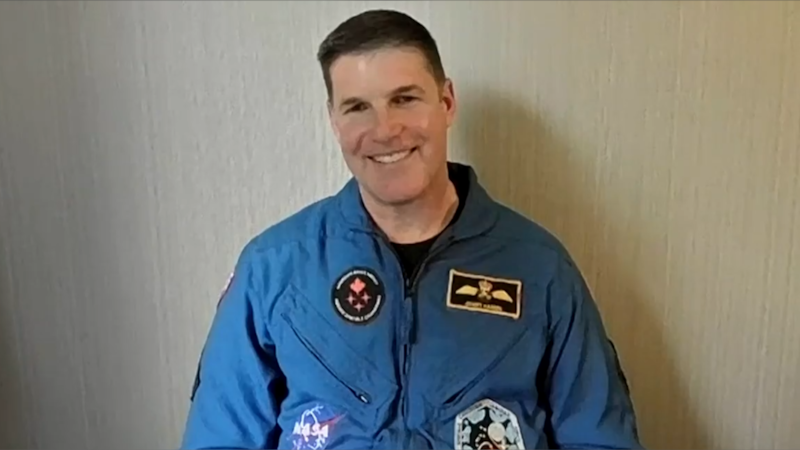
From humble beginnings to making Canadian history
Born in London and growing up in Ailsa Craig and Ingersoll, Hansen said he learned a lot in his youth and growing up on a farm helped shape the trajectory of his future career.
“Some things that I feel like I still carry with me from those experiences was a strong work ethic and a strong sense of community and teamwork. I really saw on the farm that people come together in times of need. That’s just what you did in a small community, and those things have really stuck with me,” he said.
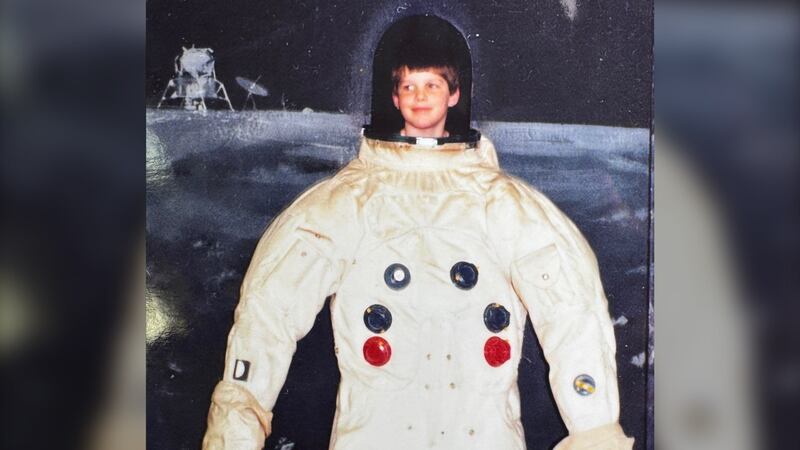
In a February interview with CTV National News, Hansen’s parents Nancy and Gary said their son’s fascination with the moon and spaceflight started at the age of five when his grandfather obtained his pilot’s licence at the age of 59. He later looked up the word “airplane” in an encyclopedia and while in the “A” section came across a photo of Neil Armstrong.
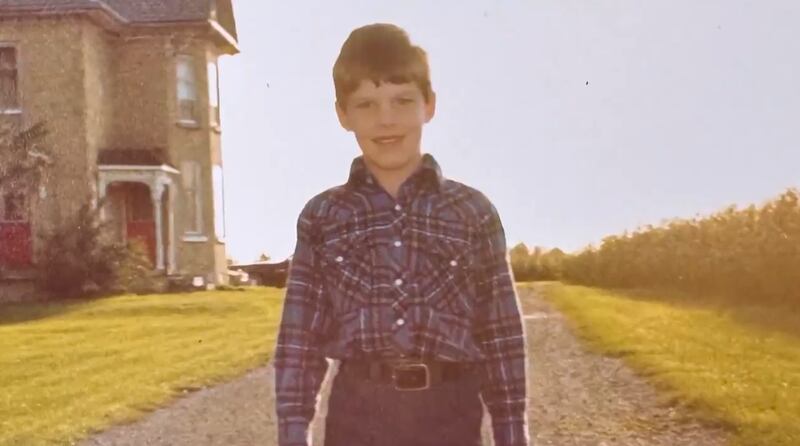
“He came out that day and said, ‘I’m going to be an astronaut,’” Nancy Hansen told CTV News National’s John Vennavally-Rao. “We didn’t think he would, but he kept up his interest in flying.”
When thinking about London, Hansen said he often thinks about the time he spent in Air Cadets and the 614 Squadron, and credits it for having a major impact on his life. He said the programs pushed him outside his comfort zone “on a number of things,” including leadership, being in front of a group, being in charge and developing a sense of self-confidence.
“I really credit that program with a lot,” he said.
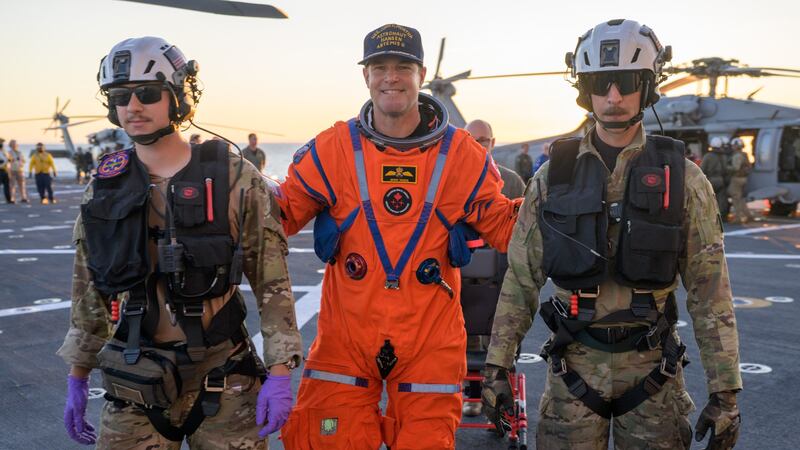
With the success of the Artemis II mission, Hansen cemented his place in history as the first non-American, and therefore the first Canadian, to travel beyond low-Earth orbit.
He acknowledged the privilege and gratitude he has for the accomplishment but said he views it from a much bigger lens.
“I don’t really look at it as a victory…your life, everyone’s life is a journey and it’s great to have goals that you’re aiming for. But when you get to one of these goals, it’s not like now life is done or that you don’t know what to do with yourself. I think every day I just try to get up and use my energy for good, try to have a positive impact on the world around me,” he explained.
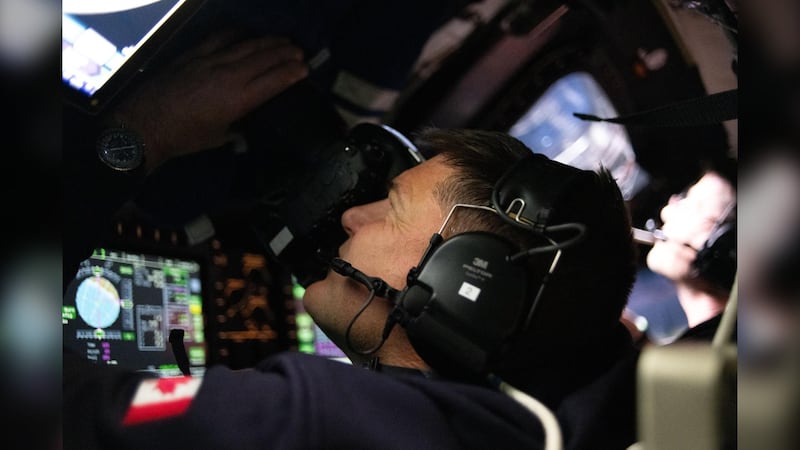
Ultimately, Hansen said that with the Artemis II mission now complete, there is still much work to be done.
“I’m very grateful space has given me a big sandbox to play in, if you will, in that. There’s a lot to be done utilizing space to provide innovation and positive impact for humanity. And so, I feel like there’s still lots more work to do,” he said.
Mission concerns
The mission saw the four astronauts, including Commander Reid Wiseman, Pilot Victor Glover and fellow Mission Specialist Christina Koch, lift off on the 98-meter-tall Space Launch System rocket, which weighed approximately 2.6 million kilograms when fully fueled.
The mission set a record for travelling the farthest any humans have ever ventured into deep space, at more than 406,000 kilometers.
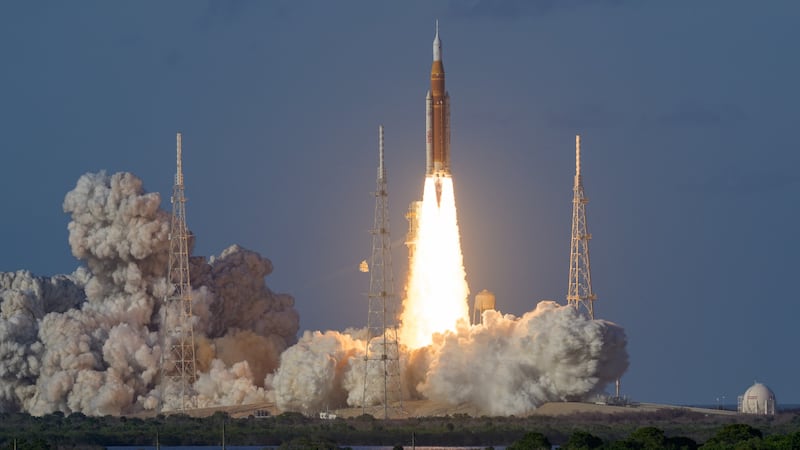
Hansen said that he didn’t live in fear while on the mission, but an overall “concern” lasted the whole duration of the trip.
“You really try in an operational environment like that to always stay guarded,” he said. “I wouldn’t describe it as living in fear because you could tell we were having a good time.”
“You know, fear is something that surprises you and you’re having to react to that you weren’t planning for. That’s not what it was like for us. But you know you are really living on the edge when you’re outside the Earth’s atmosphere. And when you start to get far away from Earth, you know you are days at least from getting back home, and you know that you have to be very careful out there,” he added.
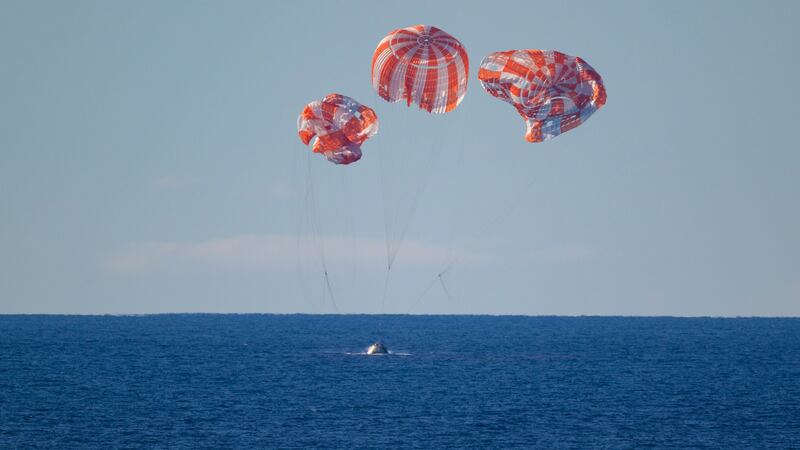
Hansen said that not until the three main parachutes deployed minutes ahead of splashdown on April 8, did he feel like he was going to make it home safely.
There was a six-minute communications blackout as Orion, the spacecraft the crew called home for the duration of the mission, barreled through the atmosphere at 40,000 km/h during re-entry, with the vehicle heating up to approximately 1,650 C.
“You take it very, very seriously when it’s time to do something operational, and that doesn’t let up ever during the mission, not until the three main parachutes open. And that’s the first time you finally feel that sense of we’re going to make it,” he said.
Over the moon for ‘moon joy’
One of the most unexpected outcomes of the mission was the coining of the term “moon joy,” which NASA describes as “the feeling of intense happiness and excitement that only comes from a mission to the moon.”
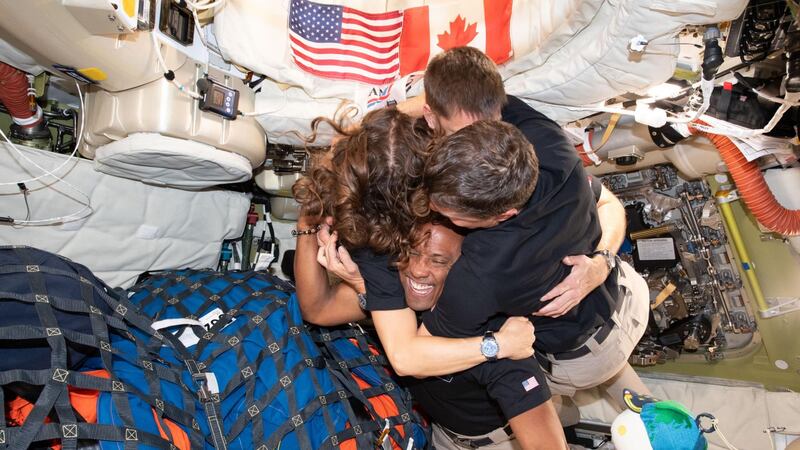
Whether posted to social media by NASA or the astronauts themselves, for 10 days people from across the globe watched the crew’s every move and experienced their most joyous and intimate moments.
Whether it’s “moon joy” or being referred to on social media as “emotional support astronauts,” Hansen said the public’s reaction to the mission has been overwhelming.
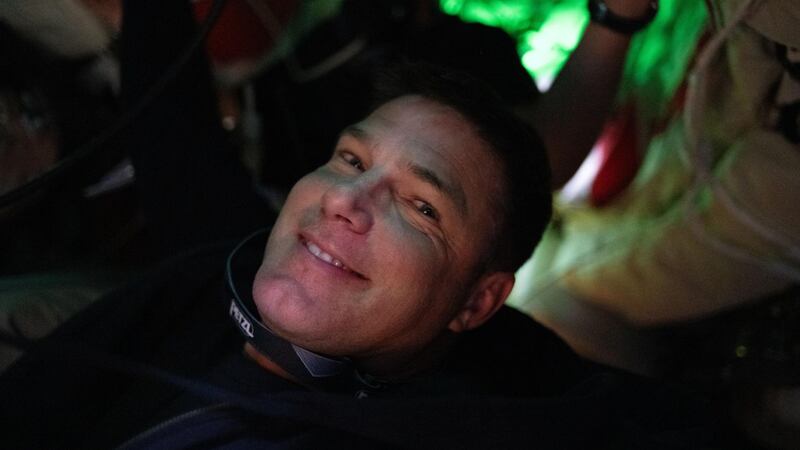
“That’s very touching for all of us on the crew and really surprising, but not shocking, but surprising in a positive way,” he said. “There’s a lot of negativity in the world.”
He said the ability for himself, the rest of the crew and their support team to go out and do their jobs and have a great time while doing it has really resonated with people.
“People seem to connect with that authentic team skill that we have developed over time as a group,” he said. “That gives me great confidence in humanity’s future and just has been a really pleasant reminder to me that people will tend towards the positive if they’re given the opportunity.”
“Because during Artemis II, there were still lots of negative out there that people could latch on to, but they chose, they had a choice, and they chose to share the moon joy,” Hansen added. “And I think that’s really special.
‘That takes your breath away’
The Artemis II mission returned thousands of stunning photos of the Earth, moon and deep space. While the photos captivated those of us on Earth, getting to witness it in person was an entirely different experience, Hansen said.
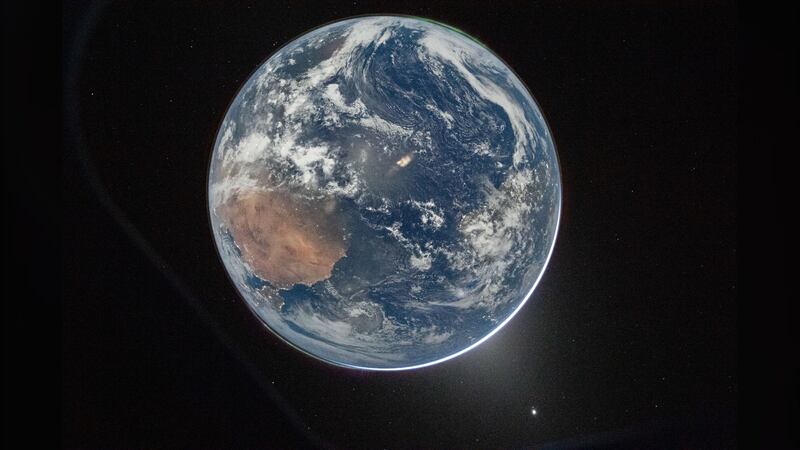
He described moments when the lighting would be just right and the sun would be in different positions behind their spacecraft, and how every once in a while, the lighting allowed the crew to see the Milky Way Galaxy outside the window or sometimes the Earth in the foreground with the galaxy in the background.
“There is a depth to the galaxy that I just didn’t expect,” he said. “And it left me with a true sense of awe.”
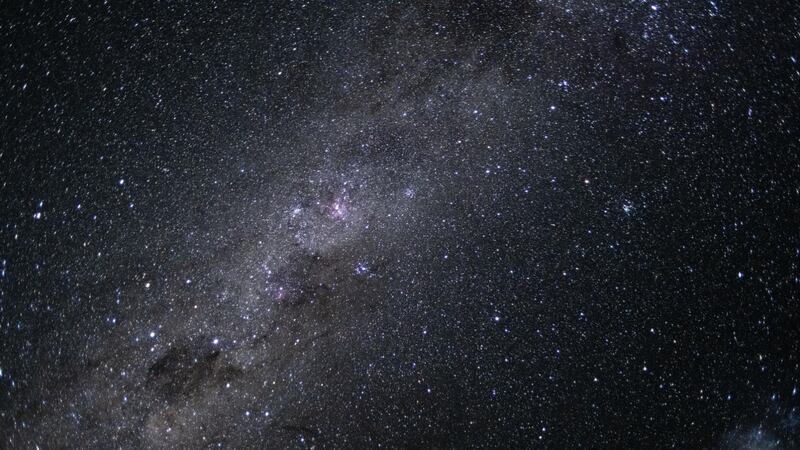
While not quite sure how to describe it himself, Hansen said while in outer space he’d find himself surrounded by stars due to some stars being closer while some were further, but said, “they’re all around you,” adding, “It’s not all just out there, it’s all around you and you’re in it.”
“That takes your breath away and makes you feel very insignificant,” he said. “You see tiny Earth with all of that behind it, yet very powerful as a human race to be able to witness that. We could come together and work together to develop a system that could fly four people out that far in space, and to witness that truly makes you feel powerful.”
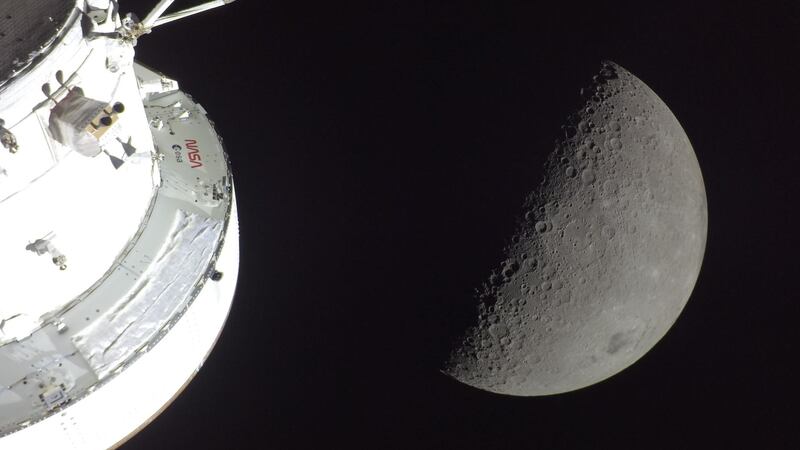
Coming within 6,500 kilometers of the lunar surface, Hansen said he views the moon quite differently now.
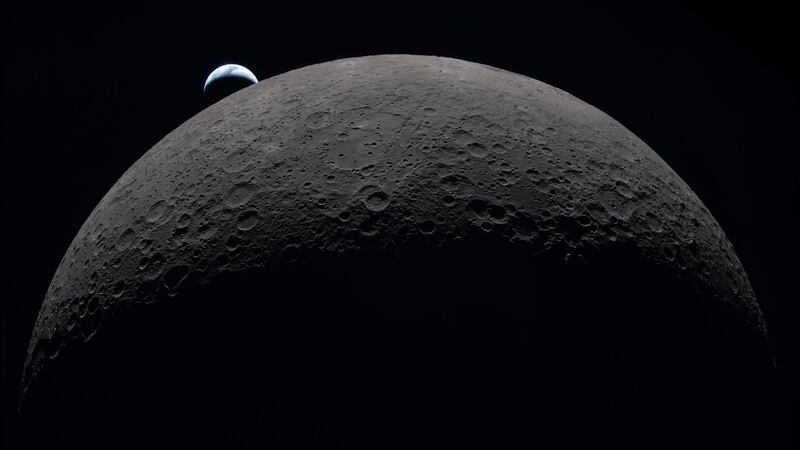
“I’ve been out a few clear nights with binoculars looking at it, and now when I look at the features, the memories of the detail that I saw up close come back,” he said.
He said looking at the moon now reminds him of the “incredible” things he saw, including the textures of different aspects of the lunar surface, crater walls and the Orientale Basin, a lunar mare (a large, dark basaltic plain on the moon’s surface formed by volcanic eruptions), measuring 950 kilometers across.
“It’s an enormous feature and the crater walls are like multiple times the Grand Canyon type feature. But to see the texture of that and to get a sense of what it would be like to be down there on the surface dwarfed by these huge features that come rushing back,” he said.
Passing the torch
On June 9, NASA announced the crew for the next lunar mission, Artemis III. While Artemis II served as a flyby of the moon and an opportunity to test out Orion’s systems, Artemis III will carry out a series of tests in low-Earth orbit to demonstrate critical systems needed for future lunar landings, including a planned crewed mission to the lunar South Pole in 2028.
The crew will consist of Commander Randy Bresnik, Pilot Luca Parmitano of the European Space Agency and Mission Specialists Andre Douglas and Frank Rubio.
Hansen said he didn’t have any advice for the crew as the entire Astronaut Corps moves through the programs together, but said the crew is “very competent,” “very experienced,” and are “very well equipped” due to their knowledge of Artemis.
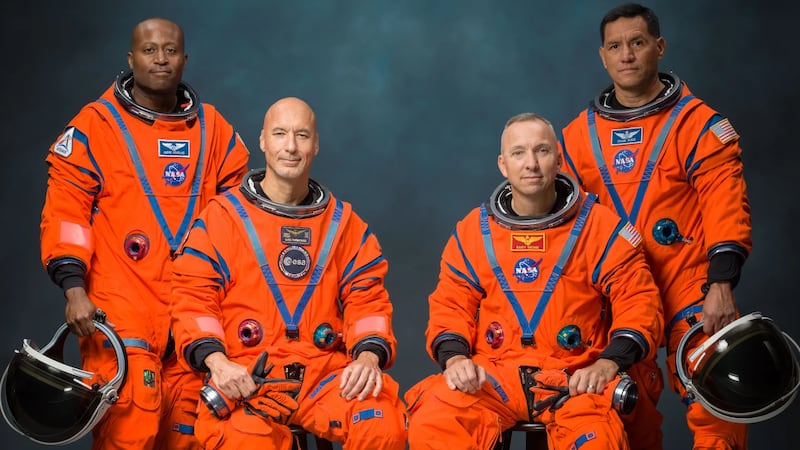
“And then the other thing is, they won’t do this alone. The rest of the Astronaut Corps will lean in with them and help them as well,” Hansen said. “I’m just excited to see them carry on and carry this on into space, test these lunar landers, and then they’ll hand on the torch to the next crew that we’re really hoping will get us to the surface of the moon.”
Canada’s future in space exploration
Now that his historic mission is complete, Hansen is looking back on what Canada has achieved, but more importantly, what lies ahead.
“It’s extraordinary that Canada has now become the second country in the world to send a human into deep space,” Hansen said.
“I always use the opportunity to remind Canadians that wasn’t a gift,” he continued. “We earned that. This is the result of thousands of people over decades who held big visions. They had the courage to take big risks. They saw a better future for Canada by using space and developing innovation and industries around that, and so, Artemis II shines a very bright light on that.”
Hansen said Canada often keeps itself small, but the nation needs to recognize that we have “some amazing gifts to share with the world.”
“We should continue to do bold things and remind ourselves that our can-do attitude and our willingness to come together and collaborate across our country and with others around the world is not as common as we would like it to be. And so, our example in the world is an important one.”
Looking ahead to the next chapters of his career, Hansen said the most important thing is that he uses his experiences and familiarity with space to help Canada identify areas where it can take advantage of opportunities that will be helpful for the future.
He said it’s necessary to “make the same bold decisions, like those first Canadians that decided to be the third country in the world to build a satellite and fly it, or those bold Canadians who took on the challenge of being the first in the world to create space robotics.”
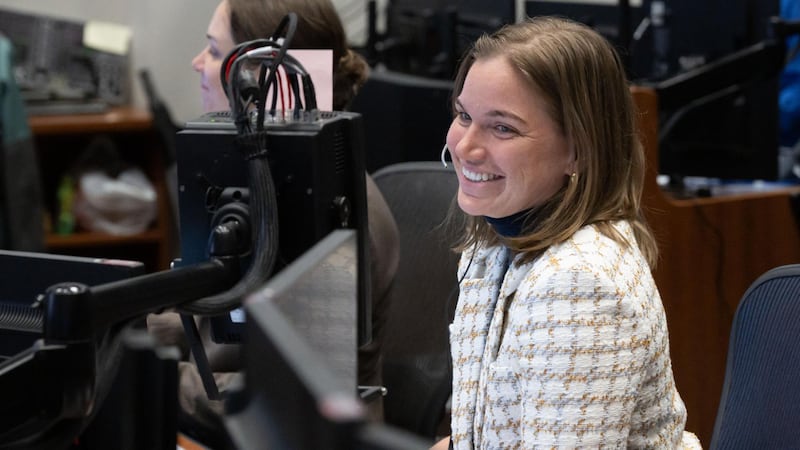
Hansen said there is a great opportunity right now for Canada in many areas that’ll help improve the lives of Canadians, and such knowledge should be shared with international partners. He concluded that this collaboration and ambition will be how we’ll see people such as Jenni Gibbons – a fellow Canadian from Calgary, Alta. who served as lunar capcom, the voice between the crew aboard Orion and Mission Control back in Houston, Texas – “spread her wings in space.”
“I’m very committed to making sure that those opportunities are highlighted and that we can take advantage,” Hansen said. “I love seeing Canada get in there and get things done.”
With files from CTV News National’s John Vennavally-Rao