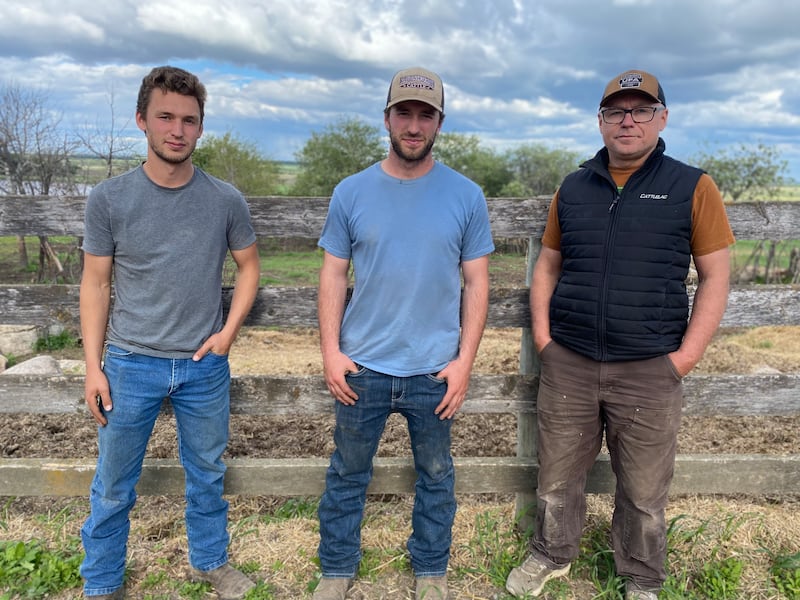
MELFORT, Sask. - Cashe, Beau and Jeff Stevenson represent two of the three generations currently operating their family farm.
26-year-old Beau Stevenson, grew up farming near Melfort, Sask., about 175 kilometres northeast of Saskatoon.
He got into the industry full-time six years ago when he joined his grandfather, father and younger brother.
At that time, they were just grain farming, but the operation was too small to support all four of them and their families.
“As a young guy getting into this, it’s not very affordable or economical buying land,” Stevenson said, which makes it hard to expand grain operations. “We knew we needed to diversify from the beginning to comfortably make a living.”
Beau and his brother Cashe, pushed to restart the family feedlot and bring in a calving operation.
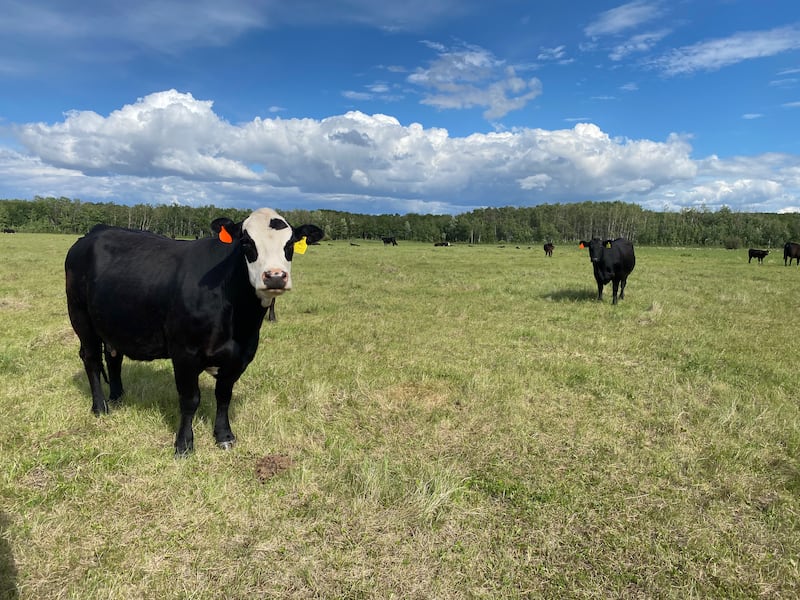
The Stevensons’ grain farm sits around 5,000 acres with 2,000 head in the feedlot and another 550 head in their cow-calf herd.
Cashe Stevenson, 24, says it has not been easy carrying on the farm for the third generation with increased input costs and uncertainty around commodity prices.
“Cash flow-wise, it’s a killer, he said. “It’s extremely difficult to make those payments, especially when you have low yields.”
Diversification has helped keep them afloat, he added.
“When you have fluctuating grain markets, our cows seem to stay steady or the other way around, he said. “If cattle prices ever go back down then hopefully grain prices are there to prop it up.”
Amid the struggles, there are more farmers leaving the industry than there are entering it, according to Farm Credit Canada (FCC).
“I’m not surprised by it,” said Jeff Stevenson, Beau and Cashe’s dad.
“It’s a lot of risk. It’s a lot of work, especially what we do. We basically work 365 days a year, with the livestock and grain farm.”
The exodus is largely driven by retirements. FCC estimates about 60 per cent of Canadian farmers are over the age of 55 and 40 per cent are expected to retire by 2033. The vast majority don’t have succession plans.
“The land doesn’t farm itself,” said Darren Baccus, executive vice president of Agri-Food, Agri-Business Alliances and FCC Capital. “As Canadians, when we lose primary producers, the risk is that our farmland ceases to be operated as a farm.”
The financial hardships, high costs and stress of the industry are deterring the younger generation from getting involved, Baccus said.
The price of farmland increased more than nine per cent in the last year, which Baccus said makes it increasingly difficult for young farmers to enter the field and for smaller operations to expand.
“We are seeing that small to mid-size family farm really being challenged to remain an independent farming operation,” Baccus said.
Succession planning is ‘a momentous event’
Rebecca Purc-Stevenson, a psychology professor at the University of Alberta, is researching family farm succession.
She found only 12 per cent of farmers had written succession plans.
“The broader concern is for agriculture in general in Canada,” she told CTV News. “It’s going to affect food production and rural communities,”
“Canada really needs that next generation of producers and supporting farm transition succession planning is really about supporting families, communities and that long-term sustainability in agriculture,” she said.
Purc-Stevenson said it is important for farming families to talk about the future and what each member of the family wants.
“Start early and start small,” she said. “We think of succession planning as a momentous event or experience, but it really is something that is a process and ongoing conversation.”
At the Stevenson family farm, Beau and Cashe Stevenson said they are ready to help take the operation into the next generation, despite the long hours and hard work.
“There’s some pressure to continue to make sure that it is successful and thrives,” Cashe Stevenson said.
“Nobody wants to be the generation that screwed it up for their kids.”

