Britany Fecteau of Beauharnois, Que., has become the first person in Canada to undergo a rare procedure designed to protect fertility in women receiving pelvic radiation therapy for pelvic cancers.
Fecteau, 29, had her first son six years ago. At the end of last year, she discovered a lump in the groin area, which tests later confirmed as Hodgkin’s lymphoma.
She learned that treatment could affect her fertility and put her into early menopause.
“It was really difficult. It was hard for my loved ones too,” she told CTV News. “I was trying not to worry too much and to stay positive because I wanted to be strong for my son.”
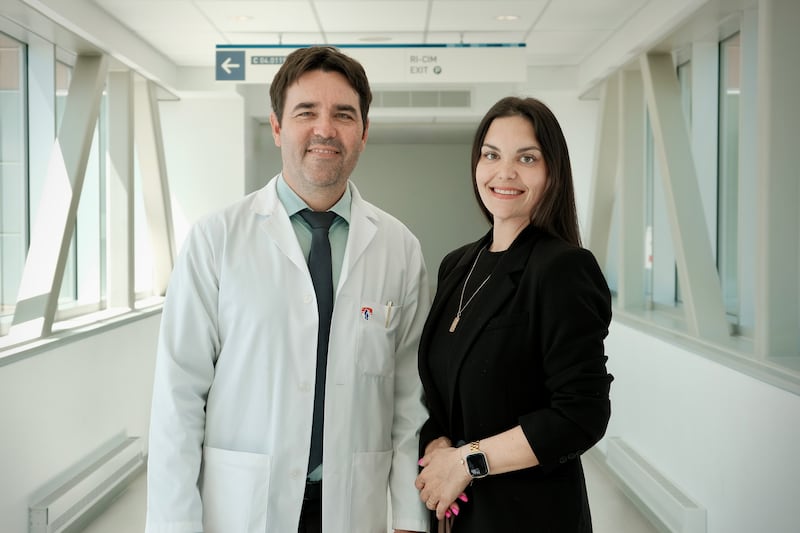
Dr. Reitan Ribeiro, a gynecologic oncologist at the McGill University Health Centre (MUHC), developed and performed the surgery Fecteau underwent. She says she believes it was a stroke of luck to learn she may be a candidate for the procedure.
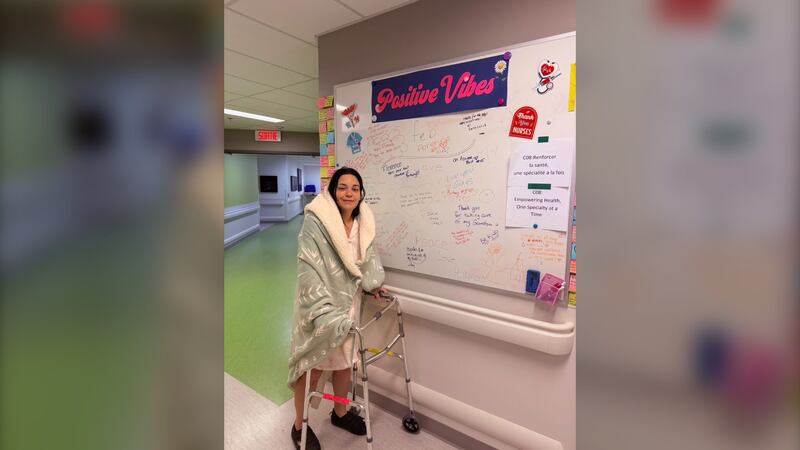
“I know that now this surgery saved me, thanks to Dr. Ribeiro. It saved my fertility but it also prevented me from going into early menopause.”
New hope for young adults with cancer
The surgery is known as a uterine transposition, in which the uterus, ovaries and the fallopian tubes are moved up into the upper abdomen during the first surgical procedure to protect them from the radiation field during radiation therapy, since radiation can damage reproductive organs even at low doses.
The uterus, ovaries and fallopian tubes are then moved back to its original position in a second procedure after radiation therapy is completed.
Dr. Ribeiro has performed the surgery more than 45 times worldwide, resulting in six natural pregnancies carried to term.
The procedure is meant for patients with pelvic cancers that do not involve the reproductive organs, such as some colorectal cancers, lymphomas, and other cancers located in the pelvis. It is not typically used for uterine, ovarian and cervical cancers, which directly affect the reproductive organs.
He says this surgery is a new hope for young adults with cancer navigating family planning. It considers not only treating the patients but also the long-term effects of treatment, according to Dr. Ribeiro.
“We are bringing more hope to the patients regarding their fertility, and I think it’s important because it shows a desire to improve patients’ quality of life,” he told CTV News.
“It’s not just about treating cancer, it’s making sure they can enjoy life, and getting patients back to all their potential of life.”
Growing need to innovate
Up until now, the main option to preserve fertility before cancer treatment has been to stimulate the ovaries via artificial stimulation, retrieve eggs and freeze them.
But this process delays the start of cancer treatment and relies on assisted reproductive technology, which can be expensive for patients and only allows a limited number of eggs to be collected. Above all, if radiation damages the uterus during cancer treatment, a woman can’t carry a pregnancy.
As cancer cases in young patients are increasing, particularly rectal cancer, Dr. Ribeiro says there is a growing need for more innovative, comprehensive treatment that considers not just treating the cancer, but also patients’ lives after treatment.
“I think we need to still keep our minds open and look for other sources of preserving fertility, in cancer and in other situations,” he said.
“This surgery is something that for many years was something that nobody considered even trying, because it was kind of impossible. Then we realized that sometimes you can find a way.”
“I think many of the treatments we do, we can innovate.”

