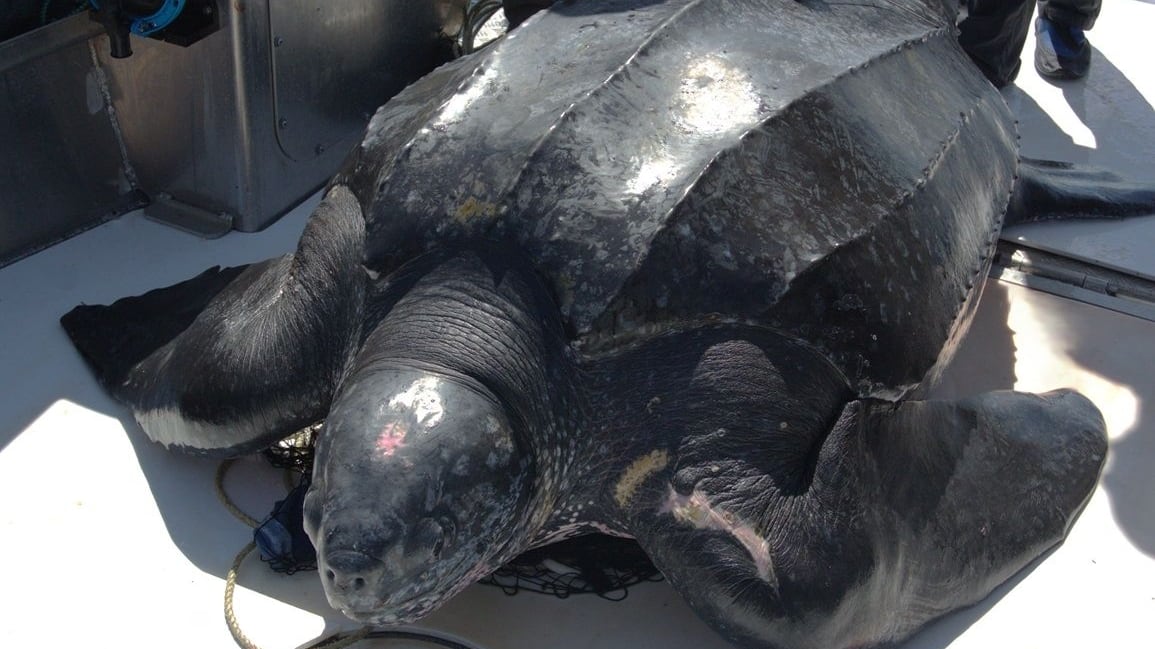
Nesting season is underway for leatherback sea turtles, many of which will crawl on tropical beaches to lay their eggs at night.
Nova Scotian scientists have been tagging the turtles in Atlantic Canadian waters and tracking their migrations for nearly 30 years.
Dr. Mike James, a biologist and sea turtle unit lead for Fisheries and Oceans Canada (DFO), says this season, international partners have reported sightings of eight turtles their team had tagged.
“Eight turtles reported back to us in a single nesting season, ID’d as animals we’d instrumented or microchipped is a lot,” says James.
Turtle sightings
Some were spotted in Martinique, French Guiana and the coast of Trinidad.
James says the coast of Trinidad is a common location for sightings as it’s home to the largest remaining colony of leatherbacks, but he points out it’s in serious decline like the rest of them.
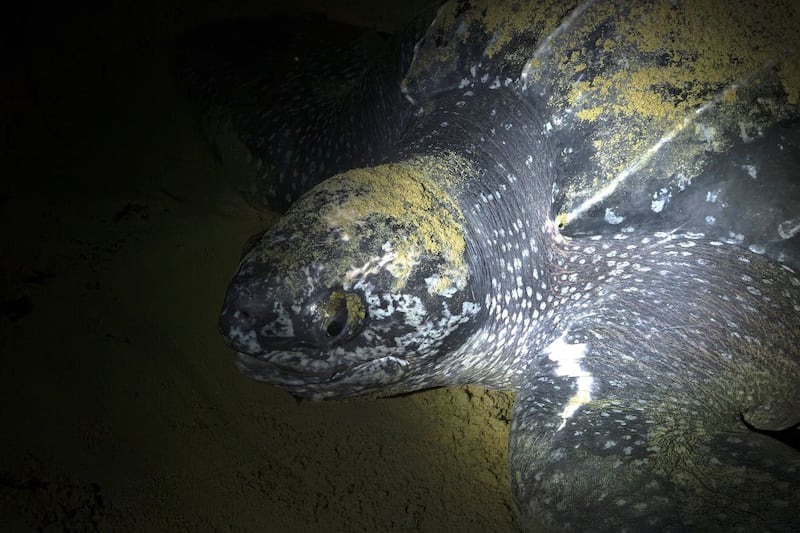
James says luck and collaboration play a big part in the research process.
Decent weather conditions are necessary to go offshore on fishing boats, then spotting the turtles at sea, successfully tagging them, and getting international partners out to specific beaches to observe the turtles in time can all be hit-or-miss.
“You can go for days without seeing a turtle,” he says.
His research group handled more than 500 turtles in Canadian waters over its years of operation. Mature females nest every two to three years, so it can come down to guesswork if they’ll lay eggs or not, and even when they do, the night provides cover.
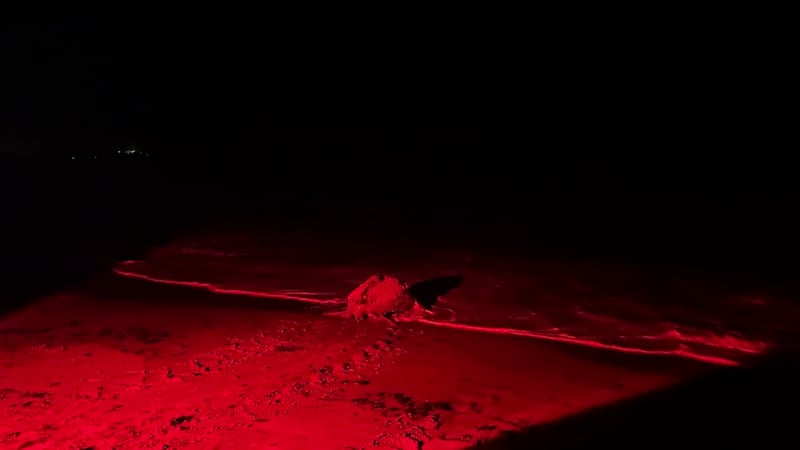
“Most turtles go undetected when they come up and nest,” says James. “I should also say all the males are never seen again unless they wash ashore or are entangled and ID’d as such.”
So, the eight turtles sighted this season were celebrated by the research community.
One of them was tagged last year on July 9. The team watched her satellite location through the winter as she made her way down to South America and wandered off French Guiana to a known nesting area.
“We got excited because we figured she was going to nest there and we know people there,” James says.
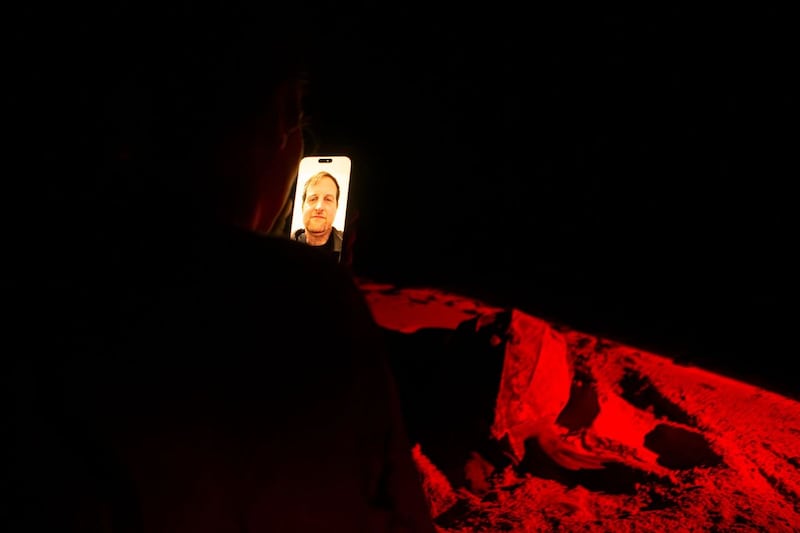
He contacted a non-government organization in the area called Association Kwata. He spoke with the head of the group, who assembled all his volunteers and tracked down the beach locations the turtle could emerge from the water.
“At that point, it was kind of entertaining for me because I was talking to people on WhatsApp in the middle of the night, 2 a.m., they’re showing me the turtle,” says James. “I’m asking them different things in French and they’re patiently letting me meander through my best attempts to communicate.”
Sea turtles in Atlantic Canada
James says many Canadians are unaware the leatherbacks frequent Atlantic Canadian waters.
He says they can be found in Atlantic Canadian waters every month of the year, with the majority occurring in summer and fall from offshore waters to the Scotian Shelf, Gulf of St. Lawrence, and south coast of Newfoundland, feeding on a rich buffet of jellyfish.
“This is the United Nations of leatherbacks, they’re coming from Costa Rica, Panama, Columbia, French Guiana, Trinidad, St. Croix, Grenada, Venezuela, they’re coming from all these colonies,” says James.
Thirty years ago, when his research was just beginning, he was also shocked to learn about the presence of the leatherbacks off Canada’s coast.
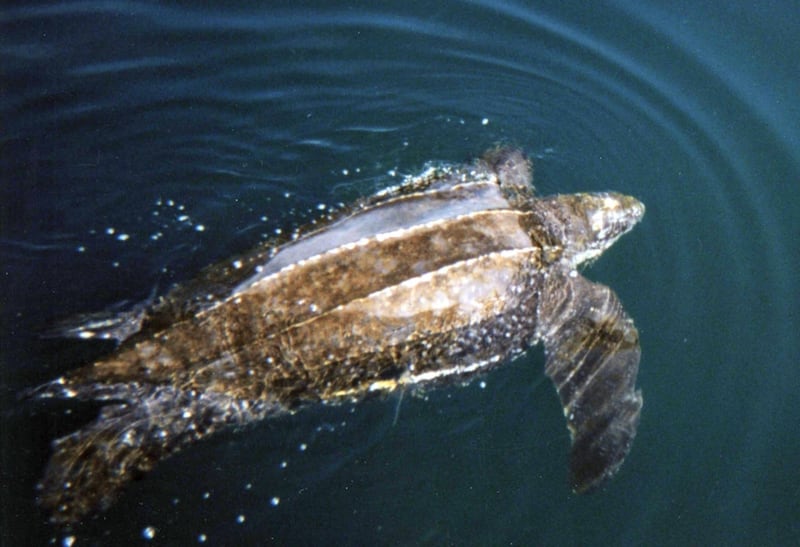
He says he ran excitedly to ask fishermen about sea turtles.
“They were like, ‘Yeah, we see them,’ yet it was amazing because the science community was kind of in the dark up here at that time.”
He went on a trip with one of the fishermen who promised they’d spot one. That day they went around 20 miles offshore of southwest Nova Scotia.
“I thought, ‘Oh, this is crazy, it’s a needle in a haystack’ — and it continues to be like that, it seems, every time we go out — however, that day luck was on our side and he just casually told me after we’d been out four or five hours, ‘There’s one of your turtles there,’” says James.
“I’ll never forget it; I ran up to the roof of the fishing boat and just sat up there and watched it.”
At that point, James says he got hooked on seeing the leatherbacks at sea.
In 1999, he wondered if he could get a permit to catch one and see where the turtles go from there.
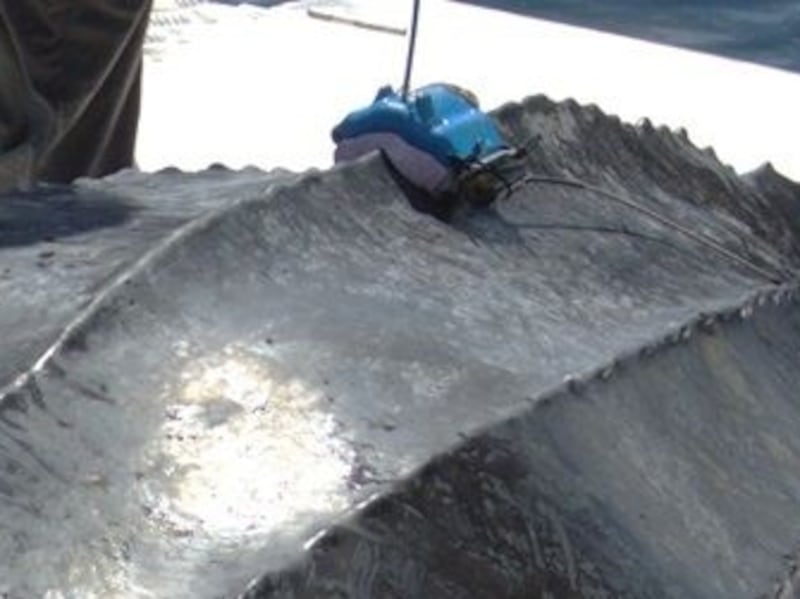
They developed the program to live capture them, sample them, record measurements and equip them with instrumentation, everything they’ve done for the 28 seasons since.
Using the data
They’ve used tracking technology to discern where the turtles were returning, which colonies they belonged to and which beaches they nested at.
Of the turtles spotted this season, one was tagged in 2003, one was tagged in 2005 and three were tagged last summer.
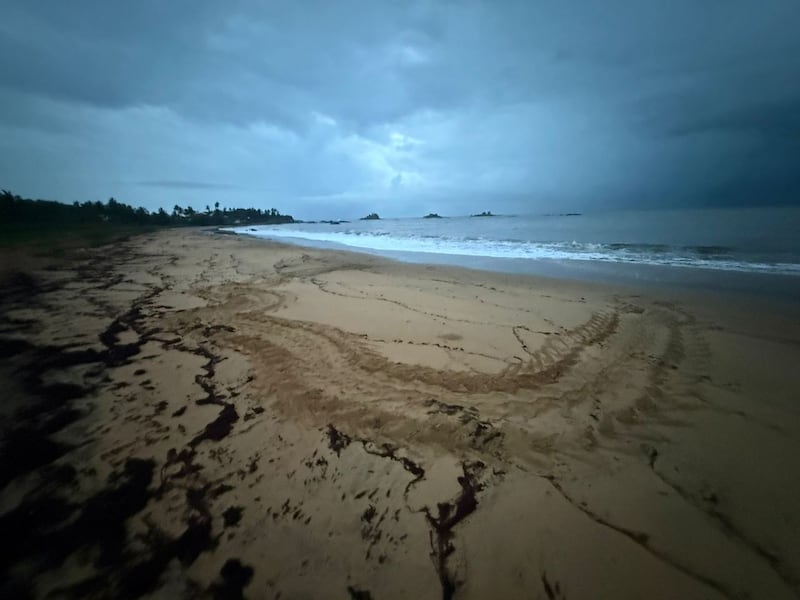
The data from this decades-long research can be used to pinpoint important areas for leatherback populations, track their physical growth and numbers.
“It’s nice to figure out what population they belong to and more than anything else, that they’re still alive because the populations, all these nesting aggregations are in decline and the turtles are facing an uncertain future for sure, and that’s why they’re listed as an endangered species in Canada,” says James.
For more Nova Scotia news, visit our dedicated provincial page

