
With the provincial government’s new benefit plan for Albertans with disabilities is about to launch in just over a week, the change remains confusing and controversial for many.
Right now, more than 80,000 Albertans use the existing benefit program, Assured Income for the Severely Handicapped, better known as AISH.
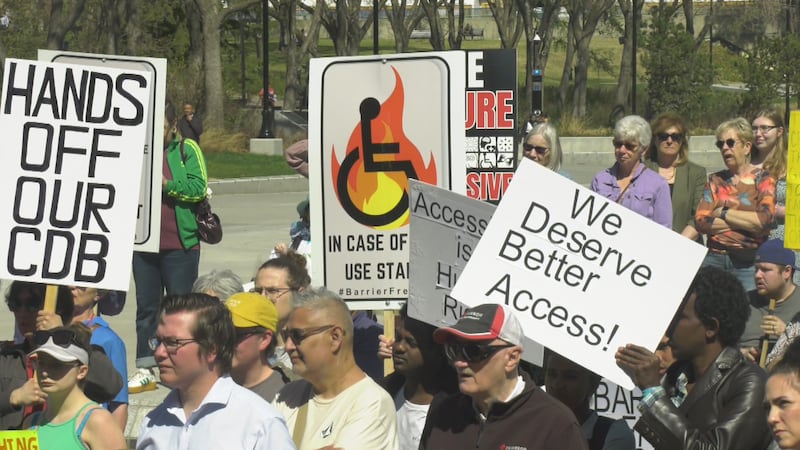
It provides a monthly benefit of $1,940 for clients, but the benefit is reduced for those who also receive the federal government’s Canada Disability Benefit (CDB) of $200 per month.
- Sign up for breaking news alerts from CTV News, right at your fingertips
- The information you need to know, sent directly to you: Download the CTV News App
Alberta is the only province that follows a policy of reducing the monthly benefit based on the CDB, says Gillian Petit, a senior research associate with the department of economics at the University of Calgary.
Petit’s work involves reviewing government policy changes and has examined the Alberta Disability Assistance Program, or ADAP, in detail.
In July, ADAP will kick in and drop the existing AISH benefit by $200.
This means ADAP will provide $1,740 for clients monthly and $1,540 per month for ADAP clients who also receive the CDB.
Petit says both figures, even if they are affected by the province’s clawback of the CDB or not, put recipients well below Canada’s poverty line.
“Right now, under AISH, a single adult receiving the maximum benefit are $525 per month below the poverty line. Right now, AISH clients cannot afford a basic standard of living in the city of Calgary,” she said.
“When we move onto ADAP, what’s going to happen is that ADAP clients are now going to be $725 below the poverty line. It’s going to push people deeper into poverty.
“In my opinion, ADAP is not enough.”

By now, all existing AISH recipients should have received a notice giving them information about their specific situation – whether they will remain on AISH, transition to ADAP or be affected by any other regulatory changes.
Anyone who meets the criteria for automatic AISH approval do not need to take any further action, but those clients who transition to ADAP will receive a $200 monthly transition benefit – the same as their existing AISH benefit – until Dec. 31, 2027.
There is no estimate on how many people will be able to stay on AISH and how many will be forced onto ADAP, Petit says.
“It is expected that it will be the majority of AISH clients moving to ADAP,” she said.
“That transition itself is not appealable. You can’t go in and appeal that decision. What you can do, though, is you can reapply to AISH.”
ADAP clients can earn more while on benefits: province
The province says ADAP’s core benefit rate is higher than other disability programs in Canada, offering about $300 more per month.
A $700 employment income exemption applies, meaning single ADAP clients can earn up to $700 per month without their benefit changing.
“Employment income above $700 per month will be gradually deducted starting with less than a cent per dollar and increasing significantly approaching $45,000 employment income per year,” the province said.
ADAP clients who are parents can earn $1,100 before their benefits are impacted, while their AISH or ADAP cohabiting partner can earn $1,500.
Under AISH, single or parent clients can earn only $350 before their benefit is impacted, the province said.
“This will be the highest limit for employment income while receiving financial benefits of any comparable disability income assistance program in Canada,” the province said.

Petit says the Alberta government believes to close the gap between the available benefit and the poverty line, ADAP clients will be able to get a job.
“That sounds great until you look at the numbers. If you look at the numbers, as of March 2026, only 15 per cent of AISH clients were employed. This means 85 per cent of AISH clients have no employment,” she said.
For ADAP clients to be as financially comfortable as they were under AISH, Petit says they would need to earn $2,136 per month.
“To put that in perspective, they’re going to have to work between 30 and 39 hours a week at minimum wage,” Petit said.
“What we’re doing is asking a population with a very low employment rate, who experience real complex barriers to employment to go out and find employment – not only a little employment, but significant amounts of employment.”
Petit says the objective of ADAP is a great idea, especially when it comes to giving supports to Albertans with disabilities to gain employment, but that’s where the policy slips up.
“However, the province hasn’t released their employment strategy. They say there will be all these great employment programs, but there’s no real information released about what these are going to look like.”
AISH not going away, but it is changing
When ADAP officially rolls out next month, AISH will still exist for those that need it, the province says.
The government says the main benefit of ADAP will be the ability of recipients to earn employment income.
Petit says its these employment conditions that are the main difference between the two programs.
“Persons on AISH will be persons who are permanently disabled and permanently unable to work while persons on ADAP are people who are disabled but may be able to work.”
All individuals who possess severe disabilities that make them permanently unable to work will remain on the old program and receive the same benefits.
The application process for both benefits requires recipients to be assessed to determine if they are deemed “able to work.”
“To be medically eligible for ADAP, the severe disability must be determined to significantly restrict but not prevent a person from being employed,” the province said.
If an ADAP client’s ability to work or medical condition changes, they can apply for an AISH assessment. The Alberta government will cover the cost of one medical assessment for current AISH clients who switch to ADAP and later choose to be assessed for AISH.
“This support is not time-limited and will be available whenever clients choose to access it,” the province said.
Petit says the drawback of this policy is the paperwork involved.
“Filling out these forms – they’re time-consuming, it does require access to an approved medical practitioner,” she said.
“It’s a lot of work, a lot of documentation for people who have already documented their disabilities and medical conditions for this government.”
One advantage of ADAP
Petit says there is a silver lining on the ADAP thundercloud, albeit a small one.
“For persons on ADAP who start to earn too much employment income to keep getting ADAP benefits, they are going to be able to retain the health coverage that’s under ADAP,” she said.
“That’s a positive change because right now, if an AISH client has too high of an employment income, they no longer get those AISH health benefits. They get moved onto a supplementary health benefit program and eventually that goes away as well.”
Existing AISH clients also have a lot of supplemental programs available to them that they can apply for to cover the cost of medical supplies, medical transportation and child care, just to name a few.
Petit says there’s nothing in the legislation that appears to suggest these supports will be available to ADAP clients but admits not many AISH recipients use these supplemental programs in the first place.
“A lot of AISH clients don’t make use of them, don’t know about them, don’t use them or don’t want to use them because it requires more documentation, of course.”
In her reading of the legislation, Petit says the benefits could remain for AISH clients, but the government hasn’t confirmed anything.

Government says disabled Albertans sought change
According to the government’s website, the move came from a desire of Albertans with disabilities and the organizations that support them to have access to more opportunities.
“They stressed the importance of providing pathways to employment for individuals who are able to work but still require support,” the province said, adding AISH does not provide those supports.
While some critics of ADAP suggest the provincial government ignored disabled Albertans and other groups on refinements to the program, officials say these claims are false.
“For more than a year, the ministry of assisted living and social services engaged with medical professionals, subject-matter experts, service providers, Albertans with disabilities, their families, and disability advocates and organizations across the province. Thousands of Albertans participated in engagement via roundtables, telephone town halls, written submissions, meetings and an online survey,” the province said.
Petit says if any engagement with disabled Albertans took place, there’s no public record of it.
“They did do consultations with employers and employment spaces that hire persons with disabilities – I have seen those consultations – but I have not seen consultations with persons with disabilities.
“It’s very unclear and who and where and what these consultations entailed.”
- Danielle Smith addresses disability benefits following death of AISH recipient
- Man dies after expressing fears over Alberta disability transition
- Alberta disability advocates warn new benefit program will deepen poverty
Other modifications under ADAP include changes to pension income for spouses or cohabitating partners (first $1,200 of spousal pension income fully exempt and 25 per cent of remaining amount exempt), a different allowance for couples who both receive AISH or ADAP and a “recalibrated child benefit rate.”
The province says monthly child benefits are $300 for the first child, $117 for the second, $88 for the third, $59 for the fourth and $30 for each additional child.
Officials say this new formula will “increase child benefits for approximately 7,000 families who receive disability income assistance and will be applied starting the August 2026 benefit period.”
ADAP relies on ‘one size fits all’ approach
Petit says even if ADAP allows disabled Albertans to earn more, it ignores a lot of the basics.
If the real goal was getting more Albertans with disabilities, she says the province could have just kept AISH as-is and offered more employment supports.
“(It’s) a good goal, but the way they have gone about this is a poor policy design,” she said.
“They’re moving, en masse, AISH clients who aren’t employed, who have real barriers to employment, all over to this ADAP program without asking them (if) they want support with employment.
“They’re just being told they’re getting this support with employment and reduction in benefits.”
Petit says AISH clients “are a very heterogeneous group of people.”
“They’ve got different disabilities, what they can do for employment will differ drastically from one person to another.
“To treat them as a group – it’s a strange move.”

