


Including two major roads in the North and a nuclear waste facility in Ontario, the federal government gave some insight Wednesday into a selection of projects that could soon be designated within the national interest under the Building Canada Act.
Two days shy of the one-year anniversary of the legislation’s enactment — which gives government sweeping new powers to approve major projects of national interest — the government hopes to make a decision on the three projects this fall.
“We all know that the North is central to Canada’s economic future,” Transport Minister Steven MacKinnon told reporters in Yellowknife on Wednesday. Through its vast reserves of critical minerals, or its strategic importance to our defence and securities, the North has the resources, the potential, and of course, the people needed to succeed.”
The announcement is highly bureaucratic and does not make clear what exactly changes with this step. A background document describes the move as “initiating the process to consider listing the first set of projects under the Act.”
“This does not mean the decision has been made to list these projects under the Act,” a government official told reporters on background Wednesday. The official stressed consultations will be carried out with Indigenous rights holders and provinces and territories before decisions are made.
Bill C-5 — dubbed the Building Canada Act — was originally proposed and fast-tracked through the House of Commons as a way to get national interest projects approved quickly, though the government has yet to designate a project as such.
“National interest listing of the project would provide confidence that key federal permits and authorizations for the project will be granted, shifting Canada’s regulatory focus from ‘whether’ the project should proceed to ‘how’ it will proceed,” reads a press release from the federal government on Wednesday.
In an interview with CTV Power Play on Wednesday, host Vassy Kapelos asked MacKinnon about the timeline of passing a bill to expedite building projects in the national interest but not to use it for over a year, and whether that is the opposite of acting with urgency.
“That ignores the other work that’s gone on in the past year,” MacKinnon said, pointing to the creation of the Major Projects Office.
“And perhaps one of the most misunderstood things about the Building Canada Act was bringing this focus to bear, such that projects could get approved with or without these new provisions,” he added. “And so, you’ve seen us moving with a lot of urgency, and today we’ve identified projects where the unique ability of that bill to help us compress timelines for building projects of national significance has come into play.”
What’s on the list?
Two of the projects are in Canada’s north: the Grays Bay Road and Port in Nunavut, and the Mackenzie Valley highway in the Northwest Territories.
A trio of federal ministers — MacKinnon, Natural Resources Minister Tim Hodgson, and Crown-Indigenous Relations Minister Rebecca Alty — were on hand for the announcement in Yellowknife Wednesday morning.
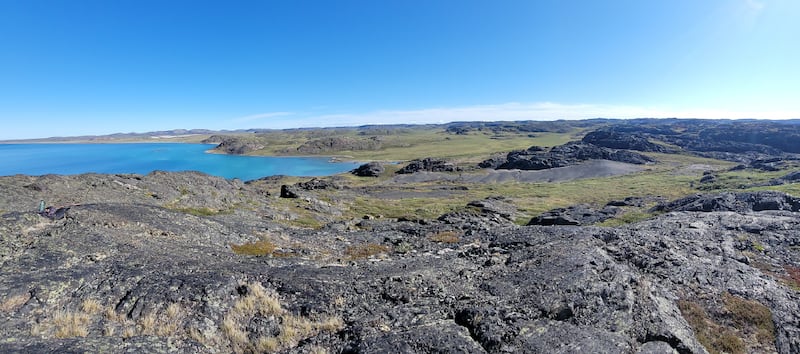
The Grays Bay Road and Port is an approximately 230-kilometre all-season road that would stretch from the Nunavut border to a port and airfield on the Arctic Ocean. Government officials described it as important for both “natural resources development” and for an “expanded military presence in northern security.”
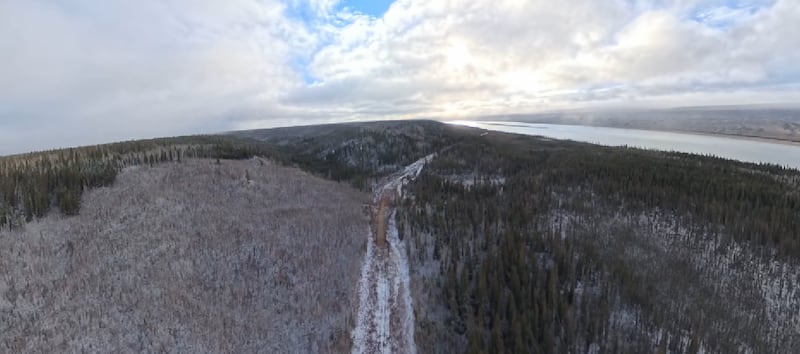
The Mackenzie Valley Highway promises an “all-season economic corridor” up the Mackenzie Valley, connecting three isolated communities year-round and providing better access to two others.
Government officials stressed the Building Canada Act doesn’t remove requirements for environmental assessments or Indigenous consultations. The Building Canada Act is part of the legislation known as C-5, which faced lots of pushback from Indigenous groups and others who were concerned about exactly that.
The government also announced a third project it’s considering designating in the national interest: a nuclear waste facility.
That project is officially called the Nuclear Waste Management Organization’s deep geological repository for used nuclear fuel. The Township of Ignace and the Wabigoon Lake Ojibway Nation in Ontario were picked as locations in 2024. On Monday, the federal government unveiled its nuclear strategy.
During the briefing, government officials referenced another 23 projects that the Major Projects Office is still working on, which it says “has shown significant progress” overall.
Conservatives criticize timeline
Conservative MP and parliamentary transport committee vice-chair Dan Albas said in an interview with CTV News on Wednesday that he wishes the announcement about possible nation-building projects “had happened a year ago.”
“Conservatives believe that the government should have used the tools that Parliament has given it,” Albas said. “Instead, we see again more emphasis on announcements rather than results for Canadians.”
“Today’s announcement doesn’t secure our sovereignty, nor does it help our economy,” he added. “And Conservatives want to see big projects built, but this is not what (Prime Minister) Mark Carney promised.”

