A Japanese-American woman with advanced Alzheimer’s disease showed noticeable improvements – which included reciting personal memories – after she took a high dose of magic mushrooms, according to a case study.
The woman was in her 80s and had a 10-year history with the disease, five of which saw her mostly communicate using one-syllable words, according to the case study published in the Frontiers in Neuroscience journal in May.
Advanced Alzheimer’s disease is generally considered a “stage of irreversible functional decline,” the report stated.
As a result of the disease, the report said the woman had cognitive problems, had trouble swallowing and controlling her bladder, and suffered a “severe reduction in spontaneous communication.”
For the study, the woman was given five grams of orally administered psilocybin-containing mushrooms. She initially experienced symptoms such as “clinically suspected hyperthermia, profuse sweating, and a prolonged deep sleep-like state.”
But about 19 hours after taking the mushrooms, researchers say she started to recite personal memories.
She exhibited other “functional improvements” in the following weeks, which included restoring her ability to control her bladder, her ability to dress herself and her ability to have spontaneous social interactions.
A month after the initial session, the patient still maintained some of the improvements. She was given a lower dose of the mushrooms – three grams – in a second session. Researchers noted improvements, such as expressing herself more verbally, showing “spontaneous” humour, and more agility while walking.
Without prompting, she even said: “It is pleasant to come here,” according to the case study.
While experts say the results are promising, they pointed out that the research was still in the early stages.
Despite the temporary “functional improvement” in advanced Alzheimer’s disease, the researchers noted that the findings do not suggest the mushrooms can reverse the disease.
“Advanced Alzheimer’s disease imposes profound loss of autonomy, communication, continence, mobility, and social interaction, generating severe emotional and caregiving burden,” according to researchers. “Current therapeutic strategies at this stage are largely supportive, and meaningful functional recovery is generally considered unlikely.”
‘Low risk and potentially high reward’: psychologist
Zach Walsh, a clinical psychologist and psychology professor at the University of British Columbia, said the research shows signs that psilocybin-containing mushrooms could be effective in treating the disease.
Although Walsh called the potential treatment to be “pretty exciting,” he said more research is needed.
“It seems to be a safe medication, at least, so the risks of something bad happening with psilocybin are low when we’re trying out a new medication,” Walsh, who studies psychedelic drugs and cannabis, said in a video interview with CTVNews.ca on Thursday.
“So, it seems like a low risk and potentially high reward, but at the same time, it’s very early days,” Walsh added.
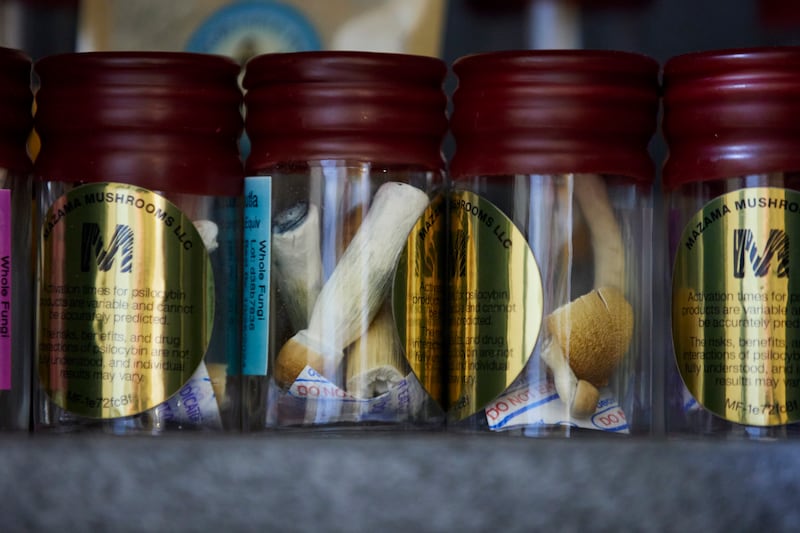
What are magic mushrooms?
“Magic mushrooms” contain silocybin, a hallucinogen or psychedelic drug that can alter how a user sees, hears, tastes, smells or feels, as well as their mood, according to the Centre for Addiction and Mental Health (CAMH) in Toronto.
How have they been used in health care?
Psilocybin is a hallucinogen or one of the active ingredients in magic mushrooms. Although it’s illegal in Canada to possess, sell and produce magic mushrooms, they have increasingly drawn interest for potential therapeutic purposes, according to Health Canada.
“While clinical trials with psilocybin have shown promising results, at this time, there are no approved therapeutic products containing psilocybin in Canada or elsewhere," Health Canada wrote on its website.
Kamaya Lawrence, a clinical research manager with TheraPsil, a Canadian non-profit that specializes in psychedelic health care, said she finds the research to be promising.
“I think it’s really interesting that (the patient) regained … a wide domain of functions…,” Lawrence said Thursday in a video interview from Ottawa, adding that she would love to see the study replicated in “similar controlled clinical trials.”
However, she said she has concerns that in a frail, elderly person, the treatment could be “life-threatening.”
“I would say this definitely isn’t something that folks should be trying at home or to give their loved ones who have Alzheimer’s disease, and the authors of this paper also wouldn’t suggest that people do it,” Lawrence said. “So, the hope is real, but the path must be through these clinical trials,” she added.
Experts say there isn’t enough evidence yet to use magic mushrooms to treat conditions, such as depression, anxiety and addictions, but there are efforts pushing for access to the drugs.
Conservative MP Corey Tochor introduced a bill earlier this month that would make it easier for doctors to prescribe magic mushrooms to treat mental health and addiction problems.
Lawrence is also pushing for the bill to pass. She told the House of Commons about a 2016 study on magic mushrooms that found after six months of five-week sessions, 80 per cent of cancer patients experienced substantially reduced depression and anxiety, as well as increased well-being and life satisfaction.
While magic mushrooms are illegal in Canada, Lawrence said, Health Canada has authorized clinical trials, including some of which she designed, and individuals with severe health conditions could gain “special access” to the drugs.
With files from CTV News Regina’s Daniel Reech

