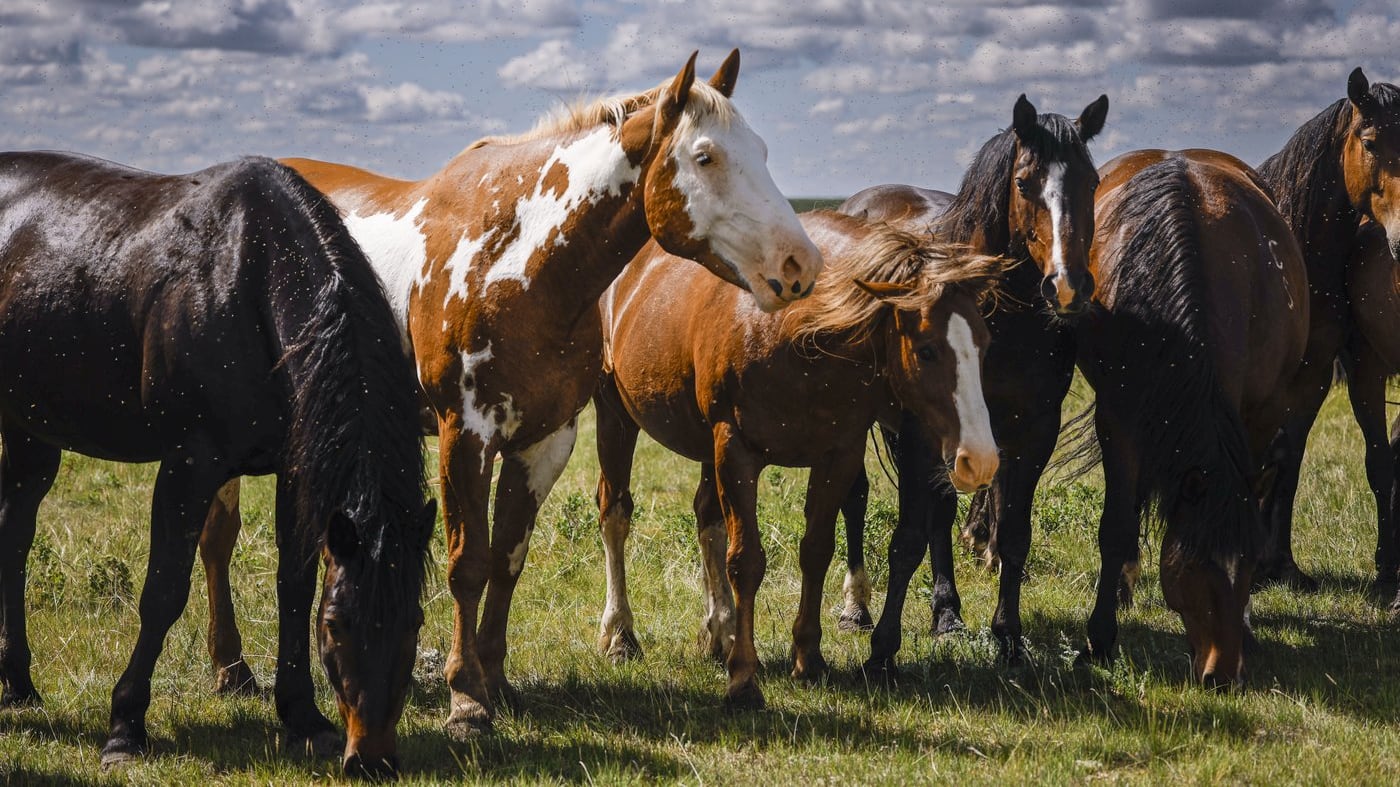
HANNA, ALTA. — Welcome to Stampede Ranch, where horses named Bubbles and Disco Party are coached and conditioned into four legs of back-arching, jaw-pounding fury.
It’s a sprawling spread near Hanna, northeast of Calgary, and bigger than the land area of Manhattan.
Established in 1961, the ranch has been raising hundreds of top-tier bucking horses for rodeos across North America. About 200 compete throughout the year, including the upcoming Calgary Stampede.
Each horse competes between 10 and 15 times a year.
On a recent sweltering day, ranch manager Tyler Kraft swats away swarms of mosquitoes while he checks on 140 horses, most of them two- and three-year-olds and a few that have already competed this year.
“I do know all their names. It would be weird if I didn’t,” Kraft said with a chuckle.
“You know these horses are bred to buck ... no different than a racehorse that’s bred to race.”
It grew out of necessity, said Kristina Barnes, director of agriculture and Western events for the Stampede.
Barnes said the annual rodeo and festival, which begins Friday, realized it needed better bucking broncos. The Stampede and others have benefited.
“When you travel to rodeos and see the Calgary Stampede brand called out in Houston and Fort Worth and San Antonio, it’s pretty cool. When you see a Stampede horse, they’re often bigger, stockier. They have a little bit of draft horse in them, so they do show up. They’re flashy.”
About a dozen mares and a handful of gangly long-legged foals sway and gallop around in two nearby pastures. The ranch tries to have about 50 foals per year to bring in the next generation of bucking horses.
Kraft, a former bronc rider, has been manager at the ranch since 2009. He said the breeding program is carefully done and he has high hopes for every horse to become a champion.
“I think they all are. You’re striving to have the best and breed the best of the best and hope for the best. These horses are bred to do this,” he said.
“We’re going back six or seven generations out there.”
Kraft said training begins when the horses are about three years old. There’s chute breaking and putting on a halter and a front cinch, which includes strapping on a 10-kilogram weight, called a dummy, to their backs.
A year later, a rider gives them a first taste of what the sport is all about.
“There’s nothing that can simulate like a human getting on a bucking horse. There’s nothing you can do to duplicate it,” Kraft said.
“The first time is no different than putting your kids on the school bus ... hopefully you’ve raised those kids up good enough that they can come back safe and sound. And that’s kind of the idea behind the dummying up, to the first time they go on a truck to go to their first rodeo.”
Destined for greatness
Disco Party is destined for greatness, said Kraft.
The 10-year-old won the title of best horse in Fort Worth, San Antonio and Houston. She was runner-up to horse of the world last year and second best bareback at this year’s National Finals Rodeo.
“She’s always had the signs of being something special,” said Kraft. “It just took her a bit of time to get her pattern, and the last couple of years she’s been exemplary ... she’s never taken a day off.”
Some of the greatest Stampede horses have the best names: Exotic Warrior, Xplosive Skies, Tiger Warrior, Weekend Departure, Stampede Warrior.
And, of course, there’s the legendary Grated Coconut.
“The horses are named based on the year that they’re born — there’s an alphabetical letter that is connected to that year and then recognizing their mother’s name as well,” said Barnes.
“You’ll see a lot of names repeated through our bucking stock names, like Warrior or Bubbles will show up. So, lots of unique names.”
This report by The Canadian Press was first published June 28, 2026.
Bill Graveland, The Canadian Press

