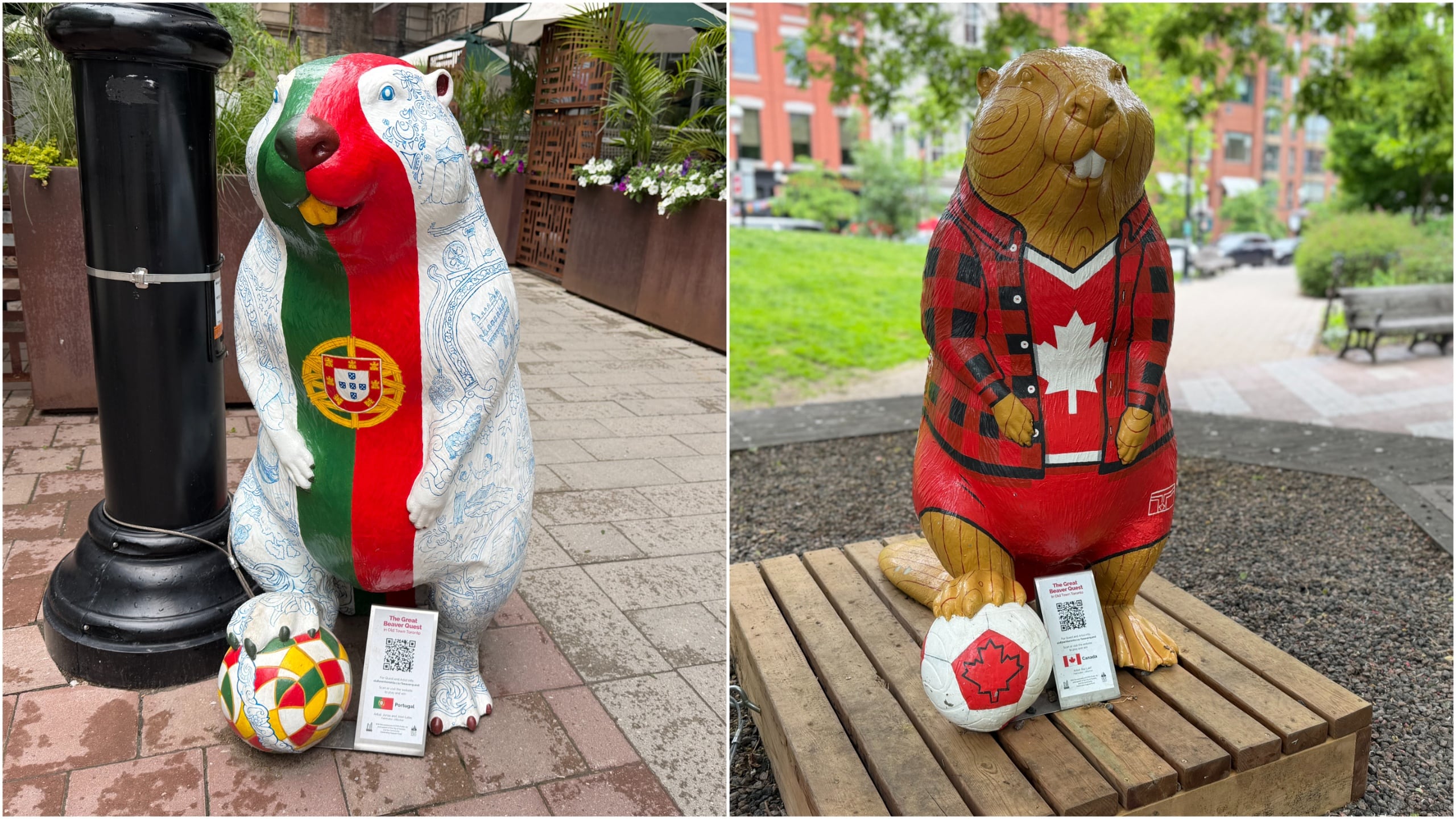
They’re hanging out on sidewalks, in building lobbies and outside popular restaurants. The four-foot-tall rodents will likely stop you in your tracks. The colourful cast of characters is welcoming people to a downtown Toronto neighbourhood.
“I love when people pat it,” says Jonas Lobo, patting the top of the head of a beaver sculpture representing Portugal. Perched along Wellington Street, he’s admiring his own work. Lobo is proud to see the Portugal-inspired beaver on display, a piece he worked on with his father.
“I never would have imagined something like this happening, so it’s nice to be able to get involved and showcase my pride for my Portuguese heritage and Canada,” said Lobo.
The first and second generation Portuguese Canadian father-son duo were the only pair out of dozens of artists selected to decorate the beavers, which honour the 48 counties participating in the FIFA World Cup. In total, there are 51 beavers, with a few extras marking the historic neighbourhood during this global event.
“It was nice to bring both of our approaches to art together and pick his brain about traditional forms of art,” said Lobo, speaking of the opportunity to work with his father. “We used a lot of inspiration from Portuguese blue and white tiles, which is called ‘Portuguese azulejo,’” he added.
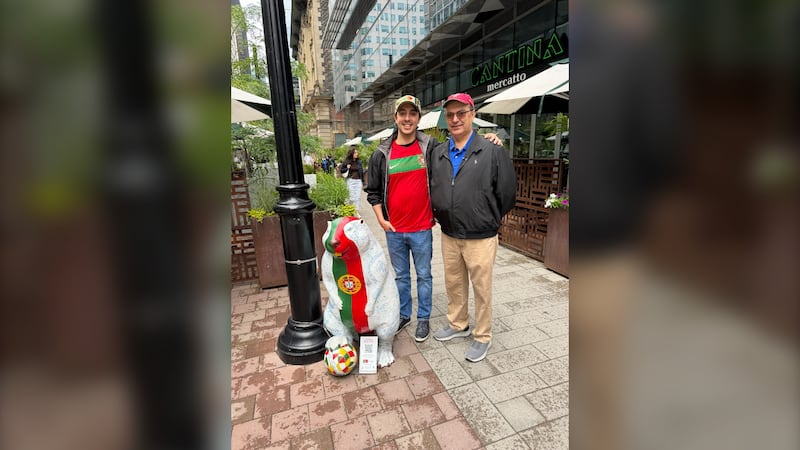
They are both artists, but don’t share the same craft or live in the same city. It was a chance for the two to come together by blending their love of culture, country and sport.
“I coached soccer for 16 years… multiple teams. And participating in this way in the World Cup gives me the illusion that I’m part of the big the big tournament!” said José Lobo, who arrived in Canada forty years ago from Portugal.
Raising his family here, José Lobo is a proud Canadian but during this tournament it’s his passion for his homeland that really shines through in his work. He is thrilled he was able to capture different areas of Portugal within their design.
“When you move close, you get all these interesting details that leads you to want to know more about the Portuguese culture and maybe even travel to enjoy the actual monuments alive,” said José Lobo.
The beaver depicts everything – from Portuguese culture, food, architecture and folklore along its side to the colours of the flag covering its face and toothy grin, complete with a soccer ball at its paws.
“I’ve been watching soccer growing up and have so many jerseys in my closet… So, it’s fun to be involved in a way, and be connected with the Portuguese team and the Canadian team and to the event,” said Jonas Lobo.
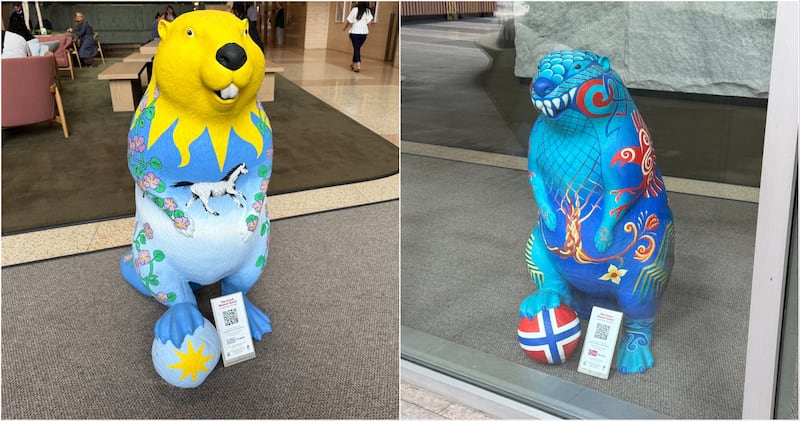
The sculptures were manufactured locally in Toronto, then transformed into a diverse and light-hearted Canadian touch welcoming the world.
This quirky art-installation may be a flashback for many, when Toronto had a herd of hundreds of life-sized moose statues scattered around as an initiative to drive tourism and promote the local arts community, more than twenty-five years ago.
These beavers are part of an online artistic scavenger hunt, extending the buzz of the World Cup into a different part of Canada’s largest city – a neighbourhood called “Old Town Toronto,” which is a few kilometres east of the stadium, where most FIFA fanfare is being held.
“The whole goal of it is to really get people to connect and spend time in our area, and really experience what it has to offer,” said Robyn Posner, director of marketing and events with Old Town Toronto BIA. Posner helped launch the project for the BIA with a local arts organization.
No two beavers are alike, as the artists’ personality shines through their work, each with a connection to the country theirs represents.
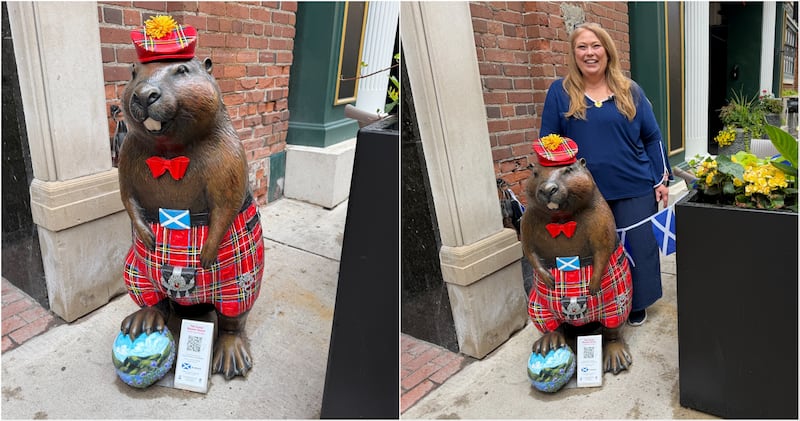
Margaret Cresswell is bringing her beaver to life, while giving a nod to her family heritage with what she calls the “Kilted Canuck.”
“Of course, she had to be wearing a kilt so she’s wearing a classic tartan,” said Cresswell, the artist behind the Scotland beaver which stands proudly outside Scotland Yard pub.
“To participate in the public art realm is one of my amazing inspirations… And to be able to do something that would be in the public realm during such an amazing event in Toronto was something that I couldn’t pass up,” she said.
Cresswell studied art in Italy but had a grandmother from Scotland. That is where her heart lies, she said, adding that taking the opportunity to study the heritage and work with the colours of the flag to really make this beaver “pop.”
The symbols of Scotland are emblazoned onto the beaver, including thistles on the soccer ball and Nessie, the mythical monster from Lock Ness.
“I think the beaver is a symbol of strength for Canada and I hope that everyone who visits here and sees our beaver sculptures, understands that we are people of strength and from around the world, as each beaver is dressed in the 48 different countries,” Cresswell said.
These beavers will continue to live on in the hearts and minds of dedicated fans even when the tournament is over. They’ll be auctioned off with proceeds going to charity.

