On Monday, children across Charlottetown will head to the city’s summer day camp program, but one will be left out, a decision his family says comes down to disability and a lack of support.
Jeff and Meagan Mackenzie registered their nine-year-old son Toby, who has Down syndrome, for the first week of the publicly run program in early May.
On June 9, roughly three weeks before it was set to begin, the family says they got a call from an assistant program co-ordinator in the city’s Parks and Recreation Department. They say they were told staff aren’t trained to care for “a child like Toby,” and that he was described as a “safety concern,” leaving them scrambling to find another plan.
“Our initial response was shock,” said Jeff. “It was a very, very frustrating moment.”
“We have to work next week. We needed the summer care for a reason,” said Meagan. “We were really disappointed.”
Questions over support
The program features a different theme each week, with some sessions booking up well in advance. Toby took part in five of them last summer, his parents said, and was taken off waitlists to participate in at least two.
During a single field trip, Toby received one-on-one support, which the family says the city has pointed to as part of its reasoning.
But the Mackenzies say that was an exception, not his everyday reality at camp. While Toby receives extra support for academic reasons at school, his parents say he doesn’t need that level of help during physical education, music, recess or lunch. They also say they’re confused – and angered - by the suggestion he poses a safety risk.
“He’s not a flight risk. He’s not violent,” Meagan said. “He may push or shout from time to time, but I don’t know a nine-year-old boy that doesn’t.”
Other families speak out
When they contacted the city to ask how the assessment was made, the Mackenzies say the response came “too little, too late,” eight days after their email was sent, and after their Facebook post about the experience had generated roughly 1,000 shares.
“We heard from many families who had been denied (their) children’s access to summer camps because of everything from Down syndrome, to autism, to ADHD, to even a peanut allergy,” Meagan said. “My question is, ultimately, who is deciding who gets to go, how is that decision process being made, and where is the line?”
In a statement sent to CTV News on Friday, the City of Charlottetown said privacy considerations prevent it from commenting publicly on the circumstances of any individual registration or participant.
“The City is committed to making its recreation programs as inclusive as reasonably possible and is willing to work with families to support participation in its camps and recreation programs,” a spokesperson said.
‘A missed opportunity’
The Mackenzies are knowledgeable about what it takes to increase inclusivity, not just on a personal level, but professionally.
Jeff said his career began nearly 20 years ago at a summer camp supporting people with disabilities. He went on to study human services and now works at Tremploy, a local non-profit that supports adults with intellectual disabilities. He’s also heavily involved with Special Olympics.
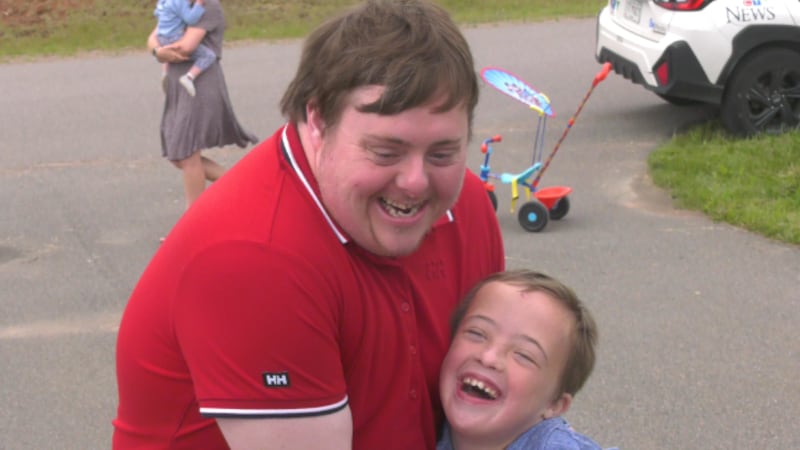
They also know the benefits first-hand. At that summer camp nearly two decades ago, Jeff met Edison, a man with Down syndrome who has become like family and even served as a groomsman in the couple’s wedding.
“We just feel like maybe people wouldn’t be so afraid of disability if they were more exposed to it,” Meagan said. “It’s a missed opportunity for everyone.”
The family says they will be meeting with the city soon. Their goal is to advocate for more inclusive programs for children with both visible and invisible disabilities, hoping the city will communicate with families before making decisions, train lead staff to handle accessibility needs and make its assessment process clear.
“It’s 2026. A child attending a summer camp because of a disability shouldn’t be an issue,” Jeff said.

