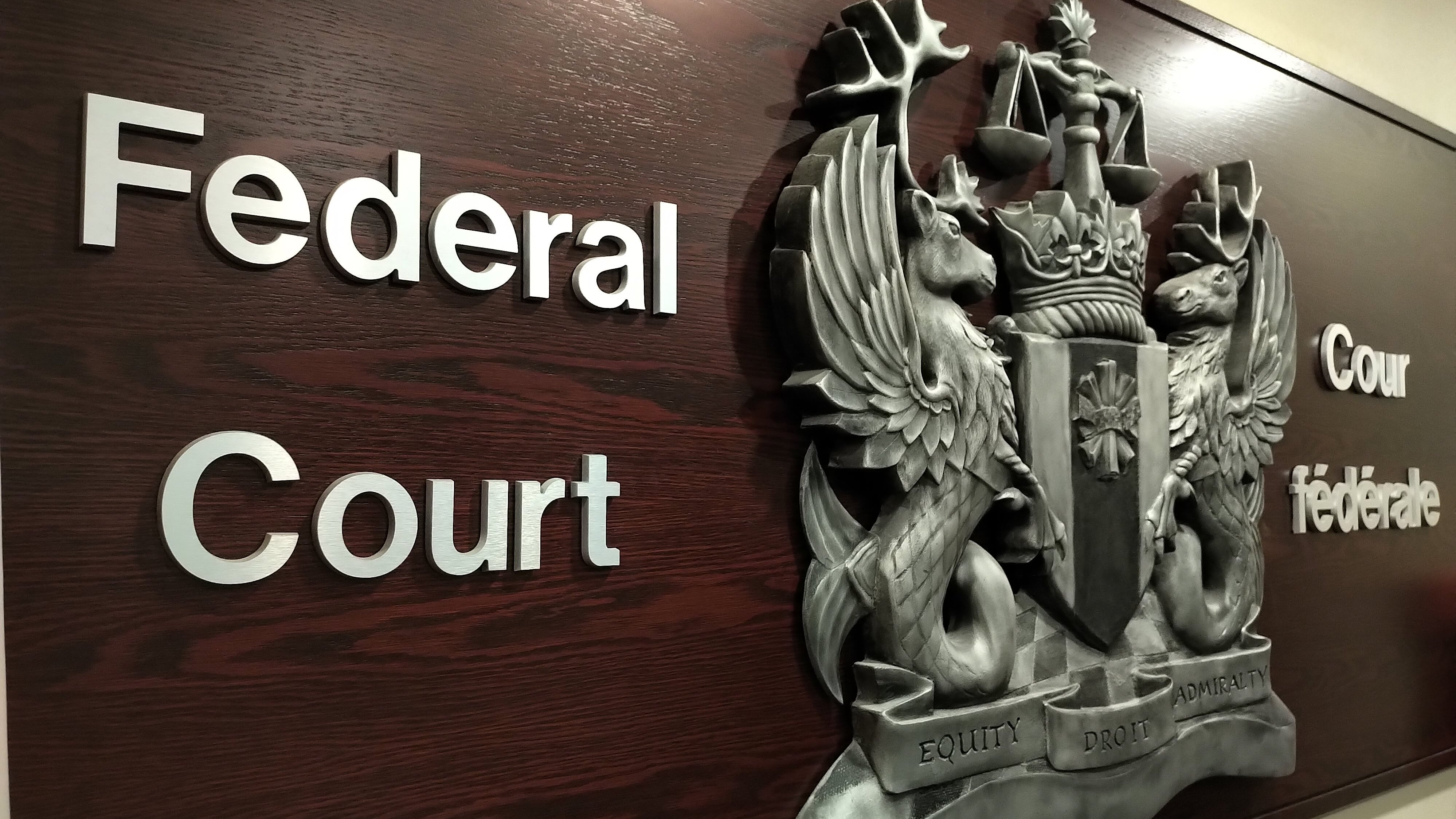
Individuals applying to have their immigration-related cases reviewed are facing weekslong delays for their documents to be processed, as the Federal Court says it is seeing an “extraordinary increase” in filings.
Canada’s national trial court said that its registry, which handles administrative duties, may take up to eight weeks to process immigration-related documents, though it aims to process documents within 48 hours.
“However, due to the continuous and significant surge in filings with the Federal Court, processing times have increased,” the Federal Court stated in a press release on Friday.
Martine St-Louis, acting chief justice of the Federal Court, told CTVNews.ca in a statement on Friday that “the situation is becoming unsustainable.” St-Louis said the number of filings has “considerably increased” in recent years, and has “accelerated in the last two months.”
While the workload has become heavier, there “has not been a corresponding increase in Registry personnel,” St-Louis added.
The national trial court stated that its registry “remains committed to processing documents as quickly as possible and continues to explore solutions to improve turnaround times.”
How bad is the backlog?
The Federal Court shared figures on Friday that reflected the growing problem with backlogs.
According to a press release, new immigration proceedings have grown for a “fifth record-breaking year,” potentially exceeding 30,000 files in 2026. The Federal Court said this figure is almost five times the average annual filing volume between 2014 and 2019, it stated.

Why are we seeing this surge?
The Federal Court makes rulings on federal legal disputes, including immigration matters.
Cédric Marin, an immigration and citizenship lawyer based in Ottawa, told CTVNews.ca in a video interview Friday that individuals will initially submit their applications to the relevant officials, who will decide on the case. If the decision is not favourable, or there is a delay, applicants may seek a judicial review at the Federal Court. The judge will assess the file to determine whether the official’s decision was reasonable, Marin said. If the ruling is in favour of the applicant, the file may be reopened with immigration-related officials.
“People are going to the Federal Court in part because … there’s really no other avenue possible to overturn a decision once you get refused,” Marin said.
The office of the acting chief justice said in an email to CTVNews.ca that the Federal Court has seen an increase in immigration-related filings related to work, travel and study permits, and in 2026, the number of urgent motions to avoid deportation has risen. Mandamus applications, which aim to compel the government to make a decision on the case, have also grown.
The swelling judicial workload is also reflected in non-immigration case filings, which surged 158 per cent in 2025, according to the office.
Judicial review applications have more than tripled since before the COVID-19 pandemic, the office added.
How are applicants affected by the backlog?
Marin said his clients have been frustrated with the backlog. It now takes multiple weeks for the Federal Court to confirm that they have received some filings, Marin said, but it used to take only a day or two.
“It’s causing a lot of inefficiencies and delays,” he said.
It’s also taking between six and 12 months to find out whether the national trial court will approve a hearing, when previously it could take one to three months for a decision, Marin said.
What measures has the Court taken?
The Federal Court said it has implemented “mitigation measures,” but is “operating beyond capacity and facing a historic backlog.”
The Federal Court said its measures include shifting to “mandatory e-filing” about a year ago, as well as introducing digital signatures and digital preservation of judgments and orders, according to the office of the acting chief. The office said applicants are encouraged to submit shorter written arguments, it stopped doing minutes of hearings, and default immigration hearings for certain cases were reduced from 90 minutes to 45 minutes.

