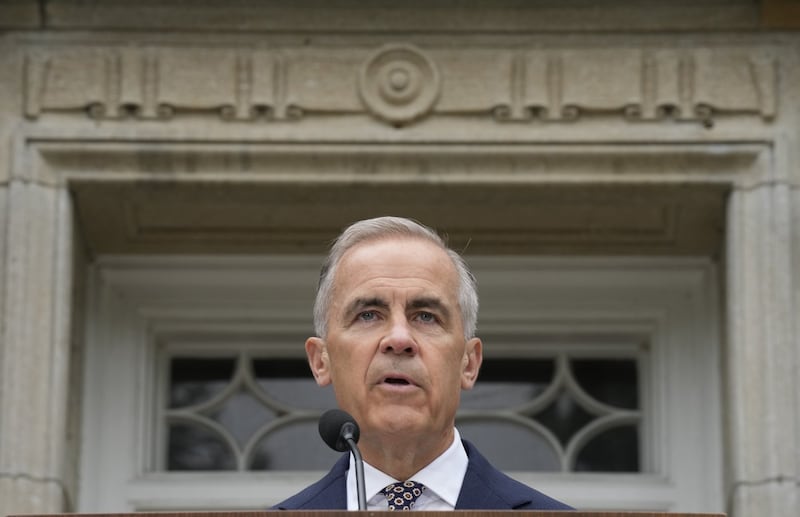
OTTAWA - As Prime Minister Mark Carney attempts to make Canada an energy superpower, he is conceding for the first time that the country’s greenhouse gas emissions will be “higher in the next few years” than projected under the previous government’s plan. The admission came in his second “Forward Guidance” video address to Canadians released on Tuesday.
“In my judgement, that plan was not sustainable over the long term,” Carney said in the 17-minute long video posted to his YouTube page.
The prime minister and his cabinet ministers have been noncommittal about the federal government’s existing emissions targets when asked in recent months.
Without naming his predecessor, former prime minister Justin Trudeau, Carney says the emissions plan he inherited “would have been too expensive” for Canadians who are already struggling with affordability. He also points out it would have “been too divisive for our country in the current environment.”
Carney called Trudeau’s climate plan “well-intentioned and well suited for the times at which it was designed,” but he added “the certainties of the world of 2015 are long gone.”
Trudeau was elected in 2015 on a promise to cut greenhouse gas emissions by 30 per cent of 2005 levels by the year 2030. In 2021, the Liberals went even further, promising to reduce emissions by 40 to 45 per cent by that same target date.
Carney also had sharp words for the energy plan of another Trudeau. He describes how he was a teenager in Edmonton when then-prime minister Pierre Elliott Trudeau introduced the National Energy Program in the 1980s, which was supposed to be a symbol of economic nationalism while guaranteeing set prices for oil and gas. Instead, it made western Canadians feel like the federal government was using them to subsidize cheaper energy for the rest of the country.
“What should have brought us together began to divide us, contributing to a half century of politics that have too often pulled us apart,” Carney said in the video address.
While Carney also said his government is focused on lowering emissions “over time,” he did not provide a target for that goal. In the same breath, he noted how Canada is producing far more oil than the country ever has, claiming only the United States and Russia have increased production more than Canada.
Carney’s admission about emissions targets is his latest walk back from Trudeau-era climate policies. Since becoming prime minister, Carney has cancelled the consumer carbon tax and paused the federal electric vehicle sales mandates to focus instead on offering subsidies.
Conventional energy ‘should come from Canada’
In his video address, Carney connected his energy plan to concerns over Alberta separation and said as much conventional energy “as possible should come from Canada” when “produced responsibly.”
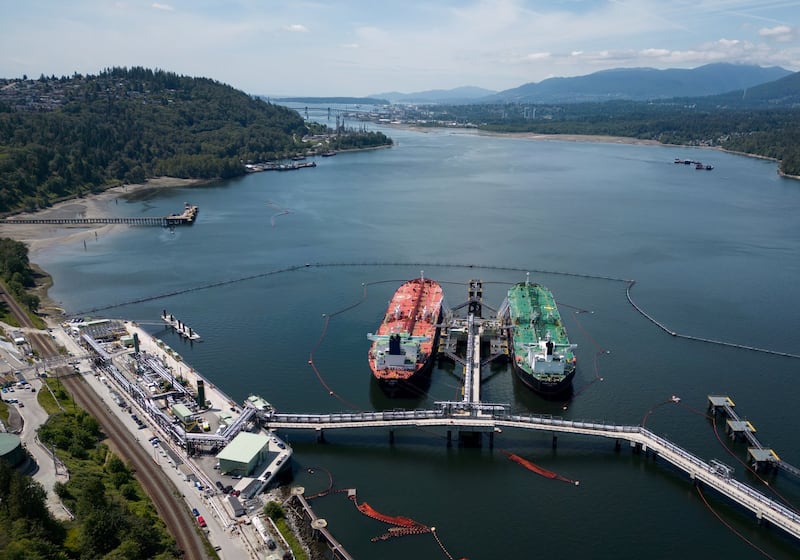
He also touted new access to Asian markets from the West Coast thanks to the Trans Mountain pipeline coming online last year and he promoted the development of a second pipeline with Alberta through the memorandum of understanding which was signed in November 2025.
That strategy was endorsed by the G7 leaders earlier this month in Evian, France, where they committed to diversifying energy supply routes away from the Strait of Hormuz which has become a chokepoint for one-fifth of the world’s oil and gas during the Iran conflict.
“We welcome the potential for Canada to deliver significant additional capacity (in energy stocks) to global markets in coming years,” read part of the G7 joint leaders’ statement dated June 17.
As he did in the last video, Carney used a historical Canadian figure as a way to point towards the future. In April, it was the “Hero of Upper Canada” Sir Isaac Beck, and in this latest video, he told the story of Sir Adam Beck, a Canadian politician who was a fierce advocate for hydroelectricity.
Beck was an advocate for publicly owned electricity grids, and he helped to harness the power of the Niagara River with an 18-storey high generating station that provided clean power for the people of Ontario.
While calling back to that time, Carney also promoted his own national electricity strategy, which hopes to double Canada’s electricity grid by the year 2050.
“We’ll build quickly and at scale to double our energy infrastructure and build a strong Canada that is powered by clean, affordable, and reliable energy,” Carney said.
On the eve of Canada’s 159th birthday and the day before the deadline for the review of the Canada-United States-Mexico Agreement (CUSMA), Carney called for unity and asked Canadians to work together.
“That’s how we build Canada strong for all, and that’s how we must tackle the security crisis through a large collective effort that can accomplish much more than any of us can do alone,” he said.
With files from CTV News’ Bureau Chief Graham Richardson

