GEORGES ISLAND, N.S. - Located in Halifax Harbour and named after King George II, Georges Island is rich in military and British colonial history.
For decades the island was often seen from the mainland but rarely visited.
“In 2020, we finally had the wharf constructed,” said Hal Thompson, a visitor experience officer with Parks Canada. Thompson also noted the new wharf led to the launch of a ferry service.
Now large crowds flock to Georges Island in the summer months.
“There is so much you can learn about Nova Scotia, just doing these day trips,” said Halifax resident Josh Presley, who brought his family to the island as a low-cost, one-day getaway.
Presley is one of more than 20,000 people who visit Georges Island each year. Visitors get to see what life was like on the island when it was a strategic military location. Its fortifications have roots dating back to the mid-1700s.
The island was heavily armed to stave off possible invasion from enemy forces and was considered a crucial link in the Halifax defence complex.
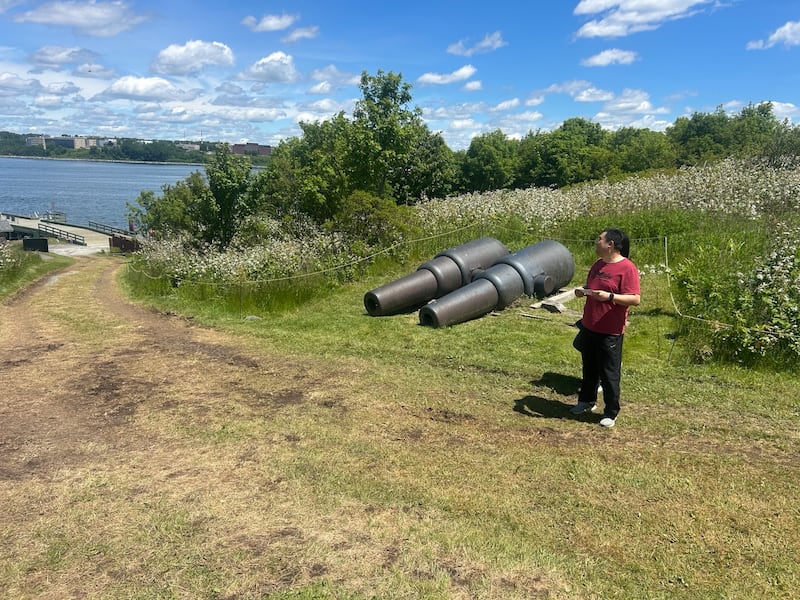
“The military and Halifax considered Georges Island and the forts here, the most strategic coastal defence here in Halifax,” said Thompson.
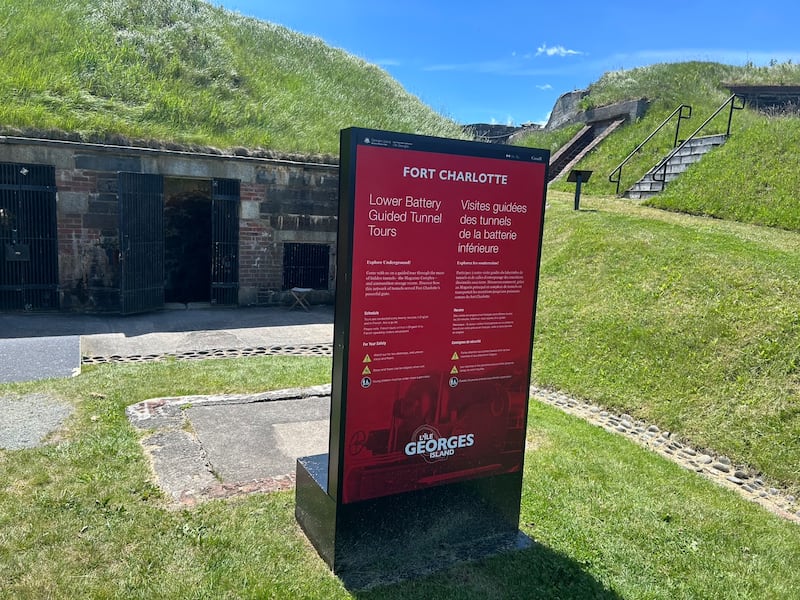
Fort Charlotte, located on the island, was a key defensive installation and was still active as recently as 80 years ago in the Second World War.
“The last troops out here were a small detachment of men, to run the anti-aircraft gun” said Thompson.
As many as 100 people, members of the military and their families, lived on Georges Island in the late 19th and early 20th centuries.
The lighthouse keeper was a permanent resident until 1972.
Now, Georges Island and Fort Charlotte, which were crumbling and neglected during the post-Second World War era, have been fixed up and transformed into a thriving tourist attraction.
“One of the biggest questions we get is what should we do first?” said Symone Patino, a tour guide on Georges Island.
The stone fortifications and the maze of underground tunnels are a constant source of fascination and a main attraction for visitors.
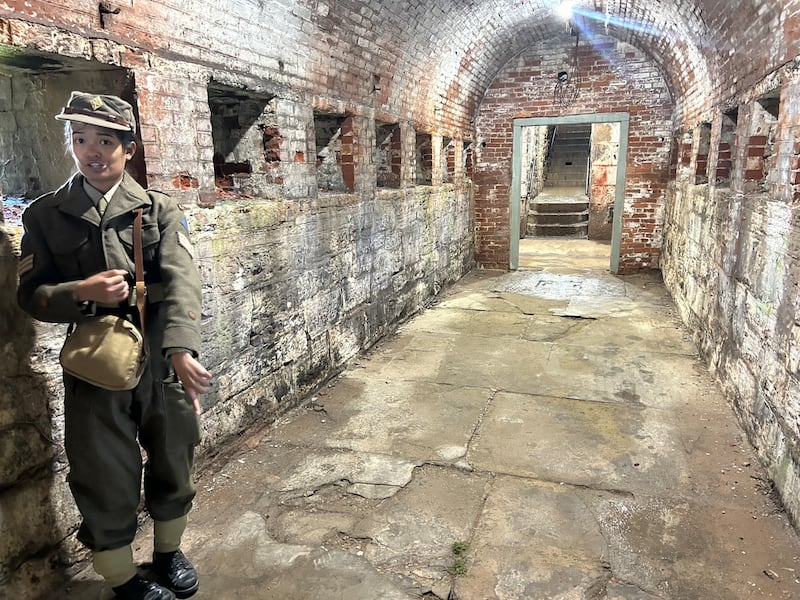
“The tunnels’ main purpose was to serve as a transportation system for black powder,” said Patino. “Which was what you used to ignite cannons.”
The large calibre gun batteries are still in place. They had a range of several kilometres and were always primed and ready to ward off would-be enemy invaders.
“Some of those defences would’ve been used to defend the city from here,” said Patino.
Georges Island was also used by Indigenous peoples long before the British settled in North America.
“Mainly, it was a stopping place and there are depictions of Mi’kmaq people here trading,” said Thompson, who also pointed out some dark chapters of history, including Georges Island’s role in the Expulsion of the Acadians. “The island was used as an internment camp, for the Acadians who escaped expulsion in 1755.”
During the Seven Years’ War, starting in 1756, more than 2,000 French sailors were also imprisoned on Georges Island.
These days, a quick day trip to Georges Island offers tourists a chance to discover what colonial and military life was like on the east coast, hundreds of years ago.
“There is so much history, that we in Ontario didn’t necessarily know about,” said Kay Buckle, who was visiting from Barrie.
It’s a close-up history lesson that serves as a reminder that Georges Island was once home to a thriving and vital island fortress.

