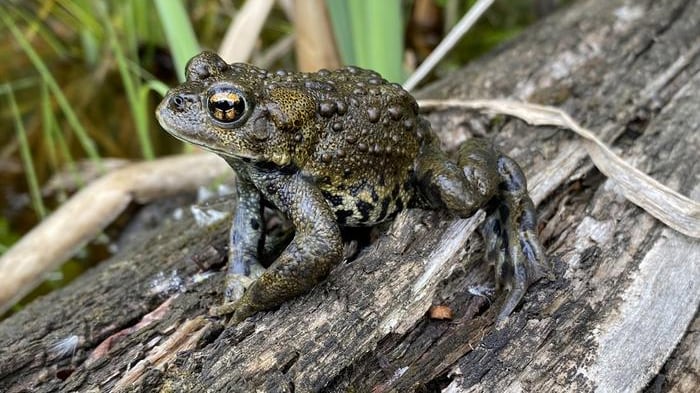
Is there an animal that’s more Canadian than the beaver, moose or Canada goose? It could be a toad that has so far only been found in the Canadian Rockies.
While the other iconic animals have ranges that span the continent, researchers from the University of Ottawa have now identified a genetically distinct western toad population in southern Alberta and B.C. Their study was recently published in the journal Diversity and Distributions.
“Our findings of a genetically distinct group entirely contained to a Canadian province is very unusual,” lead author and University of Ottawa PhD student Jayna Bergman said in a news release. “These genetic results suggest we should be doing more to protect this species.”
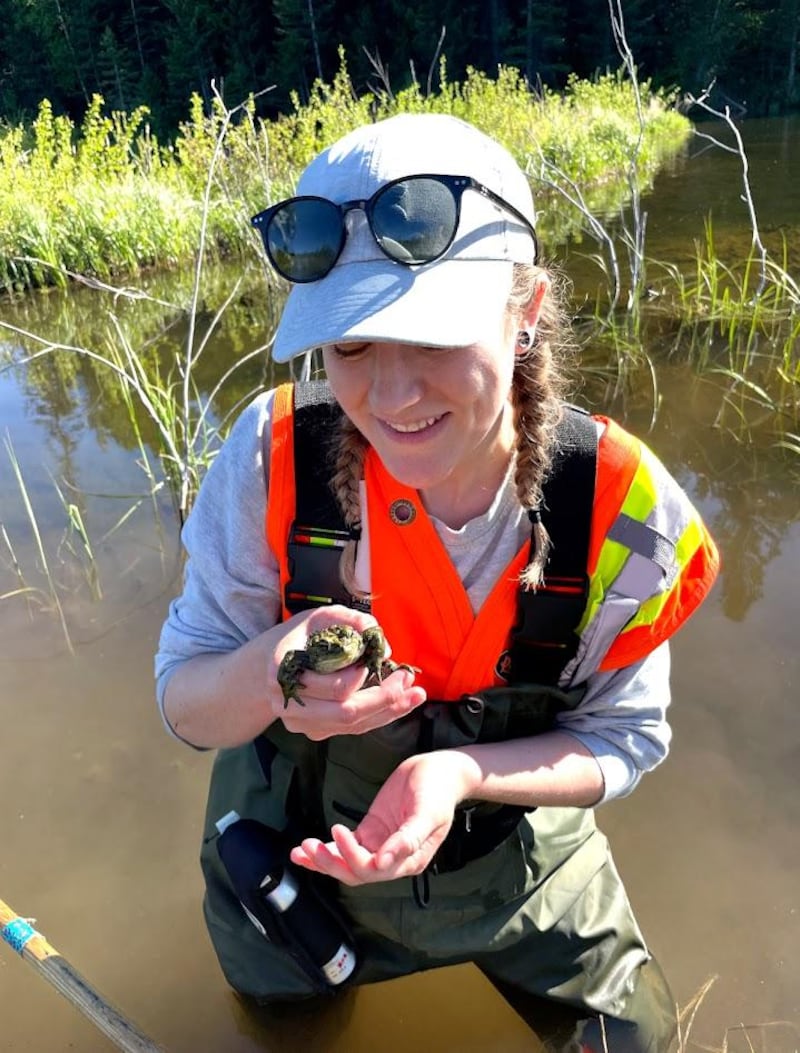
For the study, Bergman and her team ventured through ponds, wetlands and lakes across B.C. and Alberta to collect genetic samples from toads and tadpoles.
Western toads, which have a range that extends from Alaska to Mexico, are generally divided into two distinct populations: those that have vocal sacs and make mating calls, and those that don’t. Curiously, so-called “calling” toads are typically found east of the Canadian Rockies while “non-calling” toads live west of the Rockies and in the species’ southern range.
“This ‘advertisement call’ provides a notable difference in breeding strategies and may be the only example of such an extreme difference in calls within what are considered the same species,” co-author and University of Ottawa assistant biology professor Julie Lee-Yaw explained in the news release.
After analyzing tissue samples from more than 30 sites, researchers learned that in addition to their different geographic distribution, Canada’s calling and non-calling western toads are genetically distinct. Testing also surprisingly revealed the existence of a third and previously undescribed genetic group of western toad that inhabits the southern Canadian Rocky Mountains in southwestern Alberta and southeastern B.C.
The researchers say additional studies will be needed to confirm if the new group’s range extends south into neighbouring Montana, and whether or not they behave more like their calling or non-calling toad relatives.
“Toads in this part of the Rocky Mountains may be unique with respect to their calling behaviour,” the study said. “More comprehensive sampling would also shed light on whether Calling and Non-Calling populations are different enough to warrant recognition as different species.”

