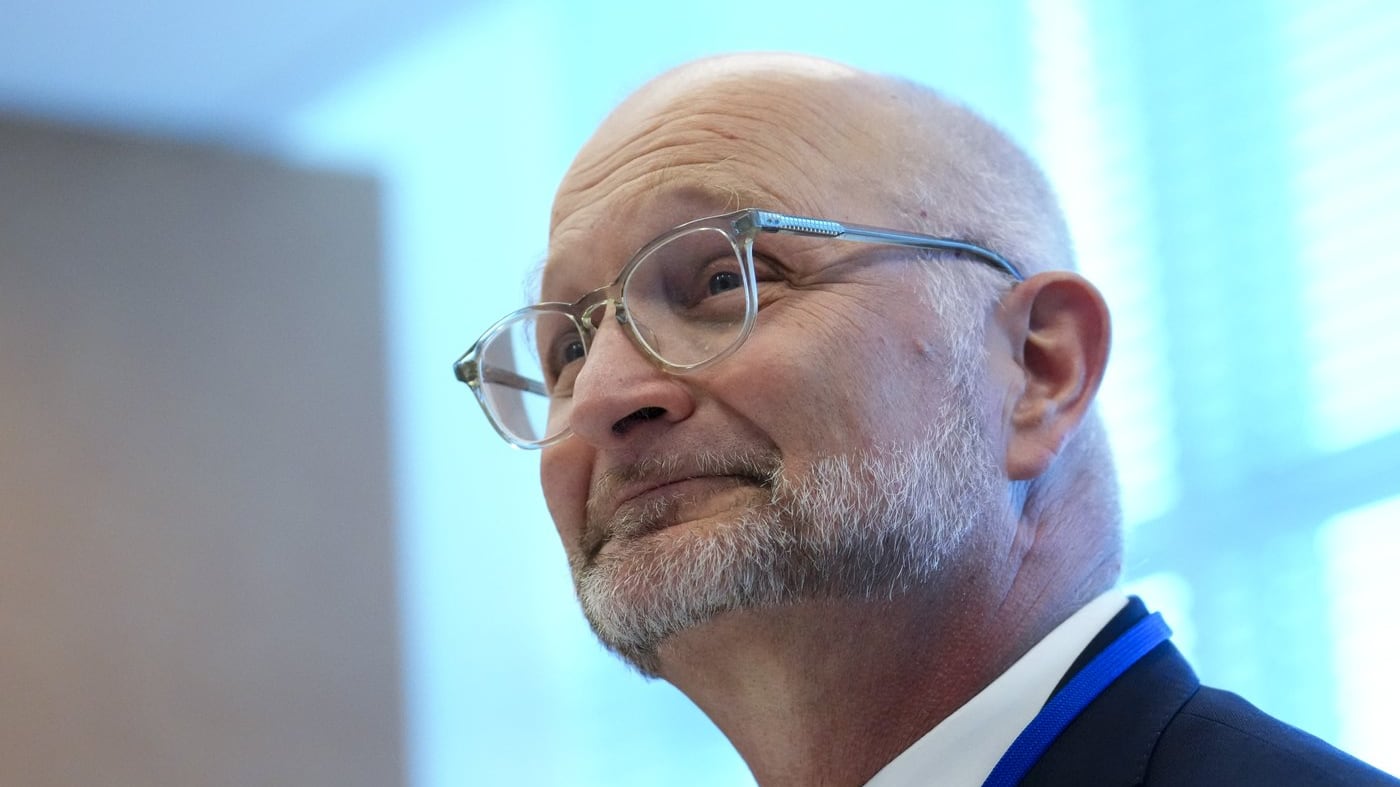
OTTAWA — The Trump administration is hindering work at the United Nations on advancing equality, says Canada’s UN Ambassador David Lametti.
“There has been a general obstructionist policy, (a) cantankerous policy with respect to women’s rights, a woman’s right to choose, with respect to LGBTQ+ rights (and) gender equality,” Lametti told The Canadian Press when asked to describe American actions at the UN.
“There’s a pushback any time you see the word ‘climate change’ anywhere, or you see ‘gender equality’ anywhere,” he added.
In March 2025, Lametti’s predecessor Bob Rae said the administration of U.S. President Donald Trump was using its UN team to join Russia and the Vatican delegation to fight against LGBTQ+ rights and abortion access.
In an unsuccessful attempt to amend documents that acknowledged LGBTQ+ teens exist and are more likely to face violence, Washington last year forced the first-ever vote on UNICEF’s routine documents at the UN since the agency was created in 1946.
Lametti said the U.S. has since toned down its approach at the UN and has focused in recent months on topics where Washington can find common ground with other countries, such as efforts to stabilize Haiti.
“We’re moving where we find common ground with the Americans and we’re building and rebuilding trust,” he said.
Lametti said human rights is at the core of his work at the UN. Foreign Affairs Minister Anita Anand has cited human rights as one of three pillars of Canada’s foreign policy, along with defence and economic security.
The government of Prime Minister Mark Carney has faced sustained criticism from activists and experts over its attempts to avoid criticizing Trump directly for his international provocations — such as the brazen capture of Venezuela’s autocratic leader by U.S. forces and Washington’s sanctions on an International Criminal Court judge.
More recently, Carney suggested Trump’s war on Iran was “worth it” due to Tehran’s nuclear threat, even after he said the war likely violated international law.
Lametti said Canada is still pursuing a seat on the United Nations Human Rights Council for 2028 to 2030. The Trudeau government announced the bid in May 2023.
Voting on UN Human Rights Council membership for the 2027-2029 term wraps in October; Lametti said Canada will make more public efforts to join the council after that date.
Lametti said he’s confident Canada can land a spot on the Human Rights Council because there is “a great deal of horse trading” in UN bodies that Ottawa is adept at navigating.
He cited the example of last month’s election of Canadian academic Amanda Dale to the Committee on the Elimination of Discrimination Against Women, which he said resulted from both a great candidate and efforts by Canadian diplomats to offer support for other countries’ candidates in other UN bodies.
“At the UN, people will trade votes for votes, and so there’s a longer-term strategy. It’s done out of Ottawa in conjunction with us,” he said.
“People are looking for Canadian leadership right now.”
Lametti said Carney boosted Canada’s profile with his January speech to the World Economic Forum in Davos urging middle powers to band together.
Canada’s campaign for the human rights seat comes as many developing countries are alarmed by how Trump’s war on Iran has hindered access to fertilizer and other critical supplies.
Those countries are also loudly critical of Israeli bombardment in Lebanon and the Palestinian territories, and the scant international attention paid to brutal ethnic violence in Sudan.
Germany failed to join the UN Security Council for the first time last month, a major upset that activists framed as a rejection of Berlin’s staunch support for Israel. Lametti chalked it up to timing.
“They did start late. And a lot of it is explained by the fact that a lot of these trades had already been made prior to Germany entering the race,” he said, adding that Canada also likely joined a Security Council bid too late in 2020.
Lametti also said human rights is guiding how Canada weighs in on broader reform at the UN, which is looking at merging agencies and closing offices to save money.
Canada has raised pointed questions about a proposal to merge UN Women — which focuses broadly on equality rights — with the UN Population Fund, which focuses on sexual and reproductive health.
“We don’t want to lose the baby with the bathwater,” Lametti said, adding Canada is all for “operational efficiencies” but not if they undermine crucial work, such as advocating for Afghan women.
“You wouldn’t merge two institutions with very different modus operandi unless you had good reason to, unless there was evidence. So we’re asking for the evidence,” he said.
Dylan Robertson, The Canadian Press

