For more than a century, the Calgary Stampede has evolved from a celebration of the West’s ranching and frontier heritage into one of Canada’s largest festivals, bringing together rodeo, agriculture, Indigenous culture and western traditions.
For longtime volunteer Will Irvine, that evolution has never changed what the Stampede represents.
Cattle broker by trade, Irvine also helps operate the vintage wagon rides.
“We have a team of horses. We’re going with nine wagons, and we go downtown,” he said. “We take tourists for a ride around the city.”
The rides offer visitors a chance to experience a piece of Alberta’s western heritage.
“This morning we had people from Brazil, Ukraine, Venezuela, New Zealand, Australia,” he said.
For Irvine, the Stampede isn’t just a 10-day festival. He said it reflects Alberta’s culture, celebrates its ranching roots and is part of who he is.
“There’s a steer show, there’s the Cowboy Up Challenge. There’s so many things that are part of the ranching and the livestock community,” he said.
The Stampede was founded in 1912 by American-born cowboy and showman Guy Weadick, who envisioned a celebration of the culture, traditions and spirit of the Canadian West.
That legacy continues at Elbow River Camp on the Stampede grounds.
Shawn Runner of the TsuuT’ina First Nation said his family’s connection to the Stampede stretches back to its earliest days.
“I’m a legacy teepee holder. My great-grandfather, Chief Big Billy, was one of the first individuals that were a part of Guy Weadick’s exhibition, Calgary Stampede. He was invited. And we always try and keep that legacy up.”
Runner said the Stampede gives Treaty 7 First Nations an opportunity to share their history and culture with visitors.
“This is a highlight for all First Nations because we get that opportunity to show the world exactly where First Nations people come from, their survivals, their ability to adapt.”
Another organization helping preserve those traditions is Little Pro Rodeo, located in the Kids Zone on the Stampede midway.
Founder Nikky Passmore said the group introduces children and families to rodeo, while explaining the practical ranching skills behind many of its events.
“We’re bridging the gap between the urban and the rural,” she said. “We travel to fairs and festivals not only in Alberta but across the country. We are showcasing rodeo as the sport as well as the ranching purpose behind it.”
“So, explaining, you know, tie-down roping has a purpose on the ranch. It’s showcased in rodeo so that we can have a little bit of fun with it.”
Seven-year-old Lawreena Safi and her 11-year-old brother Ozair both tried out the scaled-down versions of the rodeo events in their western gear.
“I love being a cowgirl,” she said.
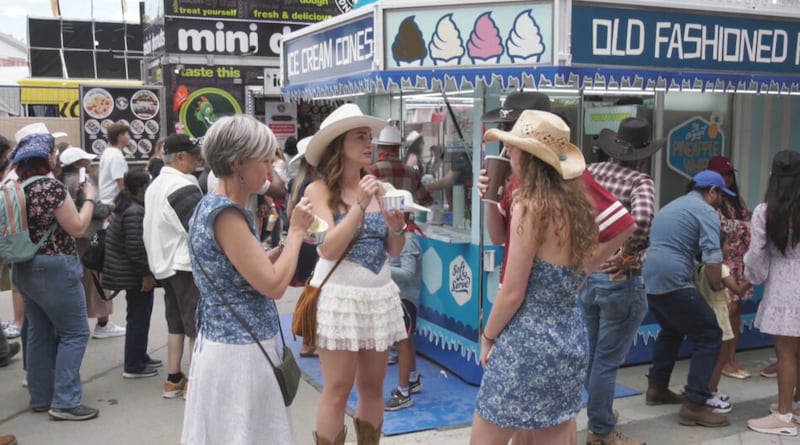
The Stampede also attracts visitors eager to experience Alberta’s western culture firsthand.
Maeva Quesada and Eliot Venturini, who are from France and have spent the past year working in Canada, including on several Alberta ranches, said attending the Stampede was a highlight of their time in the province.
“The rodeo is insane. So, we really enjoy it a lot,” Quesada said.
“Alberta is the best place for us for the Western culture,” Venturini said.
For Irvine, watching visitors embrace the Stampede’s traditions is what keeps him coming back year after year.
“I just love the Stampede. I really do.”

