For Glenn McKenzie, the uncertainty around the proposed Alto high-speed rail line isn’t about faster travel between Toronto and Quebec City – it’s about whether his family’s farm can survive.
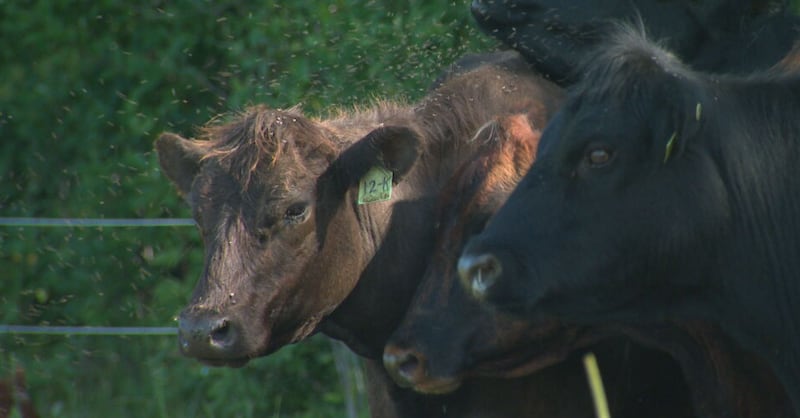
McKenzie and his family raise grass-fed beef near Balderson, Ont. His farm relies on a mile-long pasture corridor to move cattle from one section of land to the next. It’s part of a rotational grazing system.
“We have a mile-long grazing corridor,” McKenzie said. “We practice rotational intensive grazing and the cattle are on a small strip of land and we keep moving them down until they reach the end, and then we start all over again.”
Part of that grazing corridor falls within a proposed corridor for the Alto high-speed rail project linking Quebec City and Toronto.
“If they went through this strip of land, it would be over for us,” he said.
McKenzie said his biggest frustration isn’t just the possibility of losing land, but the uncertainty surrounding a project which has yet to determine an exact route.
“We’re very concerned that we’re not being taken into account by Alto,” he said. “The tone of what has been communicated so far has been concerning.”
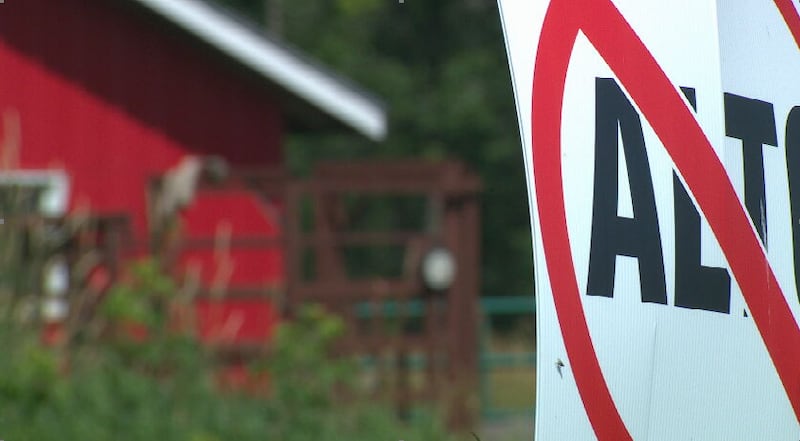
His concerns reflect a broader debate playing out across the country.
A Nanos Research survey conducted for CTV News found Canadians are evenly divided over whether the multibillion-dollar rail project should be a government priority. Thirty-eight per cent said it should be a high priority, while the same proportion said it should be a low priority.
The divide is evident in communities along the proposed corridor. In rural Ontario, “Stop Alto” signs are a common sight.
In Kingston, where the federal government recently announced a proposed station, many residents CTV News spoke with welcomed the prospect of faster rail service, saying it would make travel between Ontario and Quebec easier. Others questioned whether the benefits outweigh the impact on farmland, communities and the environment.
Kingston Mayor Bryan Paterson said he wants to see the city included if the project proceeds.
“I just want to see something built because it has been talked about for so many years,” Paterson said, adding there is a need for better transportation options.
“Regardless of what the end form needs to be, we need better rail service in Kingston. We’re a rail-oriented community. We’re used to taking the train and I hear from people all the time about how there needs to be better options,” said Paterson.
Alto has not finalized a route and has publicly released only a preliminary proposed corridor. The company says it has completed an initial round of public consultations and plans to hold additional sessions this fall.
In a statement to CTV News Sunday, the company said public opinion matters to them.
“Alto remains committed to continuing engaging with elected officials, stakeholders, communities, agricultural communities to share project updates and answer questions. A new round of public consultation will begin this fall on the more refined corridor for the Ottawa–Montréal central segment,” said the statement.
“Our goal remains to ensure the most harmonious integration of the project while limiting impacts on agricultural activities.”
For McKenzie, who says he and his wife built the 93-acre farm around sustainable, rotational grazing practices, the uncertainty remains difficult to live with.
“I mean, if it’s not us, it’s somebody else,” he said.

