A startling video showing a woman apparently asleep behind the wheel of a Tesla on Highway 1 through southeastern B.C. is raising fresh concerns about the limits of self-driving technology.
The video was captured by Caleigh King on Sunday afternoon, and shows a grey Tesla with pink accents travelling between the communities of Golden and Revelstoke.
The driver does not appear to be awake.
King told CTV News she and her husband saw two children inside the vehicle after passing it.
“I was like, ‘That lady looks like she’s sleeping,’ and I did a triple-take,” said King. “My first thought was maybe she’s in trouble — a medical emergency.”
King said she phoned 911 and left a report, but noted the driver didn’t appear to have their hands on the wheel, which is necessary for the Tesla self-driving option to operate.
She is hoping by sharing the video that it will help prevent future incidents and apply pressure on policy makers as the self-driving technology becomes more widespread.
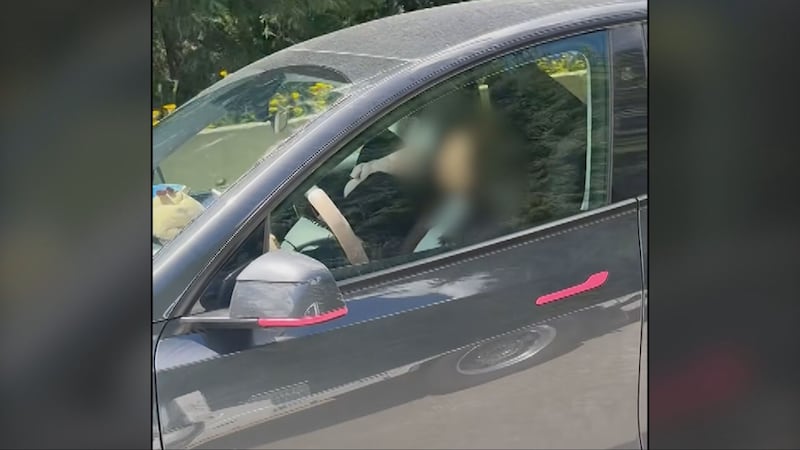
The incident is now under police investigation.
B.C. Highway Patrol said cases like these are becoming more common as driver-assistance technology advances — but stressed the technology does not replace the person behind the wheel.
“You have to be awake, alert and in control at all times, even when you’re using the legal driver assistance,” said Cpl. Michael McLaughlin.
Under B.C.’s Motor Vehicle Act, drivers are prohibited from operating Level 3, 4 or 5 automated vehicles on public roads. Violations can result in fines ranging from $368 to $2,000, up to six months in jail, and driver penalty points. Police ask anyone who sees a driver who appears to be asleep or otherwise not in control of a vehicle to report it to their local police detachment.
Vancouver lawyer Kyla Lee said the incident also highlights broader questions about how automated vehicles make decisions in emergency situations.
She argues the public has little insight into the ethical programming built into these systems, including how they would respond in unavoidable crash scenarios.
“You have to choose between sort of the lesser of two evils, whether you’re going to run over the old person or whether you’re going to run over the baby,” said Lee.
“We need to know what type of decisions vehicles are going to make in those circumstances and we need to know that we can live with that as a society.”
Lee said those decisions should be transparent and guided by regulation, warning that allowing vehicles to make life-and-death choices without clear public oversight could conflict with Canadian values and put people at risk.

