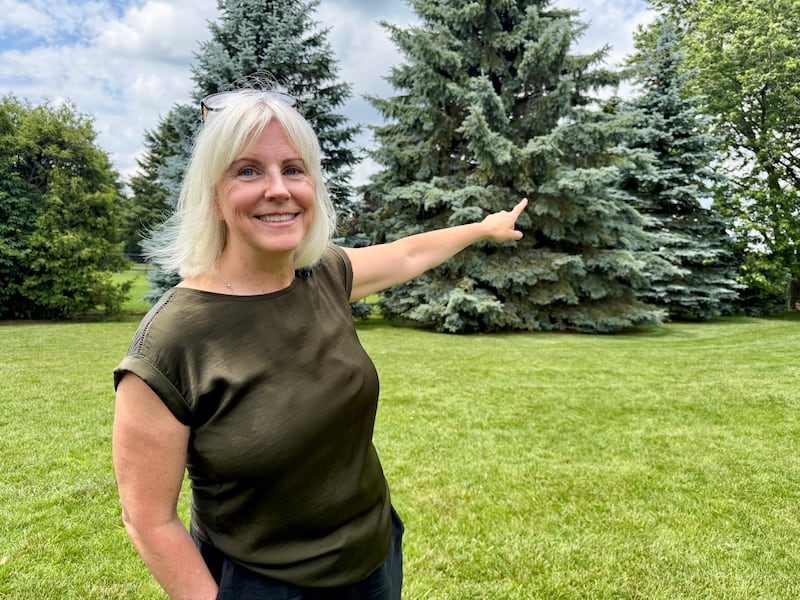
When Kathleen Miller’s husband first told her there was a bear in a tree in their backyard, she thought he must be wrong.
“Of course, I didn’t believe him,” she said.
But when she went outside herself, there it was - a black bear, up in the maples. In her 27 years of living in Stouffville, Ont., she had never seen a bear, let alone one behind her house.
“I expect them in the forest,” said Miller.
Instead, this one had settled in behind a home, bordered by a busy golf course, with a school on the other side and a busy intersection nearby.
“He was just hanging in the tree, looking really comfortable with his hands and legs down,” said Miller. “He was chewing on some of the smaller branches and so he was just chilling.”
Police initially attended, she says, but the bear was left alone until three days later, when officials tranquilized it and safely removed it.
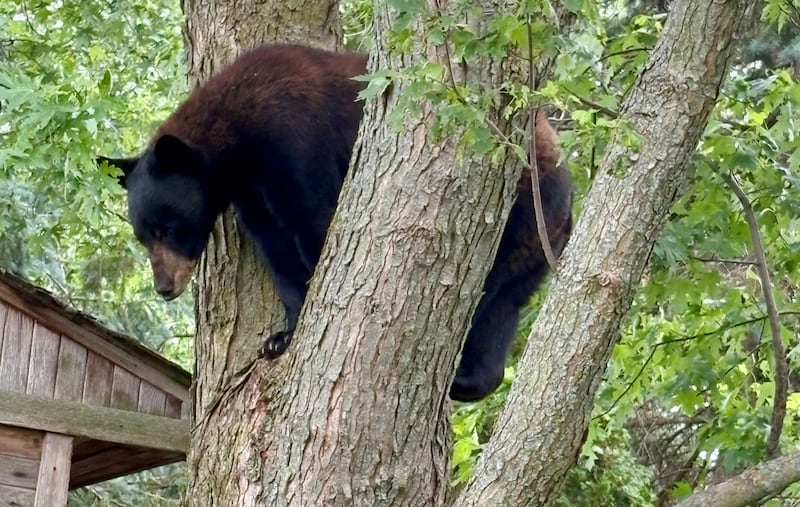
“They said they were going to relocate him in an unnamed forest not close by.”
It wasn’t an isolated visit. In recent weeks, there have been multiple reported bear sightings in residential areas north of Toronto, including one near a school in Stouffville and another in Aurora.
Bear expert Mike McIntosh, of the Bear With Us Sanctuary, told CTV News that bears are more visible this time of year because they’re hungry, looking for food and waiting for berry season to kick in.
His advice for anyone living near bear habitat: Store food waste well away from decks, and don’t leave garbage bags outside for days at a time. Bird feeders should be put away too. McIntosh says a bear can smell sunflower seeds from two kilometres away.
Coyote concerns
Bears aren’t the only animals raising concerns.
On Sunday evening, a two-year-old boy was in the playground area of Vanier Park in Whitby, Ont., when he was injured in an unprovoked attack by a coyote. The child sustained bite injuries to his face before being rescued by a guardian, according to Durham Regional Police. The injuries were not life-threatening.
Police responded to a separate incident involving a different coyote that same evening. That animal was in distress and was removed by officers.
Police say such incidents are rare and remind the public to keep a safe distance from coyotes. If you encounter one, remain calm, don’t run, make loud noises and wave your arms.
Whitby has a site where residents can report coyote sightings, and it’s not alone.
Several Greater Toronto Area municipalities, including Brampton, Mississauga and Oakville, now run public maps of reported coyote sightings, fed by resident reports. But those tools were built to manage conflicts with a single species. They don’t track the many other kinds of wildlife turning up in urban neighbourhoods.
An 8-year-old’s solution
The recent stories have been on the mind of eight-year-old Viyoohan Sayooran, who has been following news of coyote incidents in his own community of Markham.
“I wondered, why is wildlife behaving like this?” said Viyoohan, who just finished Grade 3. What he found out is that humans have been building houses in the spaces where wildlife used to live.
“And some people don’t know how to react when they see wildlife,” he said.
So, with the help of his parents, he decided to try and do something about it — and, in a sign of the remarkable era we now live in, the eight-year-old was able to quickly design and launch a working app.
Viyoohan used Anthropic’s Claude AI to help plan his ideas, then turned to Lovable, a Swedish “vibe coding” platform that lets users describe the site they want in plain English and generates the app, which Viyoohan then edited himself over a “couple of days.”
“I wanted to use AI because AI could help us solve problems much faster than coding ... Coding would maybe take weeks for me,” he said.
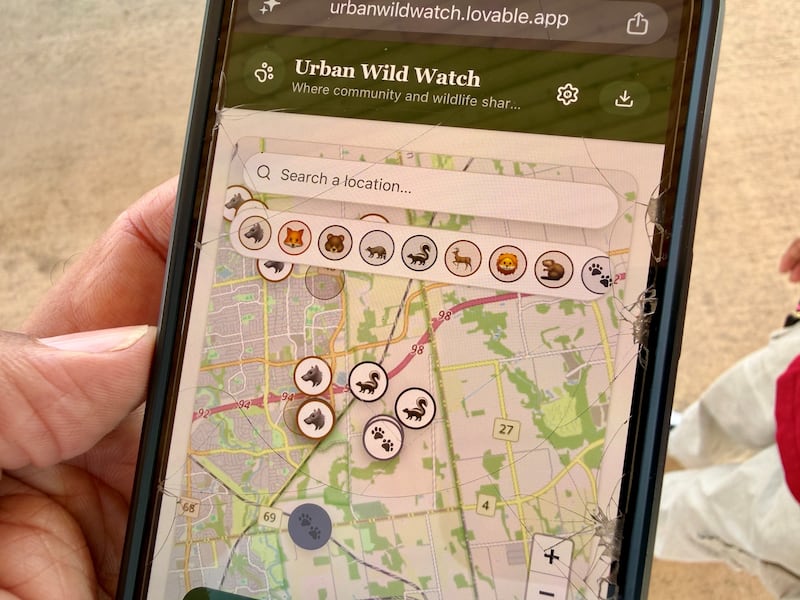
The result is Urban Wild Watch, found at urbanwildwatch.lovable.app. The app features a map where users can press a button to report a sighting, choosing the type of animal, its behaviour and any nearby landmarks.
“There’s also a button at the top where you can do an orphaned or injured animal sighting,” said Viyoohan. “There’s also a search button on the maps so you can search locations to report the animal wherever you saw it.”
He says it can be used in any location anywhere in the world — and he’s been happy to see a few reports already appearing on the map.
“It made me feel good. Like my app is being used by many people,” Viyoohan said.
He even thought through a safety feature: the exact location of a reported animal isn’t shown for an hour.
“If we show the exact location in the start, then people would start rushing over to that place just to take pictures for social media,” Viyoohan said. “So the people could get hurt - or the wildlife.”
Users can report any type of animal, but the main ones so far have been coyotes, foxes and raccoons. Viyoohan hasn’t encountered any of them himself — but he’s seen the pictures.

