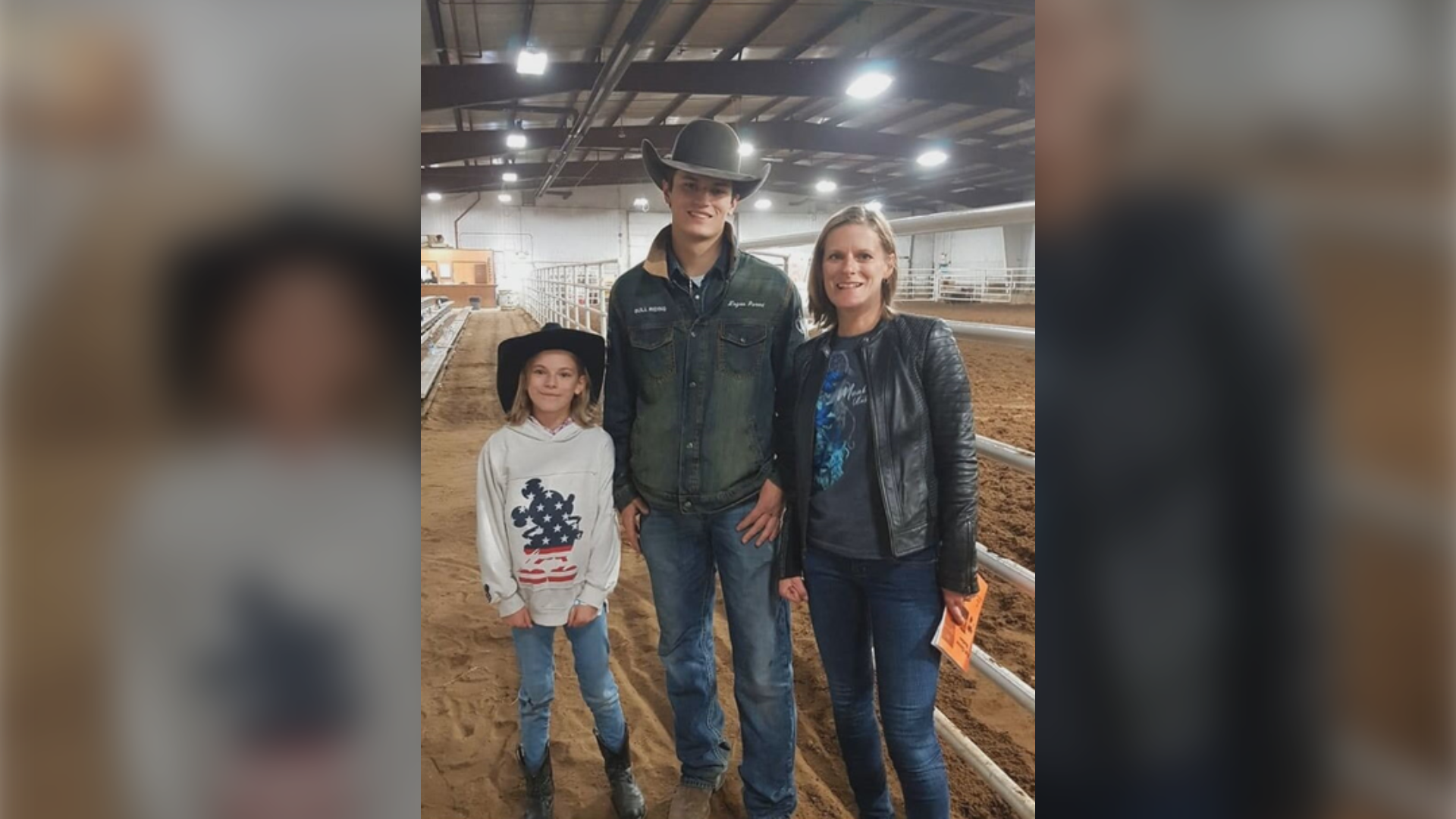
The family of a B.C. bull rider who died by suicide is pushing for greater education on the impacts of repeated head trauma — after the young man was diagnosed with chronic traumatic encephalopathy.
Cindy Parent, of 100 Mile House, said her son Logan became enamoured with the rodeo sport at 15 years old.
“He said, ‘You know, mom, I love bull riding,’” she recalled. “‘It’s exciting. It’s like I found who I was meant to be.’”
Parent said her son spent years competing, and eventually landed an opportunity to be on the rodeo team at Northern Lights College in Dawson Creek.
Mood changes, memory loss
“Logan always said to me, ‘It’s not the money I’m after when I’m riding bulls, it’s the buckle,’” she recalled.
But in the pursuit of that prize, Logan experienced numerous concussions.
Parent said at one rodeo in Smithers, he endured a concussion so severe, he could not recall the ride.
Despite that, she said, a doctor still wrote him a note saying he was fit to compete.
“He had a huge goose egg on his left eye,” she said.
“And this is no disrespect to the doctor, but he was given a note like (it was) nothing.”
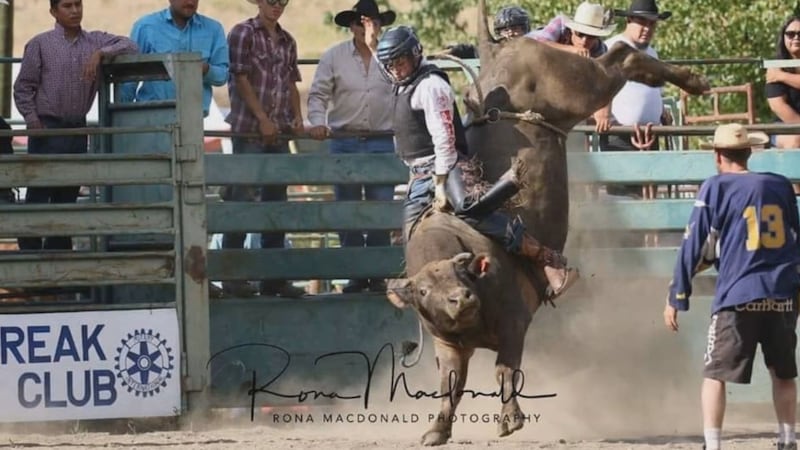
Parent said eventually the toll of the head trauma, paired with previous concussions, started to change her son.
She said he was experiencing depression, mood changes and memory loss.
“He was working as a heavy-duty mechanic, and he came home and he was super, super frustrated,” she said.
“And I said, ‘What’s the problem?’ And he said, ‘Mom, I can’t even remember how to do an oil change,’” she said.
Parent said Logan’s family and friends noticed his health began to further decline, and in October 2020, he died by suicide.
“It’s surreal at times to think that this much time has passed without Logan being here,” she said.
‘It never crossed my mind’
Following his death, the Parent family donated their son’s brain tissue to be studied.
An autopsy showed he tested positive for CTE.
Upon learning of the diagnosis, Parent said her son’s symptoms made sense.
“But it never crossed my mind at the time,” she said.
“I say this a bit shamefully. I didn’t take concussions seriously. I didn’t know the long-lasting impacts. I didn’t know all of that.”
The family is sharing their son’s story in the hopes it will help educate others about the symptoms related to brain injuries.
“What I would love to see is if a bull rider suffers a concussion, there’s stronger policies and procedures in place for them to return,” she said.
‘How quickly that decline happened’
Dr. Samantha Bureau, the assistant executive director of the Concussion Legacy Foundation, Canada, met the Parent family a few years ago.
The foundation provides support for patients and families navigating the health-care system.
Bureau said Logan’s story was compelling.
“Hearing how young he was and how quickly that decline happened,” she said. “In a six- to eight-month period, he went from being someone they could recognize to taking his life, and he was doing what they thought were all the right things.”
Bureau said she’d like to see better access to care in rural communities, where bull riding is more prominent.
Access to health care in some rural communities is strained in B.C.
Earlier this month, 100 Mile District General Hospital had to temporarily close its emergency room.
Bureau said this creates a ripple effect when it comes to addressing brain injuries, especially in these regions of the province.
“I really think our rural, remote communities, unfortunately, are getting left behind,” she said.
Bureau reiterated how crucial brain health education is.
“In Logan’s case, he found a doctor that was willing to sign off after he was knocked out for multiple hours so that he could go ride a bull again,” she said. “In a perfect world, that should never happen.”
Bureau said the earlier interventions can be made to address symptoms related to head trauma, the more successful the long-term impacts will be for patients.
“It doesn’t mean every single day is perfect, but they’re certainly living, you know, a productive life and they’re happy with it,” she said.
“It’s that fine balance of making sure people are aware of the risks that they can protect themselves and make those informed choices.”
Rowan’s Law
Bureau said she’d also like to see the expansion of Rowan’s Law across Canada.
The law was named after Rowan Stringer, who died trying to play through a concussion in 2013.
The law creates a framework for removal-from-sport and return-to-sport protocols for coaches, teachers, trainers, athletes and parents.
“It doesn’t have to be a carbon copy,” she said.
“What works in Ontario doesn’t mean it’s going to work in B.C., but (we need) something tangible that we can point to to really enforce this education.”
Parent’s story is similar to that of high-profile bull rider Ty Pozzobon, who died by suicide at 25 in 2017.
Pozzobon is believed to be the first case of CTE in a professional bull rider.
Every year, the Parent family holds a memorial event in Logan’s honour.
“Hearing people say his name, it means a lot,” Cindy said.
“It’s keeping his spirit alive.”

