For hospitals, a chemotherapy drug shortage can mean an impossible scramble of tough choices: find more supply, delay treatments or switch a patient to another regimen. This time, the warning came before the potential crisis.
A platform developed by researchers at the University of Toronto (UofT) flagged a heightened shortage risk for cyclophosphamide and alerted one of Canada’s largest medication purchasers early enough to avert a disruption that could have impacted hospitals, pharmacies and patients across the country.
With enough notice, the purchaser was able to work with international suppliers to “secure additional medication and mitigate the impact,” according to Mina Tadrous, an associate professor at the university’s Leslie Dan Faculty of Pharmacy.
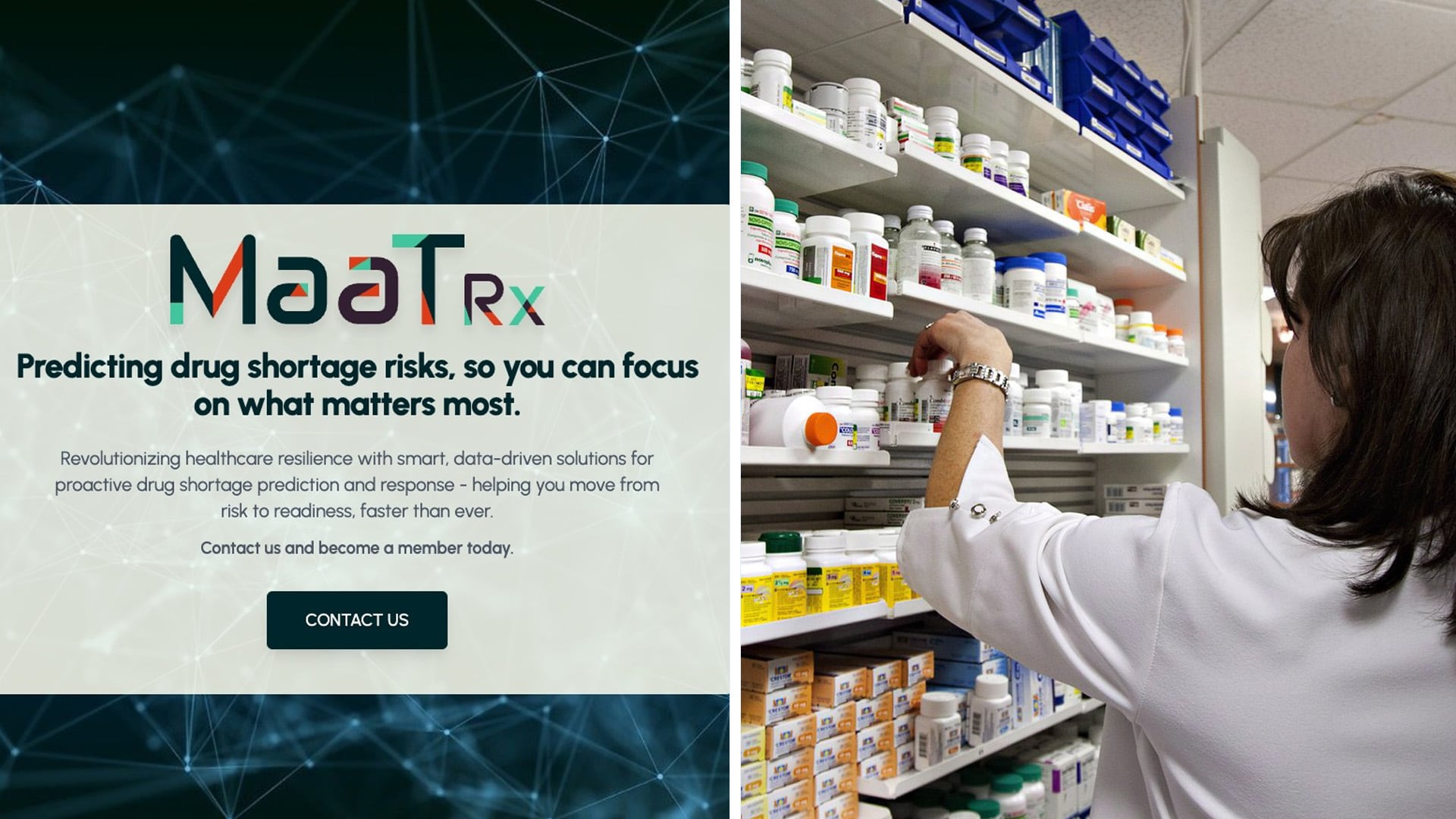
He and Shanzeh Chaudhry, a UofT pharmacy alumnus, developed MaaTRx, a first-of-its-kind dashboard that uses real-time data and AI-driven forecasting to identify medications at risk of a shortage, to help hospitals, policymakers and pharmacy networks plan for inventory and substitutions.
“People have never seen anything like this around the world,” Tadrous said. “We are really changing the way people think about drug shortages.”
The idea
As a pharmacist-by-training, Tadrous is not new to handling drug shortages.
“You would get these signals ... that nine out of 10 times (these signals) were fake,” he said, according to previously conducted research.
“You basically just got a lot of false alarms,” he added.
Often that meant a pharmacist would become aware of a shortage when trying to order a drug for a patient. Then, they either have to find an alternate medication, contact the patient’s doctor, contact other pharmacies for supplies or send the patient away for a new prescription.
“It was just constantly crisis mode,” he said.
Using research conducted over the past decade to better understand how to use data to predict shortages, Tadrous and Chaudhry started work on the platform in 2022 and launched it as a startup in 2025.
The technology was built using funding from institutes at the university and Tadrous’ own startup funding. “We kind of piecemealed it together to build the science initially,” he said.
How it works
The platform, Chaudhry said, combines 10 different data sources and accounts for supply chain factors like market size, dominant sectors, which manufacturers sell the drug and unit price.
Each medication is scored based on its supply chain vulnerability and clinical impact.
Based on their scores, the drugs are categorized by risk. “Based on that, users can triage and case manage with drugs they want to focus on,” Chaudhry said.
The dashboard gives users the ability to ascertain, in the next year, which drugs are “most likely” to have a real shortage, Tadrous said.
The platform has been in use for a year, he added and has been instrumental in sharing adaptive data to mitigate drug shortages.
Chaudhry estimated that 20 per cent of all drugs in Canada would be “in the higher risk categories,” depending on supply chain characteristics.
“A very, very high risk is about 70 to 80 drugs,” Tadrous added.
Who has access
According to Tadrous, about 100 pharmacists as well as key players in the Canadian health-care system have access to the platform.
“Most of our access is for people working with a lot of government officials that are making decisions at the federal level, provincial level,” he said, either on drug purchasing or shortage responses.
The others are pharmacists who use the information to respond at the local level. “To save themselves time,” he said.
What comes next
The platform’s popularity has grown immensely, since it was launched last year.
“We just have a rush of people starting to use it,” Tadrous said, fuelling discussions on whether to expand the venture globally.
Other countries have reached out to the team, “wanting to learn from us,” he said.
“We’re really hoping we can take MaaTRx global, take this Canadian technology around the world to help people fight shortages. This is a global problem and no one is safe from it,” Tadrous said.

