SWIFT CURRENT, Sask. - The graves of five Second World War veterans finally have permanent military markers, decades after the war heroes’ deaths.
A special ceremony was held at Swift Current’s Mount Pleasant Cemetery on Thursday to unveil the new headstones and honour the men buried below.
It is a culmination of three years of work, research and verification by Ret’d Maj. Brad Hrycyna, a volunteer researcher with the Last Post Fund’s Unmarked Grave Program.
“It’s a very emotional day to actually see that it has come to fruition.”
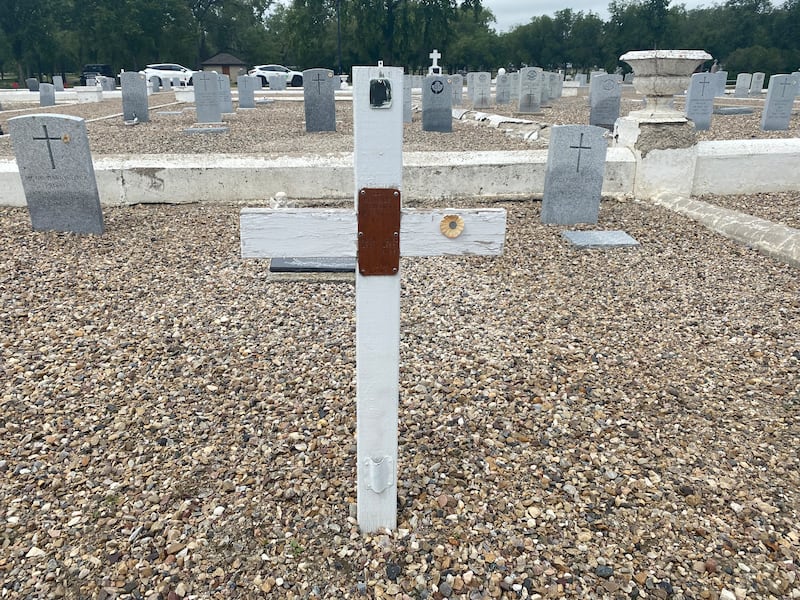
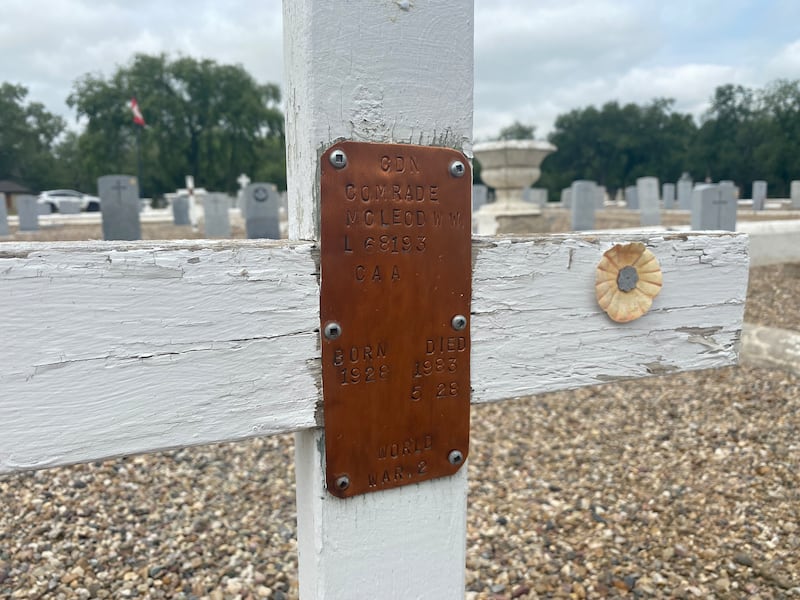
The program is a national initiative that installs military markers on unmarked graves of eligible veterans. Graves with temporary markers, including wooden white crosses, are also eligible for the permanent markers.
But before a grave can get a headstone, researchers like Hrycyna must prove that the person buried there served in the war.
“Some of these have very little information on the individuals,” he said, adding that verifying the person’s role in the military is more challenging than it may seem.
Hrycyna had to search archives, obituaries, military records and other data bases to confirm veterans were buried in each of those five plots.
Once he had the proper information, he submitted a request to the Last Post Fund.
“It’s close to two years before you see if it’s approved,” he told CTV News.
The long process is worth it, said Hrycyna, who served in the military for 37 years.
“I have always had a passion for our military history and our veterans,” he said, adding this program is a way to ensure veterans’ identities are never forgotten.
Honouring heroes
Private Herman Unger was one of the five Second World War veterans to be honoured with permanent headstones this week.
He served overseas as a medic and farmed in Saskatchewan after the war.
His son, Noel, described him as “the strong, silent type.”
“My dad has always been my hero,” Noel told CTV News ahead of the ceremony.
“To know that he, along with his fellow soldiers, is being better recognized just means a lot.”
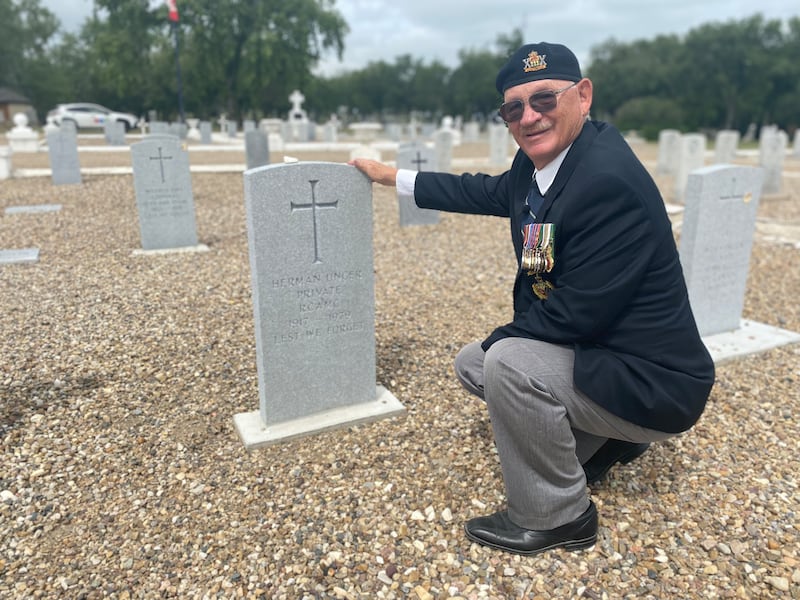
Noel said his dad made many sacrifices, not just for his family but for the country.
“Nowadays, society is beginning to forget,” he said. “They are taking the freedom we have for granted and that is a sad scenario.”
The Unmarked Grave Program began in 1996 and has placed more than 10,000 permanent markers across the country.
“There could be many, many more,” Hrycyna said.
The identification process is particularly challenging in rural areas, he said. Small towns in Saskatchewan that no longer exist may have cemeteries with unmarked graves, but the records may be lost.
“We may never know who is buried in those cemeteries,” Hrycyna said.
Canadians can reach out to the program if they know of any unmarked graves, he added.
Hrycyna has identified more than 20 temporary markers in the Swift Current cemetery’s Field of Honour. He is still looking for more information to verify seven of them.

