An arbitrator has ruled that the City of Greater Sudbury, Ont., breached its collective agreement with the Sudbury Professional Firefighters Association and is directly liable for paying out benefits to the estate of a veteran firefighter who died of “work-related prostate cancer” in 2020.
In his July 8 decision, arbitrator Eli A. Gedalof found the city breached its collective agreement by failing to secure both an Accidental Death and Dismemberment benefit and a full active-duty life insurance payout for Peter St. Denis.
Career cut short by occupational cancer
St. Denis began working as a suppression firefighter for the city on Nov. 26, 1983, a career that would span more than three decades.
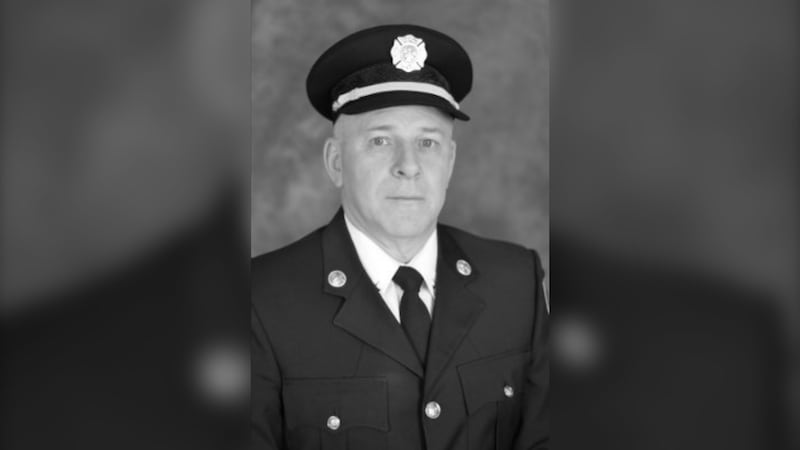
Following medical investigations, the Workplace Safety and Insurance Board established Aug. 7, 2015, as St. Denis’s official date of accident. A few months later, on Nov. 12, 2015, St. Denis was formally diagnosed with prostate cancer and subsequently went on medical leave, leading to his retirement from the fire service on Jan. 1, 2016.
On Jan. 5, 2016, the WSIB officially approved his claim, recognizing his cancer as an occupational illness under the Workplace Safety and Insurance Act.
St. Denis died as a result of metastatic prostate cancer on Feb. 11, 2020, at the age of 63.
City argues it only paid premiums
While the city paid out a basic $10,000 retiree life insurance benefit to his widow, Sandra St. Denis, on May 3, 2020, they did not file a claim for Accidental Death and Dismemberment benefits.
When the firefighters association discovered this omission, they filed policy and individual grievances against the city on May 19, 2023.
The city argued that its only obligation was to pay insurance premiums, meaning any eligibility dispute was strictly between the widow and the insurer, Chubb. The insurer had previously denied the claim because St. Denis was a retiree at the time of death and died more than 365 days after the accident — or the 2015 diagnosis.
Arbitrator affirms jurisdiction over collective agreement
Gedalof rejected the city’s argument, stating that the central issue was whether the policy the city bought actually met its union obligations.
“The essence of the dispute is not whether the grievor meets the eligibility requirements of the policy,” Gedalof wrote in his decision.
“It is rather whether the policy purchased by the city meets the requirements of the Collective Agreement.”
He added that firefighters are prone to suffer from accidents — illnesses contracted as a result of toxic workplace exposures — that may take a significant period of time to result in death.
“Absent an agreement to terms excluding such deaths, firefighters reasonably expect that an AD&D (Accidental Death and Dismemberment) benefit will be provided to their families when those workplace accidents cause them to die,” the arbitrator stated.

Entitlement vested at time of workplace accident
Gedalof found that the grievor’s entitlement to the AD&D benefit vested at the time of his accident in 2015, when he was an actively employed firefighter.
“The grievor carried out the dangerous work of a firefighter in exchange for, among other compensation, a promise that his family would receive the AD&D benefit in the event he died as a result of that work,” the arbitrator wrote.
“That entitlement vested when he became ill with an occupational cancer.”
The arbitrator stated the city had not identified any provision in the collective agreement to support a finding that the parties intended to preclude the grievor from collecting on that promise upon retirement.
Hayes Award mandates full benefits for all pre-65 retirees
The arbitrator also found that a 2017 interest arbitration award — known as the Hayes Award (a previous decision between the city and the firefighters association) — extended full active-duty benefits to all retirees under age 65.
The Hayes Award, issued Aug. 21, 2017, directed “full benefit coverage for retiree and surviving spouse to firefighter age 65” with changes to be effective within 60 days.
Gedalof rejected the city’s argument that the benefit improvement applied only to firefighters who retired after the award and found it also applied to those who had retired before the award was issued.
“A plain and ordinary reading of the Hayes Award supports this conclusion,” he wrote. “There is nothing whatsoever in the award to suggest an intention to disentitle the grievor to the benefit notwithstanding that he falls squarely within the class of people to whom the benefit was extended.”
The arbitrator noted that the city did not actually contract to extend active-duty benefits to retirees age 60 to 65 until November 2024 — years after St. Denis’s death — and has never provided such coverage to the 31 firefighters who retired before Jan. 1, 2018.
Gedalof determined that the city breached Article 12 of the collective agreement when it failed to provide Accidental Death and Dismemberment and life insurance coverage to the grievor at the time of his death from a workplace accident.
Gedalof ultimately sent the question of how much money is owed to St. Denis’s estate back to both parties to work out between themselves — but he remains seized to the matter, meaning he will step back in to decide the final amount if they cannot reach an agreement on their own.
The full decision can be read here.

