VANCOUVER – If there is an expert in how incredibly difficult it can be for an addict to get off drugs, it is Guy Felicella, who spent close to 20 years on Vancouver’s notorious Downtown Eastside.
“Struggling with addiction, homelessness, and being brought back to life six times,” he said.
Today, Felicella is a suburban family man, after putting in more than a decade of work he says started at a supervised consumption site, where he was given a bus ticket to a treatment centre.

“The commitment to change is not just getting off the drugs, it’s about creating a new life where it’s easier not to use those drugs and dealing with the reasons why you used those drugs in the first place,” Felicella said.
He is among many heartened to see a promising plunge in drug overdose deaths in B.C.
The BC Coroners Service says 109 people died after using unregulated drugs in May, a tragic number by any measure, but the lowest monthly total since February 2020, weeks before the COVID-19 pandemic.
The figure is also down 55 per cent from the record 242 deaths reported in December 2023, when the province was losing nearly eight people a day at the peak of the crisis.
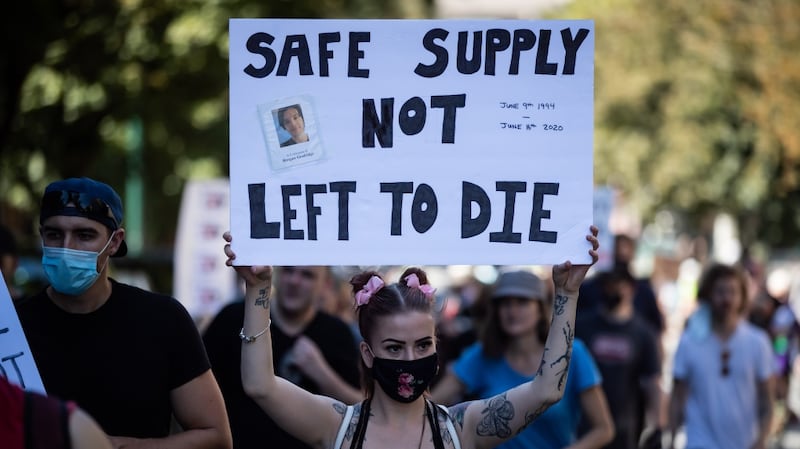
Why are fewer people dying?
Felicella, other advocates and researchers say they can’t point to a single reason for the decline in overdose deaths. Instead, they say it is likely the result of several factors, including expanded access to treatment, improved naloxone availability and the lives saved through supervised consumption sites.
The issue has also sparked political debate, and the court of public opinion came down harshly on the province’s decriminalization and safe supply pilot project that began in 2023.
B.C. MLA Elenore Sturko, a former RCMP officer who became one of the leading critics opposing the province’s move to decriminalize drug possession, said she is encouraged by the latest figures.
“I’m happy to see overdose deaths have come down.”
Sturko argues the decriminalization experiment overlapped with the deadliest period of the overdose crisis.
“The experiment was in full swing during those 15 months that also coincided with the largest number of deaths in provincial history. It’s a fact that’s hard to ignore,” she told CTV News.
Open drug use soured the public and led to B.C. Premier David Eby shutting down the pilot down.
“We can’t have people smoking crack in a Tim Hortons. Full stop,” Eby said in January.
A change in the supply
In analyzing the drop in deaths, a University of British Columbia researcher is pointing to a change in the makeup of the drugs themselves flooding the unregulated market.
“Last year, we started to see more and more xylazine, which is a veterinary sedative,” said Samuel Tobias, who also works with the British Columbia Centre on Substance Use. “Then growing this year is medetomidine, which is a drug used in really intense clinical settings in the hospital, and not very commonly prescribed to humans. It’s a really potent sedative, and that’s what’s being mixed into these drugs.”
The mixture of drugs being added to fentanyl is pushing down fentanyl concentrations, Tobias said, meaning what people are taking could be less lethal.
“It may not be such strong respiratory depression leading to a death, but it may be that someone is knocked out for several hours because of these additional sedatives,” Tobias said.
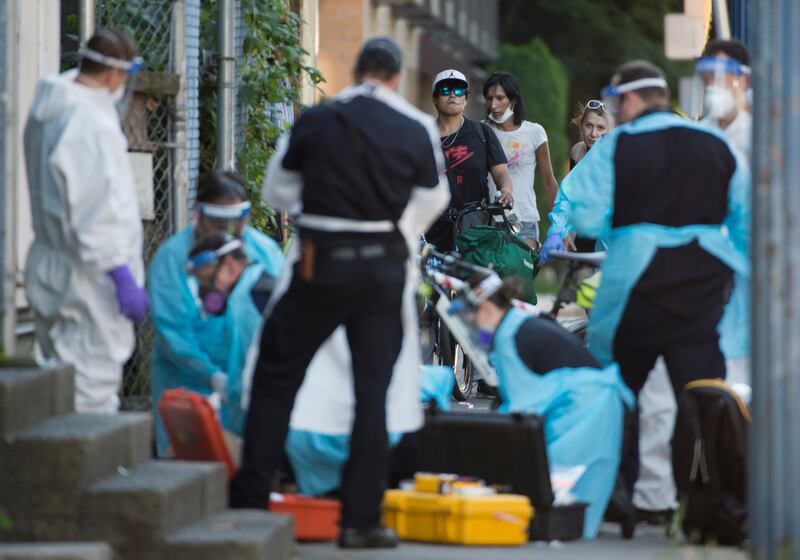
Paramedics say that lines up with what they’re seeing on the ground when responding to overdose calls and administering naloxone to counter the effects of fentanyl.
“These other drugs that are mixed in are still leaving these patients deeply unconscious with an unprotected airway for a longer period of time,” said Brian Twaites, the public information officer for BC Emergency Health Services, who has also been a paramedic for 40 years.
Deaths are down, overdoses are not
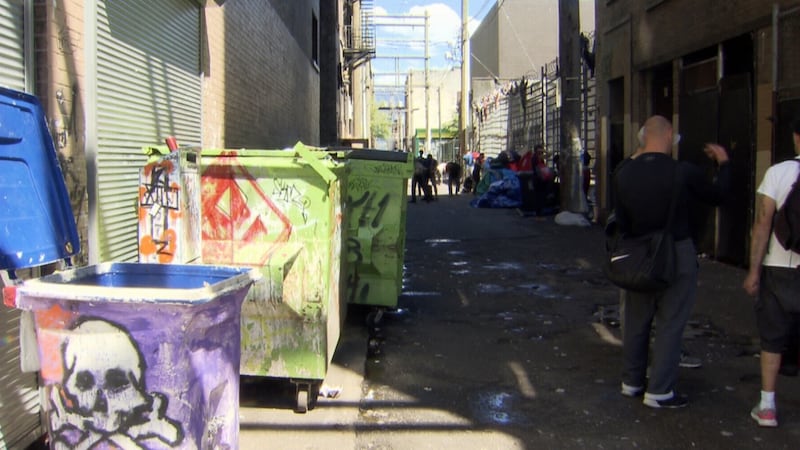
Paramedics are also confirming the decrease in overdose deaths in B.C. does not appear to be at all related to fewer people actually taking illicit drugs. In fact, new data shows the number of people overdosing is very much moving in the other direction.
BCEHS has confirmed through the first six months of 2026, it responded to more overdose calls than the entirety of 2020, including a record-high 5,129 overdoses in May.
For Felicella, that underscores there is still a long way to go treating the root causes of addiction, while first responders and advocates on the front lines do their best to keep drug users alive.
“I can’t even count how many people I revived,” he said.

