


Environment Canada has issued warnings about extreme heat in parts of Manitoba, Quebec and Ontario, where humidex values could make it feel like a sweltering 45.
Cities like Ottawa and Toronto can expect maximum temperatures of 38 C on Tuesday with humidex values making it feel more like 45. Similar scorching temperatures will be felt across the province, including in cities like Hamilton, London and Windsor.
With heat warnings stretching across most of the province, there will be little respite in northern cities like Thunder Bay and Kenora, where temperatures could reach 35 C and feel like 40 with the humidity on Tuesday.
“Today will mark the peak of this heat event,” Environment Canada said in its heat warning. “Take action to protect yourself and others – extreme heat can affect everyone’s health.”
The warnings follow extreme heat on Monday. According to The Weather Network, Armstrong in northwestern Ontario saw temperatures hit 40.7 C on Monday, which was the hottest temperature recorded in the province in 90 years.
More heat records could be broken on Tuesday. The hottest temperature ever recorded in Toronto on July 14 came in 1995, when thermometers reached 36.8 C, according to CP24 Weather Specialist Jess Smith.
While there will be relief from the extreme heat on Tuesday night in central and northeastern Ontario, the high temperatures are expected to persist until Wednesday or Thursday in southern Ontario.
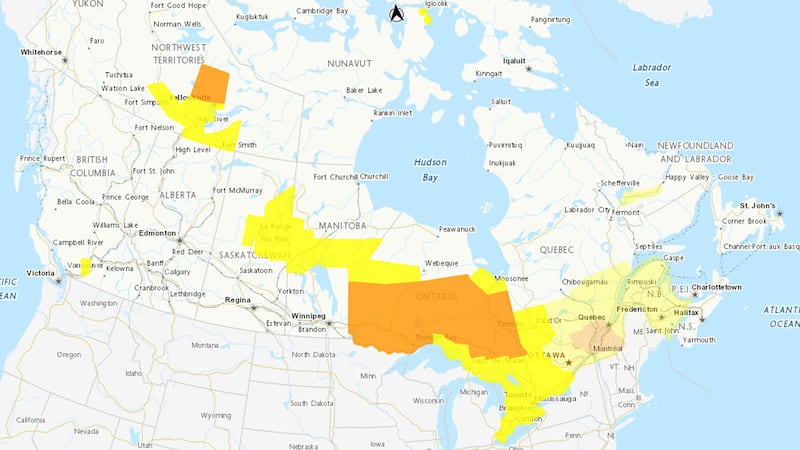
Heat warnings in Manitoba, Quebec and Northwest Territories
Heat warnings are also in place across northern Manitoba, including communities like Norway House and Flin Flon, where temperatures could reach 29 C on Tuesday. In Manitoba, the heat is expected to continue through to Wednesday.
In western Quebec, heat warnings are in effect for areas like Matagami, Wakefield, Rouyn and Gatineau, which could see highs of 37 C and humidex values of 45. In Quebec, temperatures and humidity will begin decreasing overnight Tuesday. Meteorologists are also tracking a severe thunderstorm capable of producing damaging wind gusts around Shawinigan and Trois-Rivières. Utility outages are likely as heavy rain can cause flash flooding and significant reductions to visibility in these areas.
Several parts of the Northwest Territories are also under heat warnings, including Fort Simpson and Hay River, where daytime temperatures will near 30 C. While there will be relief at night, the daytime heat is expected to last through the weekend.
Air quality risk
Coupled with wildfire activity, the extreme heat is also expected to lead to deteriorated air quality across parts of Manitoba, Ontario and the Northwest Territories.
“Smoke from wildfires is causing poor air quality and reduced visibility,” Environment Canada cautioned. “As smoke levels increase, health risks increase. Limit time outdoors. Consider reducing or rescheduling outdoor sports, activities and events.”
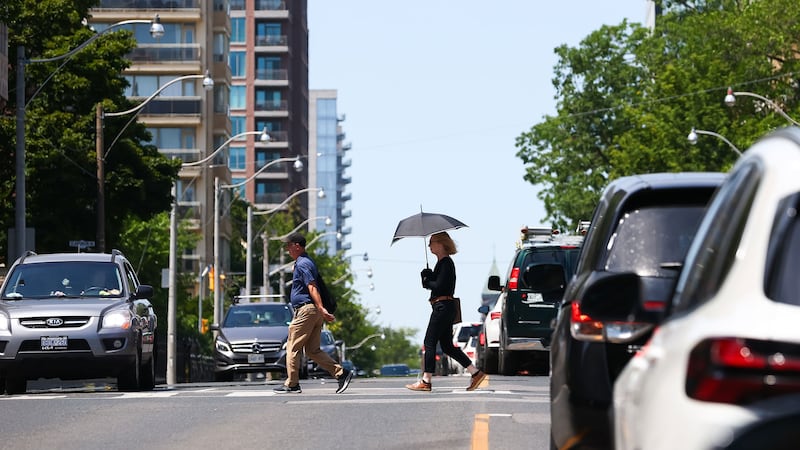
Even in areas without significant wildfire smoke, air quality is expected to be impacted by the heat. According to IQAir, which tracks air quality data from major cities around the globe, Montreal is currently ranked 56th in the world for air pollution. Toronto took the 59th spot on the list while Vancouver was ranked 117th.

