James Moore is a former federal cabinet minister under prime minister Stephen Harper, and is a contributing columnist for CTVNews.ca.
The 114th Calgary Stampede has come and gone, along with its performative, clichéd pancake-flipping political festival. But this year, one visitor mattered: Prime Minister Mark Carney – or rather, how Albertans would receive him.
A lot is riding on the prime minister’s rapprochement with Albertans, and the vast majority of Canadians are hopeful that progress is being made and that the failures of prime minister Justin Trudeau and, in particular, his antagonisms to Alberta’s interests within Canada, are understood and are being shifted away from by our current prime minister.
I think any fair-minded person capable of parking partisan bias for a moment must concede that the list of deliverables over the past 16 months has been considerable from a Liberal prime minister.
Consider:
One of his first acts in office was to eliminate the consumer carbon tax back in March 2025. What was a sacrosanct piece of Liberal orthodoxy for a decade was ditched immediately upon gaining power in a reversal that made all Trudeau-era ideologues wince.
He created his Major Projects Office (MPO) and headquartered it in Calgary and named an Albertan, Dawn Farrell – former CEO of Trans Mountain and TransAlta – as the CEO with a mandate to resolve policy bottlenecks, mitigate project risks, align financing support and shorten review timelines for projects so they can ‘get to yes’ and move forward.
Was this all just a gimmick? Well, two weeks ago Prime Minister Carney announced federal government support for a new million-barrel-per-day oil pipeline from Alberta to the B.C. coast, largely following the existing and proven Trans Mountain corridor. This is Alberta’s proposal and it now goes to the Major Projects Office for consideration immediately, with a national-interest designation under the Building Canada Act with construction possibly starting September 2027.
The governments of Canada and Alberta would be equal partners, with an Indigenous equity stake and Pembina Pipeline as a 10% private investor.
This is all good progress and an absolute cratering of Trudeau-era ideology on energy expansion and overt regional agitation.
This past May, Prime Minister Carney and Alberta Premier Danielle Smith signed a deal (building on their November 2025 MOU) under which Prime Minister Carney abandoned the old and contentious proposed federal cap on oil and gas sector emissions – a key Alberta demand – in exchange for Alberta strengthening its industrial carbon pricing and committing to cut methane emissions by 75% below 2014 levels by 2035. Compromise and progress, cooperative federalism in action.
He has also promised federal support for Alberta to build and operate competitive nuclear power generation – a new industry in the province, as well as commitments to reinforce Alberta’s electricity grid to power sovereign AI data centres. This positions Alberta for data centre investments and a diversification of Alberta’s economy and use of its massive energy producing advantages for projects of enormous scale.
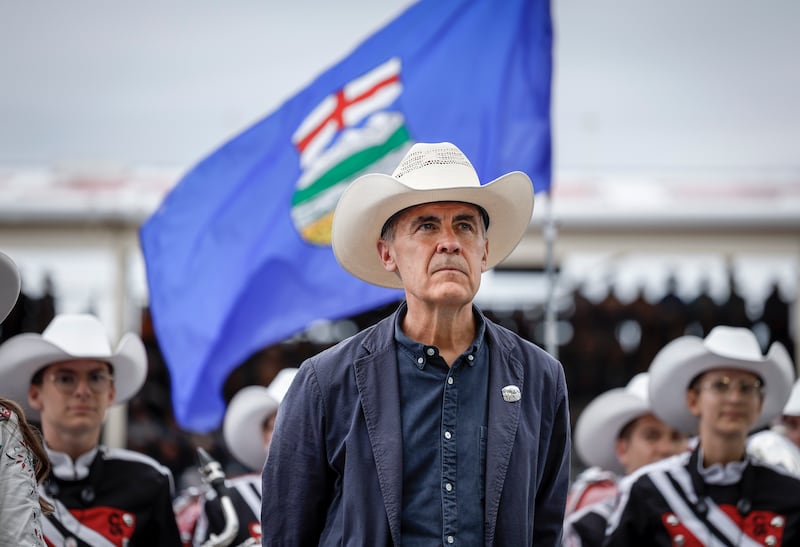
Before he left the Stampede, Prime Minister Carney urged Albertans to “lead, not leave,” and called for Canada to lead the world and for “Alberta to lead Canada.”
Well. For a Liberal prime minister with a total of three seats in the province of Alberta (he has more MPs in Brampton, Ont., alone), that is a strident effort to bring reconciliation to the Alberta-Ottawa relationship in a way that should find a warm reception with Albertans.
But I am not an Albertan. And I am certain that as Albertans consider their place in Canada and whether they want a protracted and divisive debate over their province’s future in Canada, the last thing they might appreciate is an outsider preaching to them what their interests might be.
However, as an observer of sincere past efforts by other prime ministers to correct past failures of regional policy and politics in an effort to unite Canadians, I think it is unquestionable that Prime Minister Carney has made substantive progress on a fundamental course correction regarding Alberta’s place in Canada and in the world as an economic leader.
More from James Moore:

