Researchers at the University of Waterloo in Waterloo, Ont. have developed a new way to create custom contact lenses using 3D-printing technology. It’s a breakthrough they said could one day allow patients to receive specialty lenses during a single visit to the eye doctor.
The technology focuses on rigid, or “hard,” contact lenses, which are often prescribed for people with complex prescriptions or irregularly shaped corneas. Unlike more common soft contact lenses, rigid lenses are custom-made for each patient and can last up to a year.
But that personalization can come with a significant cost and a lengthy fitting process.
Shirley Tang, a chemistry professor at the University of Waterloo, said rigid contact lenses currently cost between $500 and $1,500 U.S. per pair.
The research team hopes its new 3D-printing process could eventually reduce those costs to about one-tenth of the current price, while also cutting down the time it takes to receive a customized lens.
“Hopefully with this printing we can just deliver the perfectly fitted hard contact lenses in one shot,” Tang said.
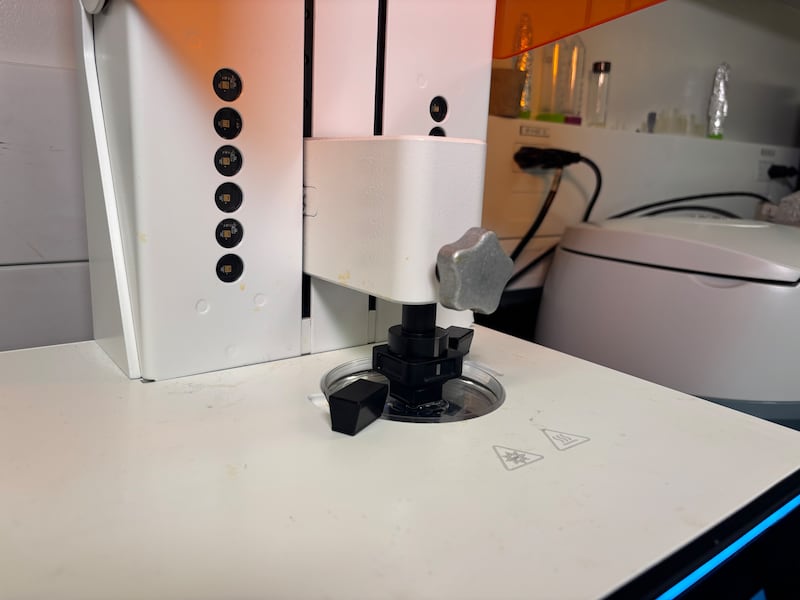
The process begins with a detailed scan of a patient’s cornea, creating a digital map of the unique shape of the eye.
“Even with astigmatism, the cornea will look different in certain spots,” said Astrid Stinson, a nanotechnology engineering student at the University of Waterloo. “So, it will have deeper portions where it’s supposed to be flatter, or it’ll have flatter portions where they’re supposed to be more steep.”
That information is then sent to a computer program that designs the shape of the lens before it is printed using a specialized silicone material developed by the research team.
Researchers said finding the right material was one of the biggest challenges because silicone is commonly used in contact lenses for its comfort and oxygen permeability, but it is not typically compatible with 3D printing.
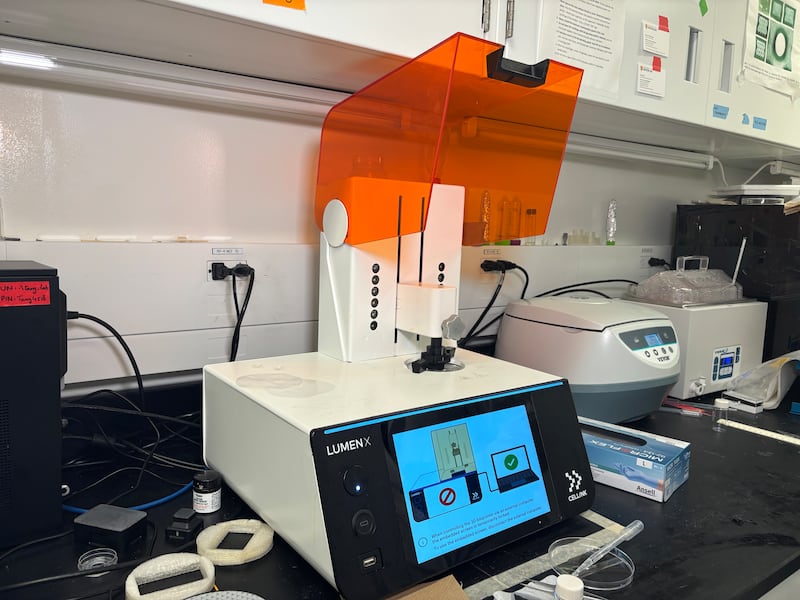
Once printed, the lenses undergo an additional coating process to smooth the surface and improve durability.
“After printing, we need a coating,” said chemistry research associate Sayan Ganguly. “We just use UV light to cure it until it is hardened.”
The team said safety testing is also a critical part of the research process.
“We need it to be good with our body,” said Fatemeh Parniani, a master’s student at the University of Waterloo. “Our body reacts with some materials that are toxic to our body. So we don’t want it to be like that.”
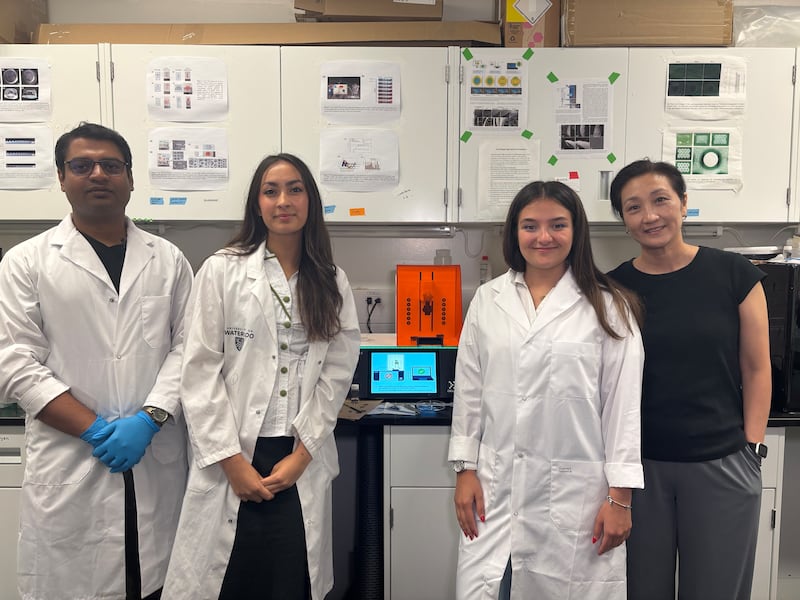
The lenses have only been tested in laboratory settings so far. Researchers said next steps include refining the technology, securing a patent and eventually moving toward human testing.

