


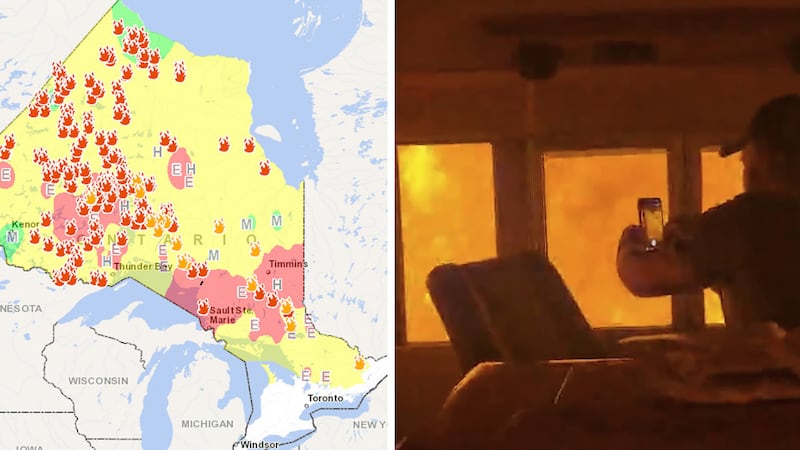
More than 850 active wildfires are burning across Canada, including in parts of Northern Ontario, where flames are tearing through structures, forcing residents to flee and sending smoke across the province.
According to latest data from the province, there are 180 active wildland fires — 136 in Ontario’s northwest region, with 63 classified as out of control, and 44 in the northeast region, where nine are classified as out of control.
A total of eight new fires were discovered in the northeast region and eight more in the northwest between Tuesday’s and Wednesday’s evening updates.
Several Ontario communities, including Armstrong, Lac La Croix First Nation, Whitesand First Nation, Gull Bay First Nation and Lac des Mille Lacs First Nation, have been ordered to evacuate due to fires.
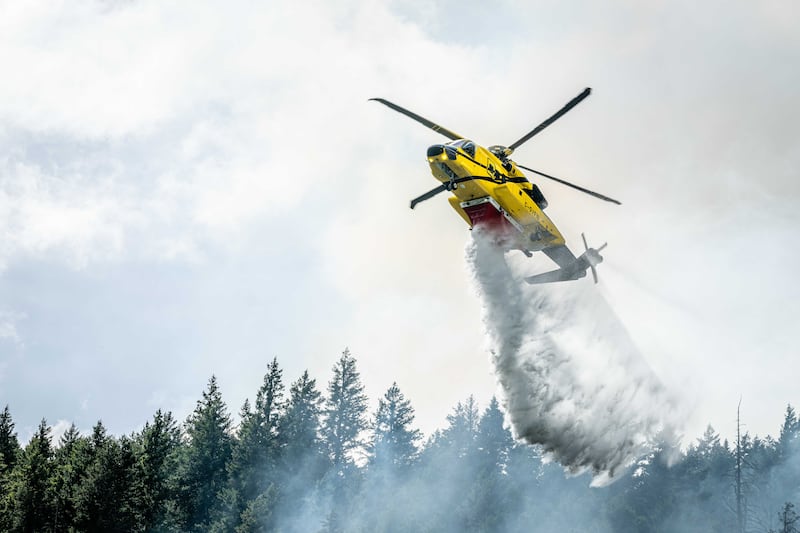
“Our focus continues to be on priority areas where fire suppression efforts are most likely to be successful, with top priorities being the protection of wildland firefighting personnel and public safety, critical infrastructure, and capturing, where possible, new fires,” the province said in Wednesday evening’s update, the latest available as of 9 a.m. Thursday.
“The types of wildland fires we are seeing on the landscape, either large in size or close to communities or other important structures or resources, require the full deployment of our available resources.”
There have been 483 wildfires recorded inside Ontario’s fire region in 2026, compared to 351 last year and the 10-year average of 320.
‘You could just about taste it,’ evacuee says of wildfire smoke in Armstrong
Armstrong resident Diane Laybourne fled to Thunder Bay when the evacuation order came into effect, saying she’s never experienced anything like this before in her more than 60 years of living there.
“It was really strange because I just got back to Armstrong from Thunder Bay. I packed some clothes and whatever I needed and got in my vehicle and drove south to Thunder Bay,” she told CTV Your Morning.
“(I) got here around 2:30 in the morning.”
Environment Canada issued an air quality alert for Thunder Bay, warning of impacts on health, and Laybourne says she’s finding it difficult to breathe.
“It’s terrible,” she said. “Having to go out in it, you just want to get in some place where the air is clean. It’s just a grey haze.”
She said the smoke is “still really heavy” in Thunder Bay, but not as bad as it was in Armstrong the night she fled. “It was really thick. You could just about taste it.”
Now Laybourne’s left wondering when she can return home.
“We’ve spent the last couple of days trying to get answers,” she said. “I’m hoping that the fire will change direction and head to a lake someplace and burn out.”
“My son and my grandson and about 40 people from Armstrong returned there yesterday (Wednesday),” Laybourne added, “and they brought pumps with them and hoses and set up a sprinkler system around the community.”
Firefighting budget questioned as fires burn
Ontario’s Emergency Preparedness Minister Jill Dunlop has asked the federal government to make its aircraft available quickly for emergency response.
The government typically may require a 48-hour lead time to respond to assistance requests, she said.
“I respectfully request your assistance to reduce this lead time to 24-hours or less by ensuring aircraft and their crews are placed at a heightened state of readiness,” Dunlop said in the letter addressed to her federal counterpart, Elanor Olszewsky.
In a social media post Thursday morning, Ontario Premier Doug Ford touted that the province “won’t spare a penny” to support the firefighters’ “heroic work.”
“We’re doubling down with historic investments in new firefighting crews and equipment to keep Ontario safe,” Ford said in a post on X.
Ontario Green Party leader Mike Schreiner personally checked out the wildland firefighting equipment at the Carling Fire Department Wednesday to understand how the fire stations were tackling the blazes.
“Every year when the Ontario budget comes out in the spring, including this year, you see a cut in the budget for wildland firefighting,” Schreiner told CTV News.
“We need to have fully funded crews.”
The province allotted $150 million for emergency forest fighting in 2026-27, despite spending $271 million to fight fires last year, according to the latest budget.
Schreiner suggested the province launch a forest fire management and wildfire prevention program, saying that his party had been asking the Ford government to make the “proper investments” needed for wildland firefighters. He also said the province should ensure firefighters are compensated fairly and have proper protective gear, equipment and training before the wildfire season begins so they are “better prepared to protect us.”
The Ministry of Natural Resources told CTV News in a statement Thursday that it has spent nearly $1.5 billion on emergency fire management since 2018.
“And we have more than doubled the base budget for emergency fire management, increasing from $69.8 million to $150 million,” it said, adding that the province is making an “historic investment” of nearly $650 million in firefighting aircraft.
More than 170 new permanent fire personnel have been hired since 2024, and frontline staff compensation has also been increased, the province added.
First Nation ‘devastated’ by fast-moving fire
Ontario’s Namaygoosisagagun First Nation, or Collins First Nation, has been “devastated” by an unexpected and fast-moving wildfire, Anishinabek Nation Grand Council Chief Linda Debassige said in a statement Wednesday.
She said the fire caused extensive damage, destroying homes and community buildings in the First Nation.
“We’re aware that community members were forced to carry out an emergency evacuation without the support of emergency services, and based on information currently available, all community members known to have been in the community at the time have been accounted for; however, this will be confirmed pending a full assessment,” Debassige said on Wednesday.
The Anishinabek Nation is dedicating resources to support the Namaygoosisagagun First Nation by providing “boots-on-the-ground, accommodation co-ordination, and liaising with government,” she said in the statement.
Collins First Nation Chief Helen Paavola said people fled the area by boat as the trees near their homes ignited. The community is located roughly 210 kilometres north of Thunder Bay and cannot be accessed via roadways.
The community has declared a state of emergency and is seeking support from both the federal and provincial governments.
“Our primary focus is to take care of our community members, as many of our people ran out of their houses with only the clothes on their back,” Paavola said.
Smoke in the forecast across Ontario
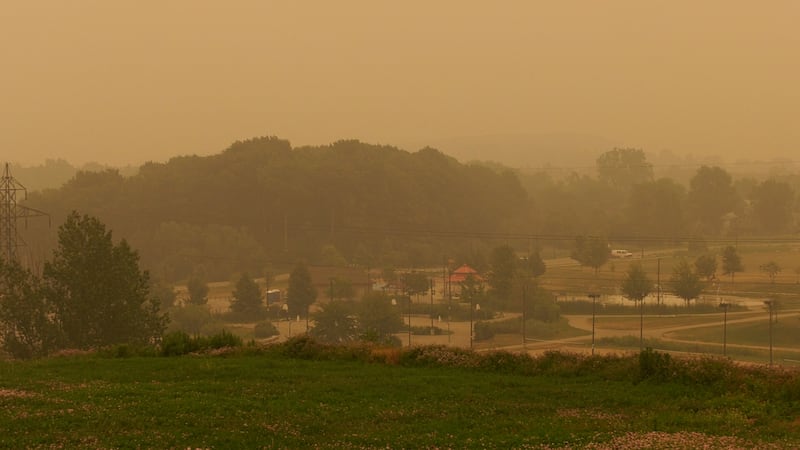
Residents of the Greater Toronto Area (GTA) and elsewhere in more southern parts of the province are dealing with thick smoke that has shuttered outdoor programs and facilities. Weather alerts are in effect for much of Ontario as a result of the smoke.
On Thursday, Toronto was the city with the second-worst air quality in the world, according to air quality data tracker IQAir, a day after it held the top spot.
Environment Canada is warning that everyone, “regardless of their age or health status,” is impacted by poor air quality.
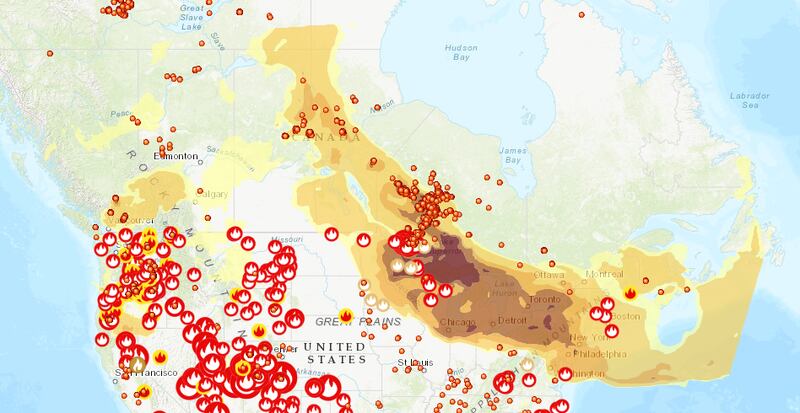
The smoke has drifted to areas south of the border, leaving parts of several northeastern U.S. states under hazy, orange skies. Hazardous conditions were reported in Wisconsin and Michigan, while Ohio, New York and Pennsylvania also noted serious health risks because of the smoke.
Via Rail halts trains due to wildfires
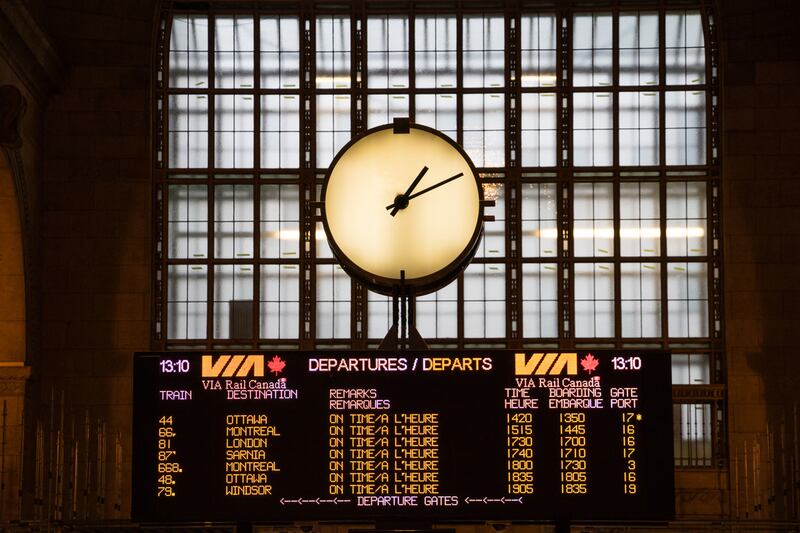
Spreading wildfires near tracks in northwestern Ontario have prompted Via Rail to cancel trains operating through the area.
Train 1, which runs from Toronto to Vancouver, was cancelled between Toronto and Winnipeg on Wednesday, while Train 2 (Vancouver to Toronto) didn’t operate past Winnipeg on July 10, Via Rail told CTVNews.ca in a statement Thursday.
The upcoming Toronto-Winnipeg portion of Train 1 departing Sunday is also cancelled “due to continued wildfire activity in the area,” the company said, adding that affected passengers were contacted and received a full or partial refund.
“Via Rail is repositioning equipment through Winnipeg to maintain service on the western portion of the route,” the company said.
“We acknowledge these situations, which are beyond our control, impact the travel plans of our customers, and we sincerely apologize for the inconvenience caused.”
Road closures, restricted areas
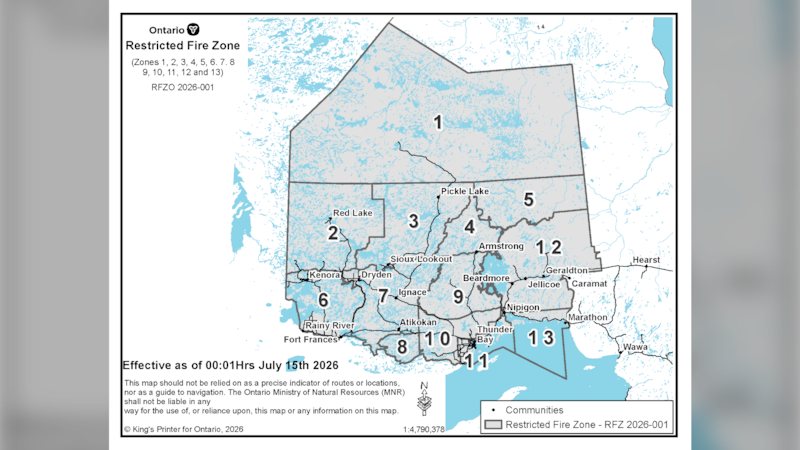
Ontario has implemented certain “restricted fire zones” and road closures for the northwest region and a small portion of the northeast region, according to an alert on the Ministry of Transportations 511 website.
Sections of two roads remain fully closed as of Thursday morning, including Highway 599 between Highway 516 and Mishkeegogamang First Nation, while Highway 527 is shut down between Gull Bay First Nation and Armstrong.
“This order is required to reduce the number of human-caused wildland fires. We are expecting the current fire hazard to remain, along with the potential for problematic fires to continue and expect a continuation of the increased forest fire activity into the foreseeable future,” the province said.
The restricted fire zone is in place “until further notice,” according to provincial environmental officials, meaning no open air burning, including campfires, is allowed within the boundaries.
The province also warned people to use extreme caution when using portable gas or propane stoves for cooking or warmth, and all burning permits are suspended.
A Notice to Air Missions and standard airspace restrictions are also in effect.
“The airspace around all active forest fires is restricted to forest fire suppression aircraft only, specifically airspace within 5 nautical miles, up to an altitude of 3,000 feet above ground level,” the notice said.
Smoke wafts past U.S. border
U.S. Ambassador to Canada Pete Hoekstra posted a statement Wednesday on social media saying that responding to these wildfires demands a “shared response” from both countries, noting that the smoke had reached over his home state of Michigan.
“I commend the outstanding cooperation between the United States and Canada as we confront these fires together. Our two governments are monitoring and sharing information in real time — coordination that reflects our partnership at its best,” Hoekstra wrote.
“This challenge knows no borders. The United States will continue to coordinate closely with Canada, just as we have for more than four decades of shared wildfire emergencies.”
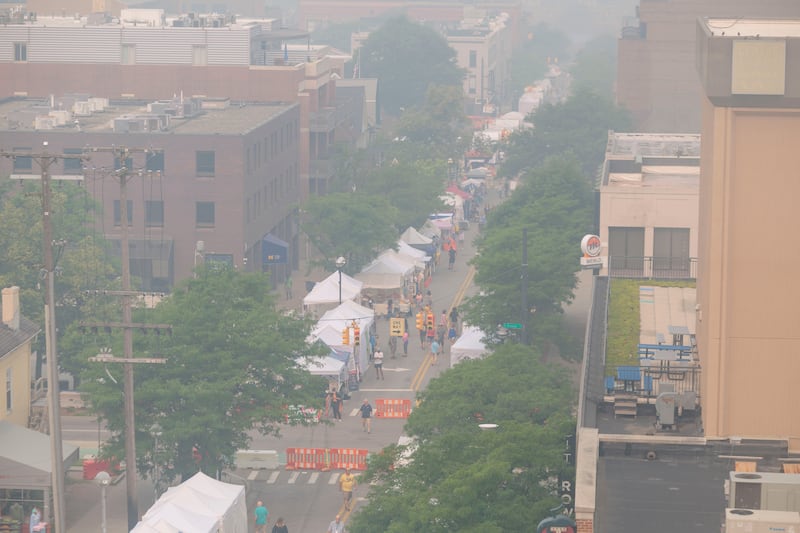
New York Mayor Zohran Mamdani also addressed the deteriorating air quality in a post on social media.
“Poor air quality affects everyone, but some people are more sensitive to it than others, including people with heart or lung conditions, older adults, pregnant New Yorkers, and infants and children,” Mamdani said.
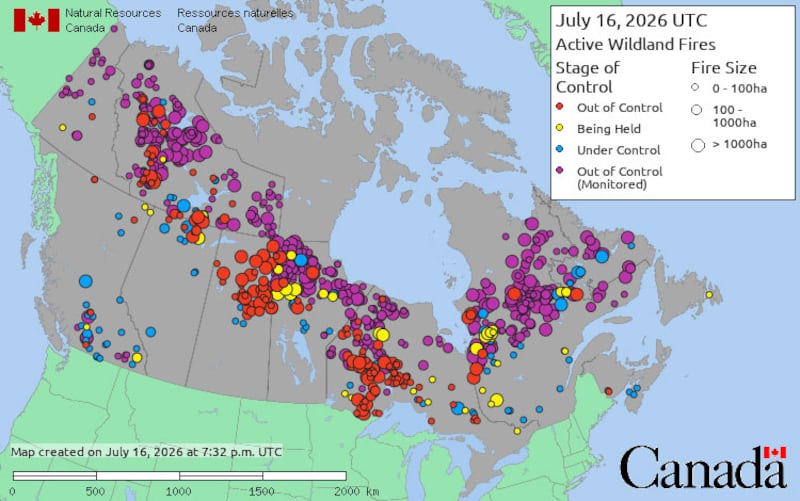
How many wildfires are burning across Canada?
As of Thursday, 858 active wildfires are burning across the country, from Atlantic Canada to B.C., with 111 listed as out of control, 25 being held and 64 under control. These blazes affect roughly 904,200 hectares of land, according to the Canadian Wildland Fire Information System. An additional 97 fires require modified response, while 561 are being monitored.
Fire destoys buildings in B.C.
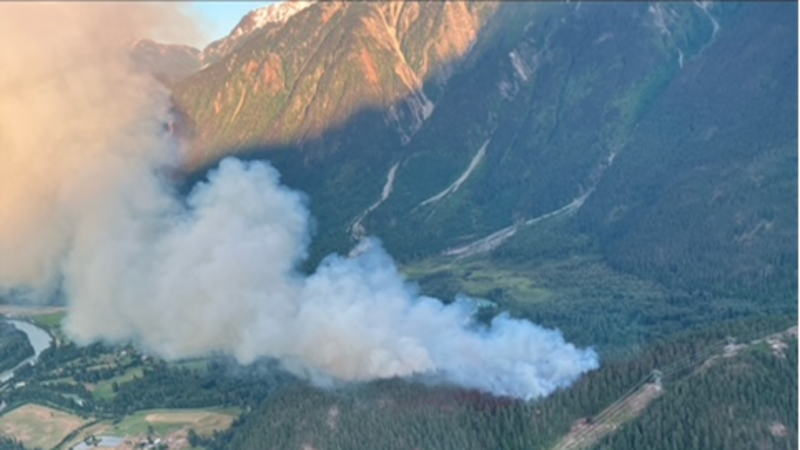
In B.C., authorities ordered Boston Bar residents to evacuate Thursday because of a wildfire that flared overnight. A fire complex — the Brunswick Creek and Ainslie Creek fires — had already forced people to flee, but the new order extends the evacuation to the town site, which has a population of roughly 170.
Seven buildings have been destroyed by fire in the Ainslie Creek area, according to officials with the Fraser Valley Regional District.
“Four are either residential structures or seasonal cabins,” district spokesperson Samantha Piper said in a statement Thursday morning. “Three are accessory structures or structures supporting commercial uses.”
While no injuries have been reported, officials say the situation remains highly dangerous. Some residents have chosen to stay behind despite mandatory evacuations, Piper said, and she’s urging them to adhere to the order.
Meanwhile, a park in Pemberton has been ordered to evacuate following a human-caused blaze discovered Wednesday afternoon, the B.C. Wildfire Service said. Several properties within the town are also on evacuation alert.
With files from CP24’s Jermaine Wilson, the Canadian Press, and CTV News’ Luca Caruso-Moro, Rick Wyman, Todd Coyne and Kaija Jussinoja.

