ST. JOHN’S – Jayden King just wants to get back to his teenage life — hunting, fishing and exploring off-road, around the bay in rural Newfoundland.
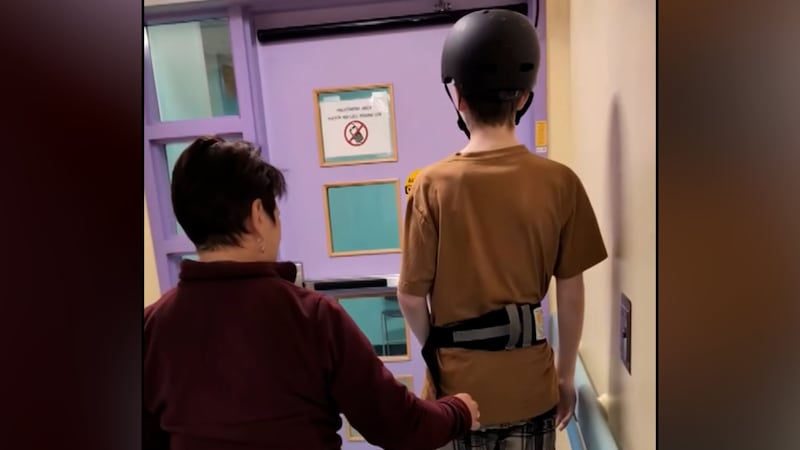
While he’s taken his first steps, there’s a long road of recovery between him and the freedom that he once enjoyed as an outdoors-loving 14-year-old boy.
King has only just started walking unassisted, after months of therapy designed to restore as much mobility as the physiotherapists and doctors can give back to him.
A traumatic crash on an electric scooter has put even more therapy ahead — and has pushed that adventurous life seemingly far way.
“It’s a feeling I never want to feel again,” said Amy Richards, King’s mother. “I hope no parent has to go through it.”
King was riding on his electric scooter with a friend while operating the machine and his friend was riding behind him when he hit a speedbump, lost control of the scooter, and crashed.
The teenager was wearing a helmet, and it saved his life, Richards said. But the crash, and the impact of his friend falling on top of him brought a broken collarbone, a fracture, and further traumatic injuries.
King was in a coma for two weeks. He required an emergency surgery that removed portions of his skull to relieve the pressure of swelling in his brain.
He’s kept the clothes he was wearing that day, including his good pair of blue Silver jeans. They’re “nice to have,” he said.
“I don’t remember my childhood, I don’t remember anything,” King said. “I kind of wish I had my memory back, but it’s shot, it’s gone.”
As electric scooters and bikes explode in popularity across the country, so too have serious accidents. According to data by the Canadian Institute for Health Information almost 500 people were sent to hospital in electric scooter crashes between April 2023 and March 2024.
That constituted a 32 per cent increase from the previous 12-month period.
Health officials in Quebec and British Columbia have recently issued warnings about electric scooters, but rules vary greatly across the country about who can ride them, where, and how fast.
Across Quebec, electric scooters can be used on roads and some bicycle paths, provided the speed limit for the road is less than 50km/h. In all cases, the occupants must be travelling less than 25 km/h.
Toronto, Ont., on the other hand, forbids the use of electric scooters on its streets, even as a marketing campaign for the city rules acknowledges “they’re everywhere.”
Newfoundland and Labrador, where King and his family live, is one of the provinces where officials admit their rules haven’t quite caught up the new reality. The province’s Highway Traffic Act doesn’t explicitly consider electric bikes or scooters like it considers motorcycles or off-road all-terrain vehicles.
“These e-bikes are getting lighter and more powerful, so it’s definitely a concern for us,” Mike Goosney, Newfoundland and Labrador’s minister of government services, said in an interview in June.
“Our province isn’t really built for that type of infrastructure, for such an advancement in technology.”
Goosney’s PC government has pledged new rules will be in place this fall governing the use of the machines in that province. In some other provinces, rules even vary by municipality.
Whatever the regulations, Richards said it’s become far too easy for children to get their hands on electric bikes and scooters, and parents don’t always know the risks.
“These scooters are ordered online through the kids, and there’s easy access,” she said. “Parents don’t realize how fast these machines are, how big they are, and how dangerous they can be.”
Richards would like to stricter rules, and potentially more limitations on the speeds of the machines, she said adding that she didn’t realize just how fast King’s scooter could possibly travel.
“I also think there should be more safety, a better helmet made for e-scooters,” she said.
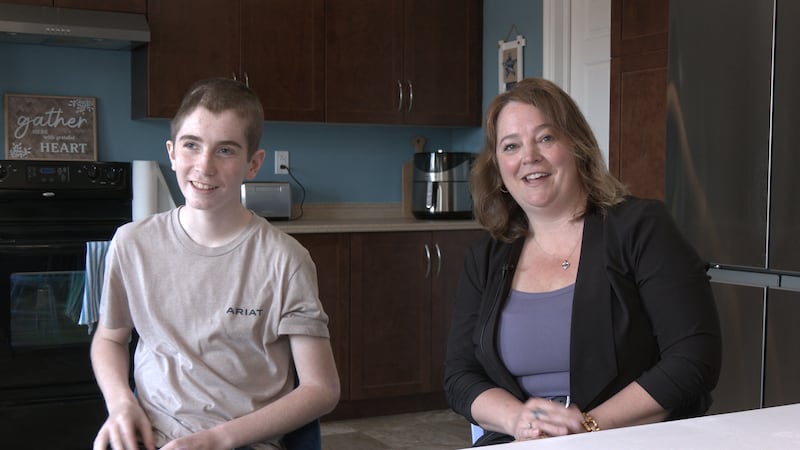
The crash wasn’t King’s first time on a scooter. He had been responsible with it before, Richards said, so it didn’t worry her at the time. The teen said he was travelling at 30 km/h at the time of the crash, but his scooter could reach speeds closer to 70.
King’s days are now filled by therapy sessions at the Janeway, the children’s hospital in St. John’s. He can go home for some time, but he’s still required to go back to his hospital room every night.
He’s anxious to get out. More than 70 days inside hospital are “too much,” he said.
Richards says her life has been put on pause too — she’s off work to care for King more intensely, helping guide him to his various appointments and therapy sessions in the hospital, and preparing to care for him when he is discharged.
He’ll be in physiotherapy until he’s an adult, Richards said.
But King wants to get back to his life. A life that includes a bit of adventure and independence.
His stepmother, Janine Dawe, said photos of King fishing, holding a crab or picking blueberries describe him “in a nutshell, before the accident.”

“He loves to be dropped off in the middle of nowhere, walk to a pond with his fishing rod and his tent, and spend the whole day there,” Richards added.
She’s hoping he can have those passions again, even if one part of her is still understandably terrified for her boy.
“I don’t even want to see him walking down the steps alone, let alone get on an e-scooter or a dirt bike,” she said. “But I know that day is coming. So, I’ve got to prepare for that.”

