THUNDER BAY, Ont. - Thousands of people in northwestern Ontario have been forced from their homes due to fast-moving wildfires, with many more told to be ready to leave as strong winds threaten to further the spread of more than 60 out-of-control fires.
One of the hardest hit communities is Collins First Nation, also known as Namaygoosisagagun, where the chief confirmed Thursday that the entire community has been destroyed.
“The flames were jumping and it was so scary,” said Chance Paavola, a 13-year-old boy. He was seen in a now-viral video driving an aluminum boat away from the flames.
“I was in disbelief, I couldn’t believe the fire was burning right in Collins,” he said. “It was scary that people could have been left behind.”
Chance said the community initially thought the fire would miss them. Strong winds then forced it in their direction, and they had little time to act. The community is not accessible by road, so people loaded what they could into boats and fled across the lake. Community members went door-to-door making sure everyone got out.
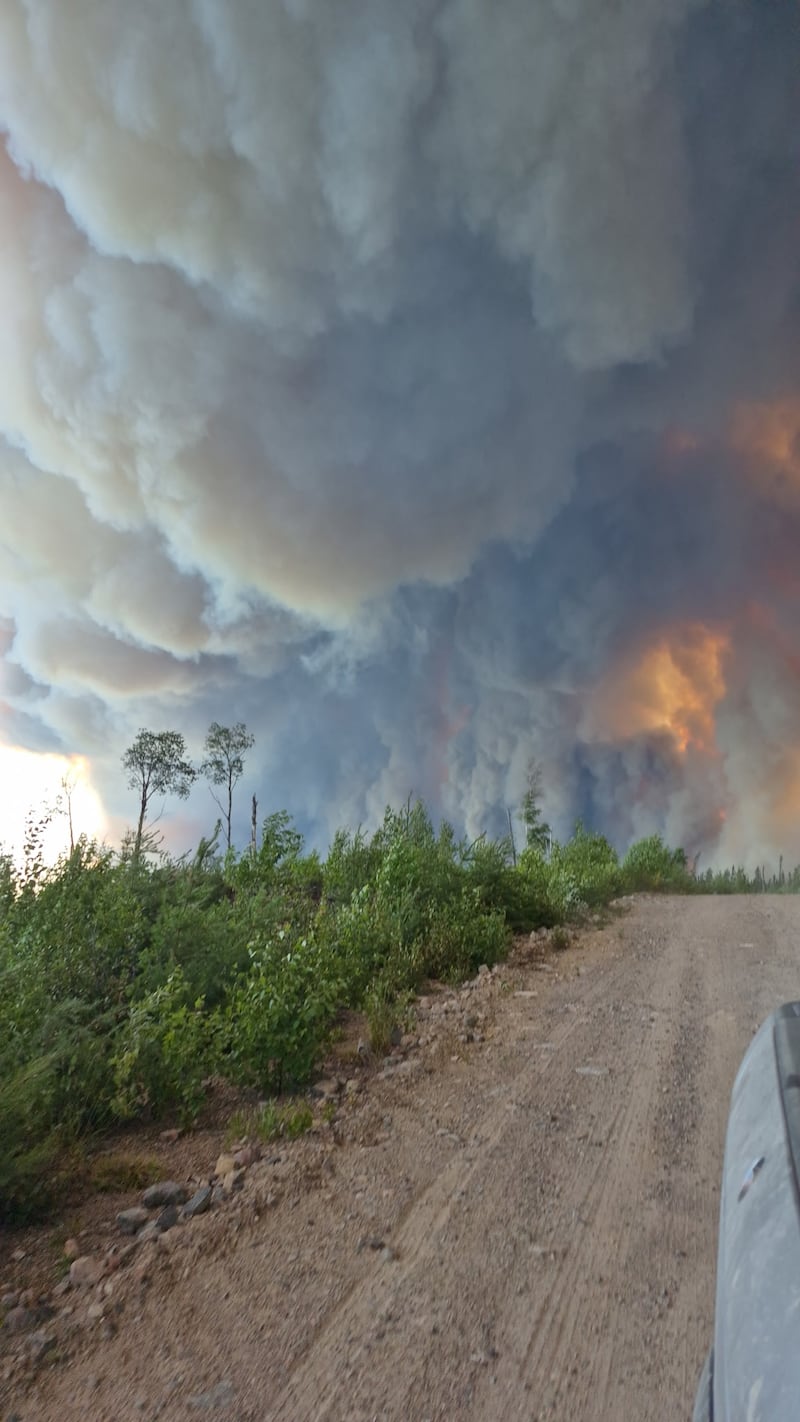
Chance said he turned his boat around to help another vessel that had too many passengers and was at risk of sinking.
“It was a matter of minutes that they would have died,” said Chief Helen Paavola. The chief was at the Assembly of First Nations (AFN) Annual General Assembly in Ottawa when the fire broke out.
She said she tried to keep in touch with community members but her phone service kept cutting out. Paavola was finally able to call her sons to tell them to get to the landing spot and help rescue people fleeing.
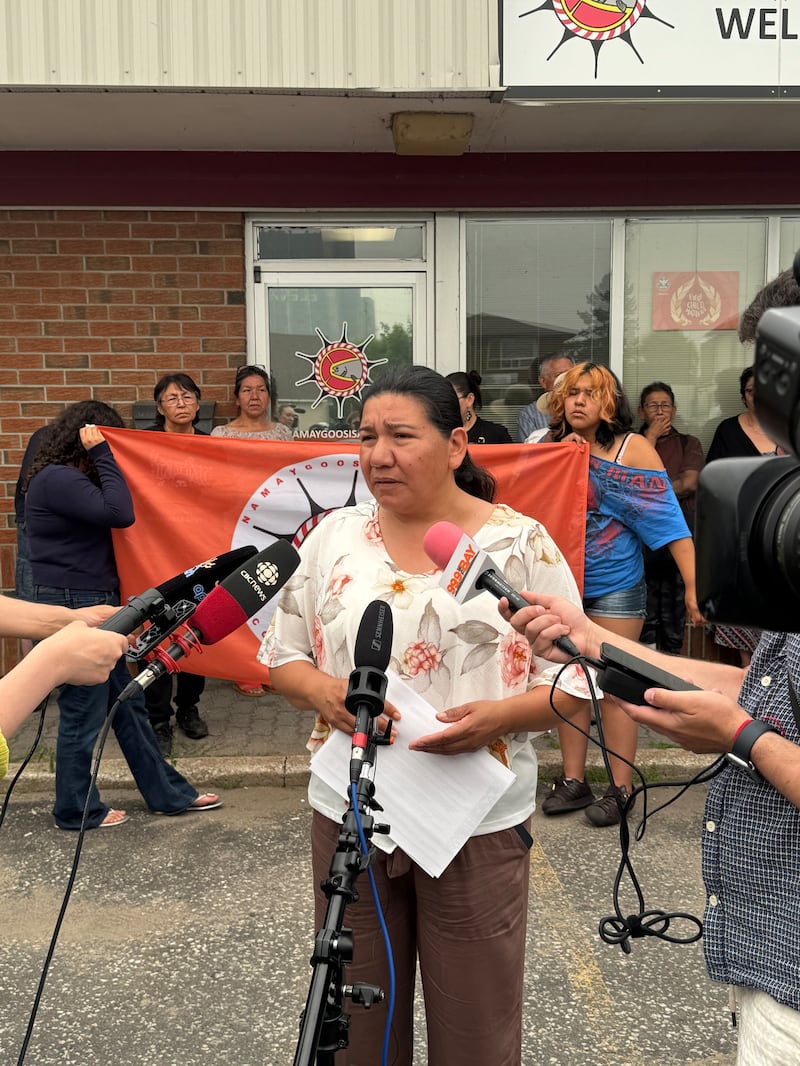
“They had no help. They had to do it on their own and did,” she said, adding that no one was left behind.
“They survived it, but now we have nothing,” she said. “The whole community burned down in less than an hour.”
‘It’s getting harder to breathe’
Ontario’s Aviation, Forest Fire and Emergency Services said the fire that impacted Collins was more than 350,000 hectares in size on Thursday. It was one of 136 fires burning in the northwest part of the province, 63 of which are considered out of control.
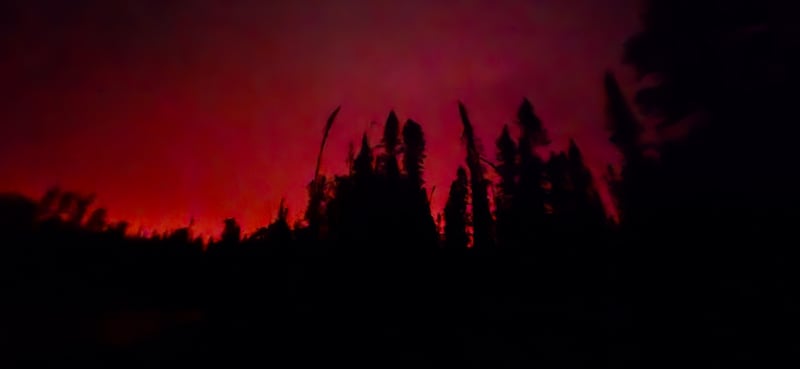
David Ogle and Kevin Stovall were in the midst of a canoe trip when they noticed smoke getting closer.
The two friends from Texas alerted their outfitter and they were told to paddle to a nearby lake where they could be picked up by float plane. About an hour into their paddle, they were told to stop because the fire was moving too quickly.
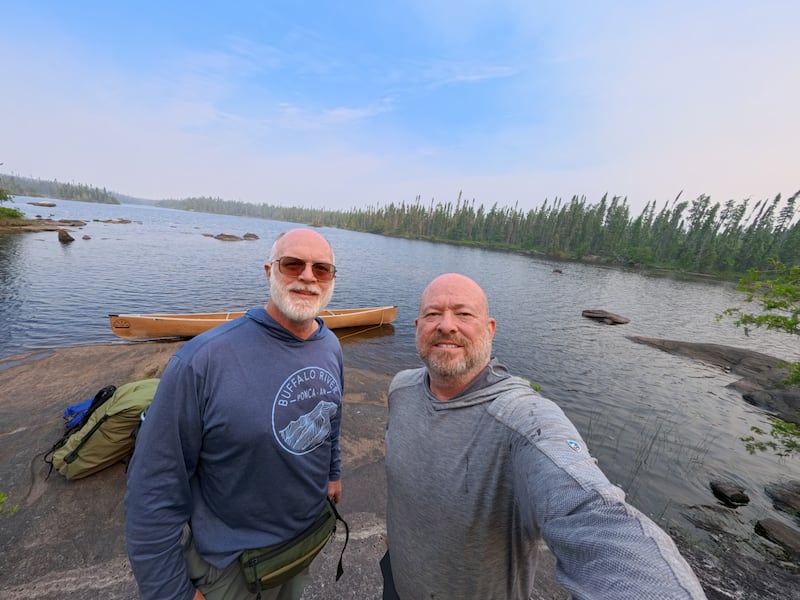
“It was frightening for sure,” said Stovall, who praised Bruce Hyer and his team at Wabakimi Wildnerness Lodge for doing everything they could to get them out. Hyer found a helicopter to fly in and rescue the friends, but visibility was so bad the chopper initially could not land.
“That’s when they told us to stay put at that spot for 24 hours,” Ogle said.
The pair spent the night in their canoe, ready to paddle out to water if the flames got too close.
“Ashes started falling on us, smoke was getting thicker. It’s getting harder to breathe,” recalls Ogle. “We actually created filters to breathe with - put stuff into the end of a bottle to make a filter,” he said.
They were eventually rescued but lost most of their belongings, including their passports. The Wabakimi Wilderness Lodge, where they had left some of their things, burned to the ground.
About 15 communities in northern Ontario have started evacuations or are considering them, with many not accessible by road.
Ontario has asked the federal government to have planes ready to go with less than 24 hours of notice in the event that more people need to get out.
Correction
CTV News mistakenly used a single shot of file video in coverage of Northern Ontario wildfires. The video has since been corrected.

