


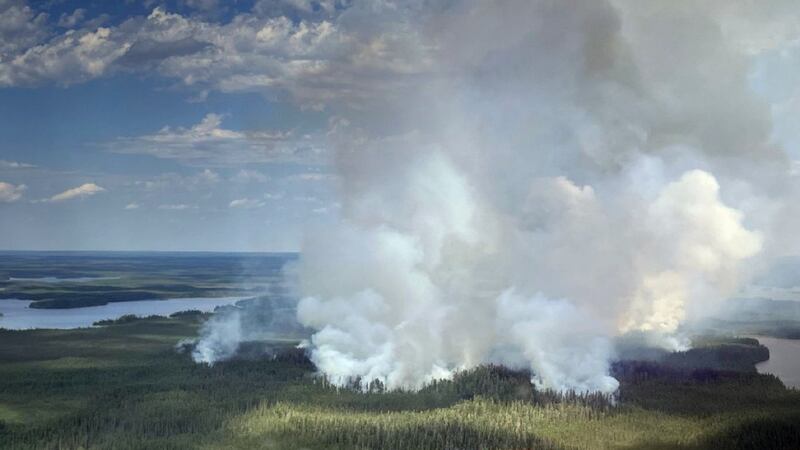
A small Ontario First Nations community that was burned to the ground by a raging wildfire on Monday is being deprived of necessary help because the federal government doesn’t recognize it as a First Nation, the community’s lawyer said.
Residents of Collins First Nation, a remote community without road access more than 200 kilometres north of Thunder Bay, were forced to self-evacuate earlier this week in advance of fast-moving fires.
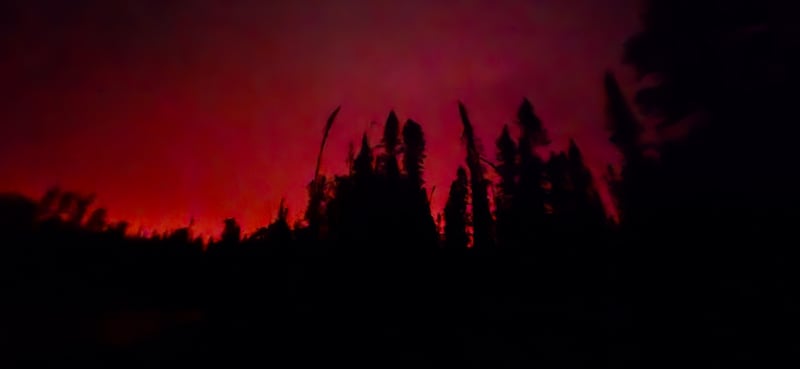
Videos show community members fleeing on small boats as the flames encroached upon the shoreline.
Anishinabek Nation Grand Council Chief Linda Debassige told The Canadian Press the community members made a narrow escape. She said they took care of each other after provincial and federal agencies failed to warn them of the blaze and provide evacuation supports.
The council, a body of 39 First Nations, recognizes Collins, also known as Namaygoosisagagun, as a First Nations community and is supporting its members by providing hotel stays and essential supports like food and clothing.
“We don’t know if we’re going to be reimbursed, but that doesn’t matter,” Debassige said.
“Our concern is about supporting this community when the federal and provincial government have failed them.”
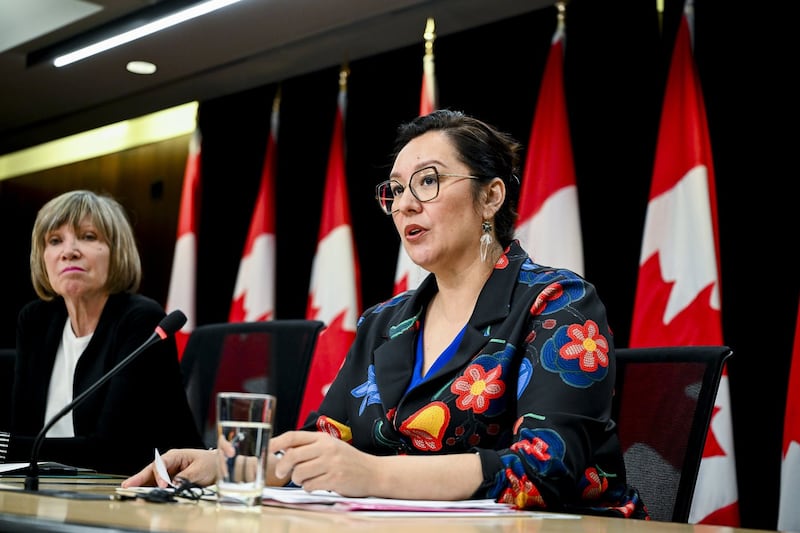
Meaghan Daniel, a lawyer who represents Collins First Nations, wrote a letter to Indigenous Services Minister Mandy Gull-Masty on Thursday calling on her department to provide the community with emergency, recovery and reconstruction supports available to recognized communities under the Indian Act.
Residents of Collins are recognized as First Nations people under the Indian Act but the community itself is not. Its leaders have pressed Ottawa for official recognition for decades.
“To be clear, if Namaygoosisagagun is denied access to the emergency and rebuilding supports available to recognized First Nations, it will not simply suffer a slower recovery. It may lose forever the opportunity to rebuild the community its members spent decades creating,” Daniels wrote in the letter.
“In those circumstances, the question is not merely whether recovery will be delayed. It is whether Namaygoosisagagun will have a future in the place it has called home since time immemorial.”
In an emailed statement, Indigenous Services Canada spokesperson Eric Head said the federal government will provide aid to address the community’s immediate needs. He said work is underway with federal and provincial partners to determine those needs and co-ordinate supports for community members.
The department did not answer questions about whether it will reimburse Anishinabek Nation for evacuation and relocation supports or help Collins First Nation rebuild, or if the minister has spoken with leaders from the community.
It did not say if it will recognize Collins First Nation under the Indian Act.
Indigenous Services Minister Mandy Gull-Masty was noncommittal when asked Thursday if the federal government would commit funding to Collins First Nation. She said the community exists in a policy gap because it lacks status.
“We are working very closely with the province. The province has expressed that they will be providing that support but I think we have a role to play in that space,” Gull-Masty said. “I am looking to take that next step.”
Conservative MP Billy Morin, who previously served as the chief of Enoch Cree Nation, accused the minister of dragging her feet.
“It’s wrong when people are faced with their homes burning down and their lives on the line that government officials don’t react to say, ‘We’re going to do everything in our power to help you,’ and they cite policy and technicalities not to help them,” he told The Canadian Press.
“They’re late to respond to people whose lives are on the line.”
Daniel said the First Nation does not have the luxury of waiting while jurisdictional and administrative questions are sorted out, and that every day that passes without clarity affects the future of an entire community.
This report by The Canadian Press was first published July 17, 2026.
Alessia Passafiume, The Canadian Press

