


New wildfires have sparked across Canada, with more than 900 blazes on Friday from the Atlantic provinces to B.C., though the total remains below the country’s worst fire season on record.
Friday’s cross-country tally includes 43 new active wildfires — 15 of those being human-caused, 18 natural and 10 undetermined — bringing the total to 903 across Canada, an increase from the 858 reported Thursday, according to the national wildfire summary.
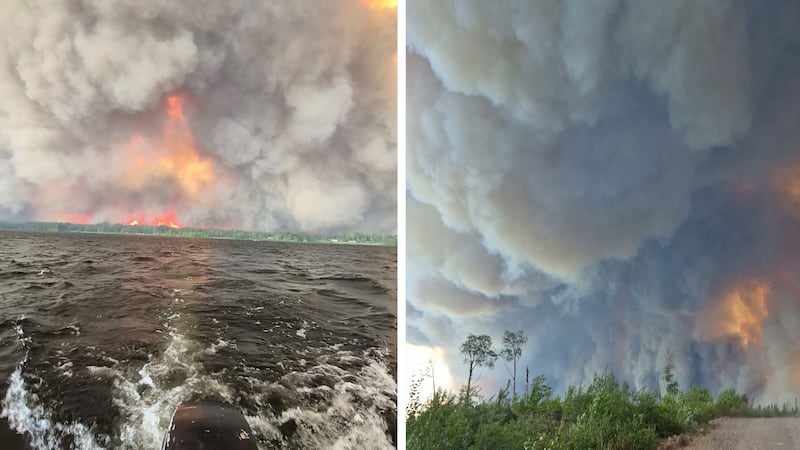
People have been forced to flee their homes amid evacuation orders, including in northern Ontario, where flames destroyed buildings and blanketed smoke across much of the province.
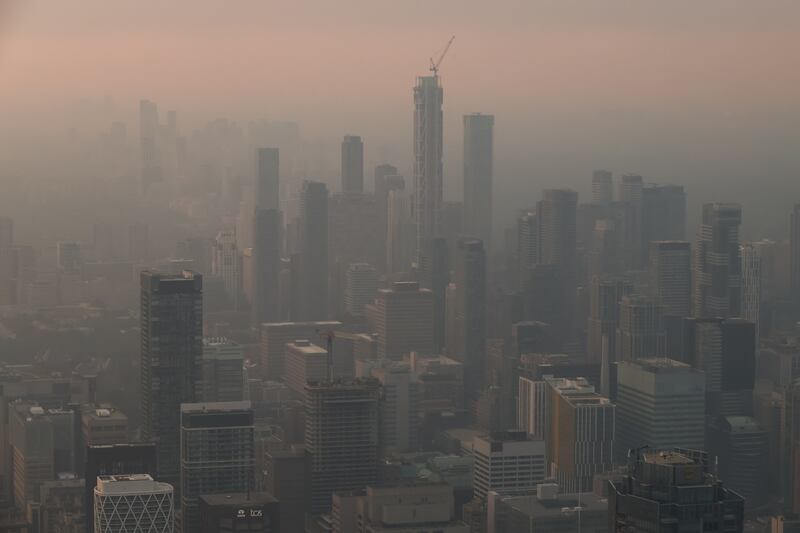
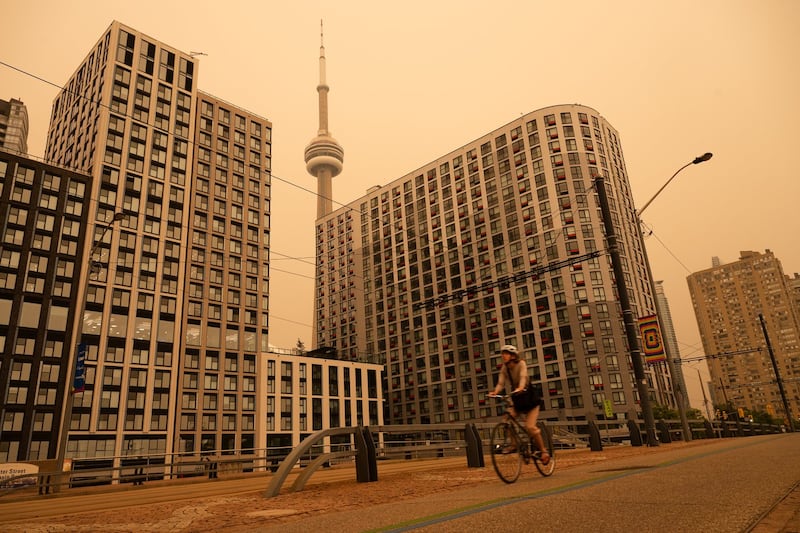
Toronto’s air quality ranked among the worst in the world this week, with Environment Canada issuing widespread alerts warning of heavy smoke’s potential health impacts.
“It’s terrible,” said Diane Laybourne, who fled to Thunder Bay, Ont., after an evacuation order in her home community of Armstrong. “Having to go out in it, you just want to get in some place where the air is clean.
“It’s just a grey haze.”
In B.C., a complex of fires near Boston Bar, spanning roughly 20,000 hectares, also triggered evacuations, while residents of the Jacket Lake, N.S., area were asked to leave due to an out-of-control wildfire there.
In Manitoba, about 600 members of O-Pipon-Na-Piwin Cree Nation have been displaced since late June also due to fire.
Flames are also impacting people in Northwest Territories, including those living in Fort Simpson and Wrigley. They were forced to flee late last month and still haven’t returned home.
How do previous wildfire seasons compare?
Of Canada’s 903 fires, as of Friday, 122 are burning out of control, 29 are being held and 73 are under control, officials say — while 101 require modified response and 578 are being monitored. Nearly 2.8 million hectares of land have been impacted by wildfires.
Yet the current wildfire season remains less severe than in 2023, Canada’s worst, most destructive season on record. On July 17, 2023, 1,084 fires were actively burning across the country, affecting more than 10 million hectares of land since the start of that year. Two years prior, on July 17, 2021, 1,003 fires were burning.
‘I was in disbelief,’ says evacuee in Ontario
As of Friday morning in Ontario’s northwest, 129 active fires are burning, 62 of them are not under control. Sixty-one fires are being reported in the northeast.
“I was in disbelief. I couldn’t believe the fire was burning right in Collins,” said Chance Paavola, 13, recalling the blaze in Collins First Nation, also known as Namaygoosisagagun.
“It was scary that people could have been left behind,” he told CTV News.
‘Now we have nothing’: Chief
The entire Collins First Nation, one of Ontario’s hardest-hit communities, was destroyed, Chief Helen Paavola said. Residents had to flee by boat.
“They had no help. They had to do it on their own and did,” Paavola said, adding that no one was left behind. “They survived it, but now we have nothing.
“The whole community burned down in less than an hour.”
READ MORE:
- Ontario crews battling about 190 wildfires, half out of control: officials
- ‘Despicable and disgusting’: Doug Ford rebuffs accusations that province is underfunding wildfire fight
The Ontario government and the Assembly of First Nations have called on Ottawa to provide support. The province budgeted $150 million for emergency forest firefighting in 2026-27, despite spending $271 million to fight fires last year, according to the latest budget.
“The fire hazard is expected to remain high to extreme across the region over the next few days. Hot, dry, and windy conditions are forecast throughout Northwestern Ontario and may contribute to increased fire behaviour and fire intensity on existing fires,” reads an update from the province.
Smoky skies: The new normal?
Smoke-choked skies in Ontario’s capital may be a glimpse of what’s coming as forests get drier, though experts say conditions may differ each summer.
Mike Wotton, a research scientist with the Canadian Forest Service, told CTVNewsToronto.ca that the city has seen more hazy skies in the last five years because of wildfires than in the previous 20 years.
“...we are seeing warmer summers overall, and I think you see that on the news globally. You see that we keep breaking global temperature records,” Wotton said.
“The warmer you are, the drier your forest fuels are getting, essentially.”
Michigan lawmakers criticize Canada
A handful of Michigan state representatives have called on the Canadian government to improve its response to wildfires, claiming Canada has not done enough to address the “source” of the blazes.
“In 2023 and 2025, I and many other elected officials across Michigan called on Canada to change their forest management practices to decrease the risk of widespread forest fires that lead to hazardous air quality downwind,” wrote Rep. David Martin.
“It’s disappointing that there hasn’t been meaningful change, and that Michiganders are breathing hazardous air for the second straight summer,” reads his post on social media.
Republican representatives Jack Bergman, John James, Lisa McClain, and John Moolenaar penned a letter earlier this week entitled “Canada’s Apologies Won’t Clear Michigan’s Skies.”
They accused Canada of not acting with “urgency” to address wildfire smoke in recent years, and stating “nothing has changed except that our patience has run out.”

The U.S. ambassador to Canada struck a different note. Pete Hoekstra, a former Michigan representative, released a statement on Wednesday commending the two countries’ co-operation.
“This challenge knows no borders. The United States will continue to co-ordinate closely with Canada, just as we have for more than four decades of shared wildfire emergencies,” he wrote.
The ambassador praised the collaboration between Canada and U.S., saying it “reflects our partnership at its best.”
Parks Canada has said “decades of fire suppression” has created forests dense with debris and vulnerable to fire. It also shared predictions that climate change would extend wildfire seasons in Canada. To mitigate that risk, it wrote, it coordinated wildfire “risk reduction” projects across 719 hectares spread between a variety of sites in 2025.
With files from The Canadian Press, CTV News’ Heather Wright, Alex Arsenych

