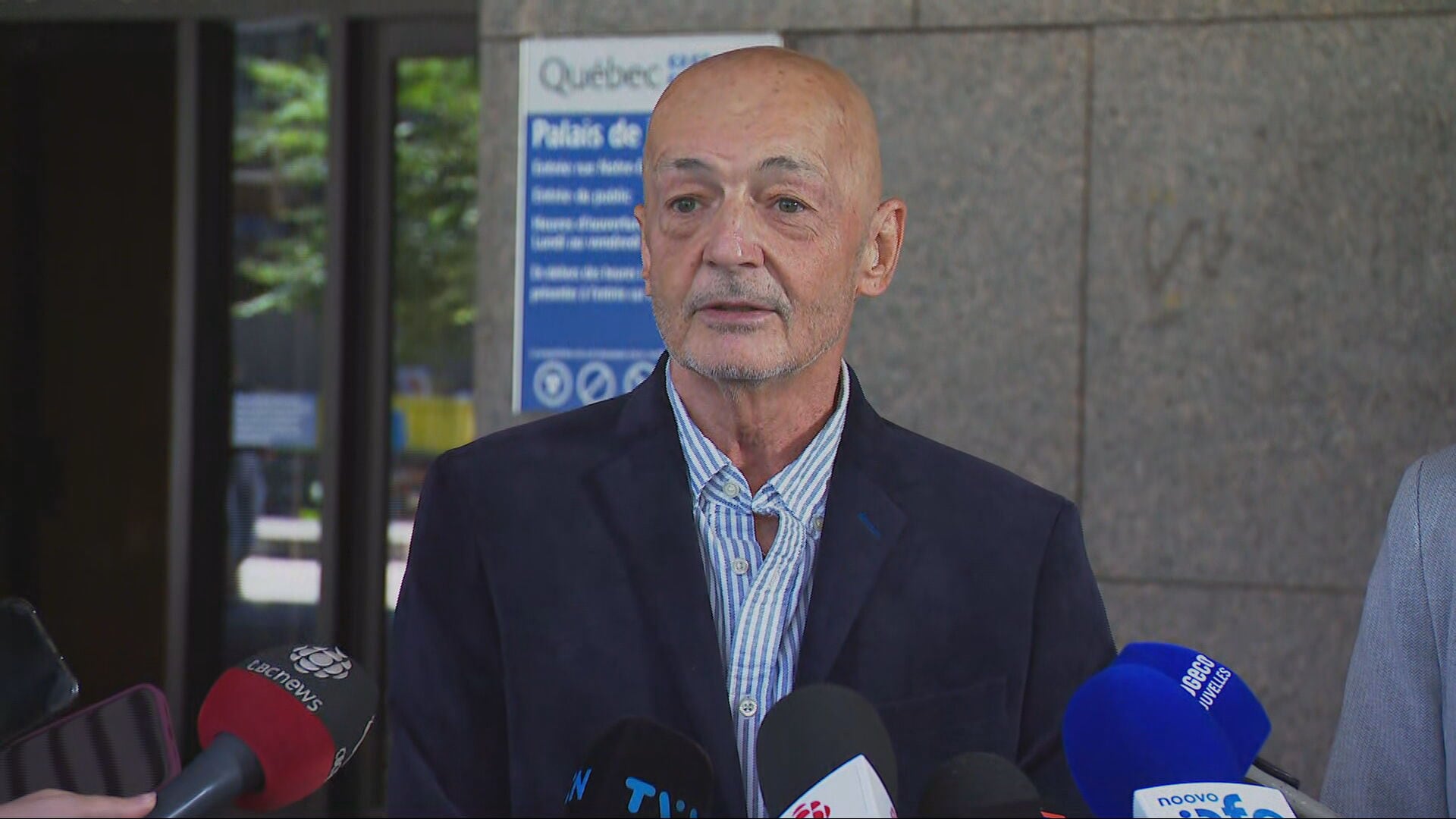
A Montreal man who says he was wrongly convicted more than three decades ago will have another day in court.
The Minister of Justice and Attorney General of Canada, Sean Fraser, has ordered a new trial following the criminal conviction review in the case.
The rare decision is not a ruling about the guilt or innocence of the applicant.
“As Minister of Justice, I have the authority under the Criminal Code to order a new trial or appeal when new evidence shows a miscarriage of justice likely occurred. My decision does not decide guilt or innocence, as that will rest with the courts. Our responsibility is to make sure Canadians can trust their justice system, and that means, in rare cases, returning cases to the courts for new information to be considered,” said Fraser in a statement on Friday.
The statement also says the minister found reasonable grounds to conclude a miscarriage of justice likely occurred in Jolivet’s 1994 conviction.
Jolivet has been waiting for a decision since Dec. 19, 2025. That day, he walked out of detention for the first time in 33 years.
Despite spending all those years behind bars and fighting to get out, his lawyer, Nicholas St-Jacques, said Friday it’s important for his client to hear the words “acquitted” rather than to just move on without a fair trial.
“I want a new trial because I want to be found not guilty, which you know that I am,” Jolivet said with a smile at a press conference outside the Montreal courthouse on Friday.
“It’s the better option because everyone will know that I am innocent, that I will be found not guilty by a Superior Court judge after the new trial was ordered. I don’t want the charge to be dropped or for them to say there will be no trial.”
Jolivet was convicted of a quadruple murder that took place during the night of Nov. 9 to Nov. 10, 1992 in a condominium complex on the South Shore of Montreal. Two men linked to organized crime, Francois Leblanc and Denis Lemieux, were found shot to death. Two young women, Catherine Morin and Nathalie Beauregard, who were at the wrong place at the wrong time were also killed.
Jolivet has long admitted he had a criminal past with convictions on his record but has always denied he was responsible for the murders. From his prison cell, he had fought tirelessly to be exonerated, including creating a detailed paper timeline of all events surrounding the murders.
Eventually, lawyers with the Projet Innocence Quebec took on his case.
A major breakthrough for Jolivet came last year after Quebec’s Crown prosecution office determined that he may have been the victim of a miscarriage of justice. The case was referred to the federal justice minister, who was weighing whether to order a new trial, refer the case to the Quebec Court of Appeal, allow Jolivet to walk free or return to prison.
In December 2025, St-Jacques convinced a judge that he should be released on bail while his fate was hanging in the hands of the minister. He argued in court that there were significant issues with the disclosure of evidence at Jolivet’s trial, saying Jolivet did not have a fair and equitable trial.
Much of the evidence against Jolivet rested on the testimony of a former cop, Claude Riendeau, who had turned to organized crime, and then became a police informant. Riendeau said Jolivet had admitted to the murders the morning after the killings, but there was some evidence contradicting the timeline of that admission that was not revealed to Jolivet before his trial.
Jolivet was granted bail and instructed to follow a list of conditions, including remaining supervised by two court-appointed sureties who were responsible for ensuring that he would follow the conditions of his release.
The day of his release marked a major milestone, but his lawyer said that waiting for the decision on whether he would return to prison weighed heavily on Jolivet.
“Being in a state of uncertainty is very difficult for a person like Mr. Jolivet. Still waiting to know if he’s going to go back to detention for the rest of his life or if he’s able to continue living his life outside of the walls, you know. So, it’s very stressful and there’s a lot of anxiety, and you know, I think his mental state is being affected by all this,” St-Jacques said at the time.
On Friday, he said the justice minister’s decision helps alleviate some pressure that Jolivet has been enduring over the last seven months and that he plans to file a motion to allow his client to remain out on bail pending the new trial.
Last month, the two sureties filed a motion to be relieved of their duties for reasons that were never publicly revealed. But Jolivet was instead admitted to a psychiatric hospital.
As he waits for the next steps of the legal process to unfold, Jolivet said he plans to take it easy.
“I will go fishing, I will take care of myself, I will have a follow-up with my psychiatrist,” he said. “Let’s hope that everything’s going to be fine.”

