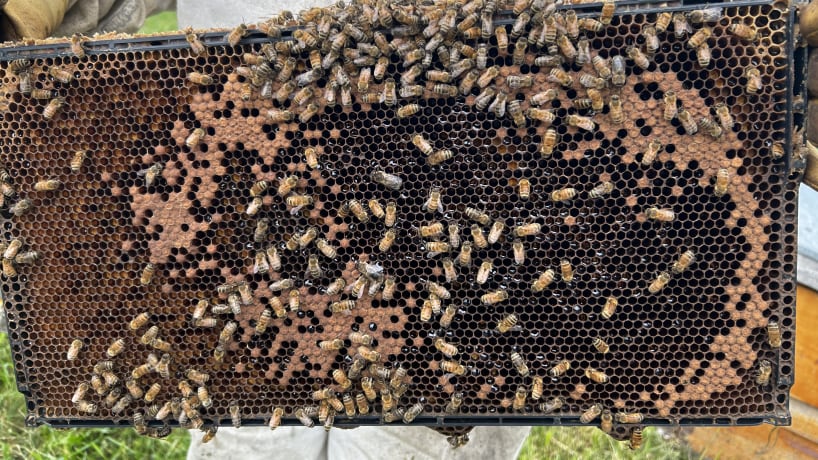
Honeybees are best known for producing honey, but their most important contribution is the role they play in pollinating Canada’s food crops.
However, the western honeybee (Apis mellifera) faces growing threats from disease, parasites and environmental stressors driven by a changing climate.
To address these growing issues, Dr. Nuria Morfin of the University of Manitoba is researching how microbes, parasites and environmental conditions combine to impact the health of honeybees.
“Honeybees are very important and contribute billions of Canadian dollars to the economy through the pollination of crops and also providing jobs and other sources of revenue,” said Morfin, an assistant professor of entomology in the faculty of agricultural and food sciences.
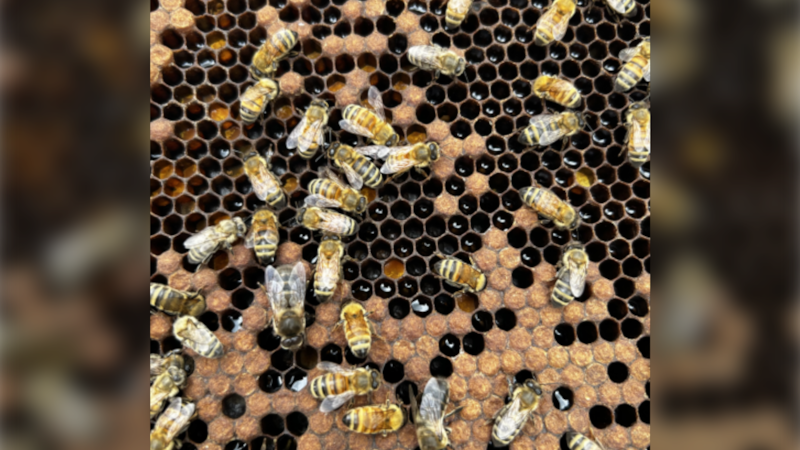
One of the greatest threats to these honeybee colonies is the parasitic mite Varroa destructor. The mite weakens bees’ immune systems by feeding on them, leaving colonies more vulnerable to viral infections such as deformed wing virus.
While the effects of the mite are well documented, researchers like Morfin are still working to understand how the mite interacts with different bacteria and viruses that affect honeybee colonies.
“We’re working to understand how these stressors interact and affect bees, and at the end, we want to propose solutions to the beekeeping industry so they can have more productive and healthier bees,” she said.
“We are also testing, for example, new treatments against Varroa mites, but also other diseases like European foulbrood and American foulbrood,” she said.
Morfin’s research at the University of Manitoba’s UM Honey Bee Lab uses the pathobiome approach — a research framework that recognizes diseases rarely have a single cause.
The team is investigating how Varroa destructor, microorganisms and environmental stressors work together to weaken honeybee immunity and trigger disease.
The research will also explore how changing environmental conditions, including temperature fluctuations and humidity, influence bee health and their ability to resist infection.
“We believe these will not stop, and we want to be prepared, understand more and provide more tools to the beekeeping industry,” she said.
“Apart from that, from a scientific point of view, honeybees are a very interesting model organism to understand diseases, behaviour and behavioural immune responses, so they are an amazing way of conducting basic research as well,” she said.
Morfin was awarded a new Natural Sciences and Engineering Research Council of Canada (NSERC) discovery grant to conduct these studies, which she estimates will take around five years.
Master’s student Danika Strelaeff says it’s important to understand all the different factors that impact honeybees to protect them for the future
“Honeybees are the pollinators that we rely on for large agricultural practices, so if we can keep them safe, then we can keep our agriculture safe,” she said. “I think it’s especially important that we take these diseases with high importance and we look for new, innovative solutions.”
Charu Sharma, a technician in apicultural research with the University of Manitoba, says honeybees don’t just have an impact across Canada, but globally.
“They are found in all the continents except Antarctica; it’s too cold for them,” she said.
“Honeybees are very important organisms in many ways, and the thing that I like about this is that they are part of research, they are part of industry, and food production.”
Beekeeping industry feeling the effects
For Manitoba beekeepers, managing these diseases remains a major concern.
Paul Gregory, vice-president of the Manitoba Beekeepers’ Association and co-founder of Interlake Honey Producers in Fisher Branch, about 150 kilometres north of Winnipeg, says it’s been tough to manage all the stressors bees are facing.
“Last year, we lost almost half the bees, and the bees that did come through were weaker,” said Gregory. “We’ll eventually get back to our numbers of 1,200 colonies, but it’s a lot of work and a lot of cost, and it’s a lot of stress for my son and myself.”
“We had a neighbour, in fact, that lost 90 per cent of his bees, so there’s a lot of stress,” Gregory said.
He says the issues honeybees face have intensified in recent years.
“It’s frustrating because the practices that we used two or three years ago are obviously not working today,” he said. “We’ve got to control the mites, but we have to be careful.”
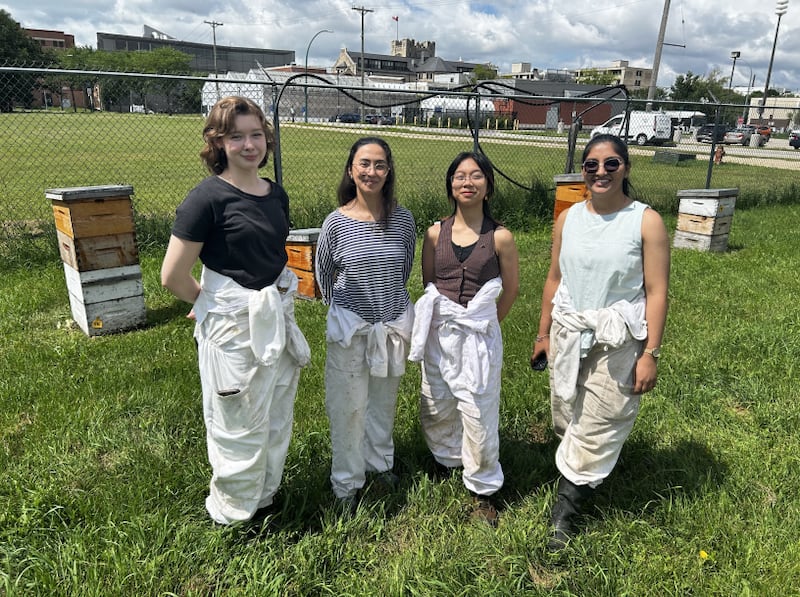
Despite the challenges, Gregory says the research Morfin and her team are undertaking offers hope to beekeepers.
“It’s going to affect, large areas if we can’t keep the bees alive, and we do hope there’s going to be some solutions out there going forward,” he said.

