New numbers are highlighting the enormous impact the June storms had on Manitoba farmlands.
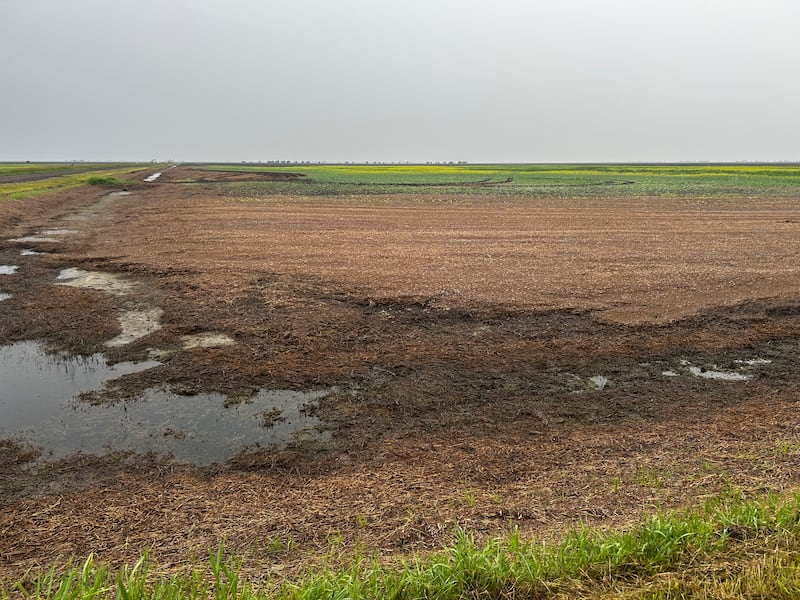
According to the Manitoba Agricultural Services Corporation (MASC), which provides support for farmers, more than 300,000 acres of farmland have been claimed for insurance since the flooding.
That includes about 157,000 acres that couldn’t be seeded and another over 160,000 acres that were seeded but later damaged.
“Producers don’t have to report those acres to us unless they plan to do something with that land,” said MASC CEO Jared Munro. “We know that those numbers will be a bit underestimated, but we really won’t know the full effect until after harvest.”
“We’ve got all our boots on the ground trying to get through claims as quickly as we can,” he also said. “We’re using technology like drones to try to do a quicker job of some of the assessments.”
As producers work to manage the effects of excess moisture and flooding, they’re also dealing with serious damage caused by hail.
“We are seeing an above average year for hail insurance damage, particularly in the southwest part of the province, so we are also dealing with that at the same time and trying to get those claims adjusted as quickly as possible,” he said.
Michael Bartley, whom CTV News spoke with earlier this month, has a farm near Killarney, Man., about 200 kilometres southwest of Winnipeg. About 65-to-70 per cent of his crops were destroyed by a hailstorm in the region, rendering his fields unusable.
“I would say this is one of the worst years I have ever seen because you just don’t know what’s coming,” Bartley said.
The Insurance Bureau of Canada (IBC) says severe June storms in Manitoba and Saskatchewan caused more than $728 million in insured damage.
‘Hard to get motivated’
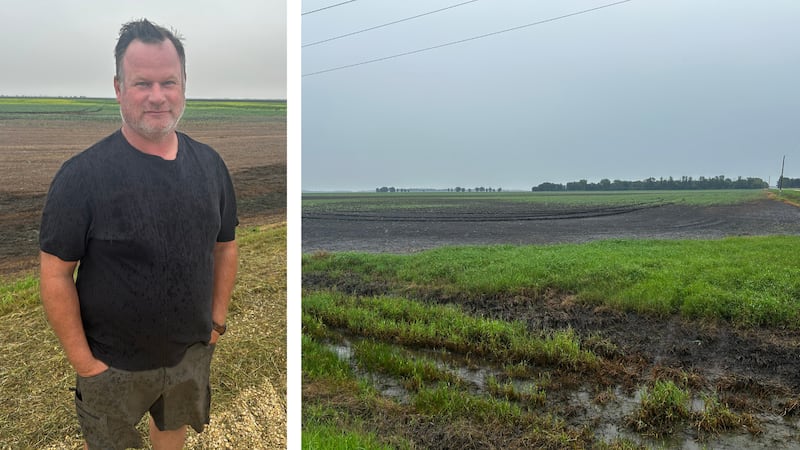
Heavy rain and storms in June flooded about 2,000 acres of farmer Curtis McCrae’s land, with water reaching up to three feet deep in some areas.
“The farm consists of around 4,000 acres,” said McCrae, who farms near Clandeboye, Man., which is about 40 kilometres north of Winnipeg.
“1,000 acres have been totally flooded,” he said, adding another 1,000 acres are at risk.
He says the financial impact will have a massive toll on his production and estimates he’ll lose about half a million dollars this year.
“It’s a difference between working for the year to make some money, or working for the year to make a deficit,” he said. “It’s very hard to get motivated when you know you’re not going to make money, but the only way you can do something is to work for next year.”
McCrae says the damage from this year’s floods could heavily impact his crop for next year.
Jake Ayre with Keystone Agricultural Producers (KAP) says the impact from this year’s weather will not just be a one-year event for some farmers.
“When you receive upwards of 11 inches of rainfall onto your farmland and you can take a kayak or a paddleboard out there, that’s not going to be an instant recovery, unfortunately,” said Ayre, who is the Vice President of KAP and a farmer just north of Boissevain, Man., about 220 kilometres southeast of Winnipeg.
“So, you know, this is going to be a bit of a hangover too for a lot of people, and it will carry on in in the years to come,” he said.
Ayre’s family farm was hit hard by the flooding this year and says he’s never seen anything like this before.
“It’s definitely been a challenging season for all walks of Manitobans. You look at the parkland region, you look at the southwest region, you look at the central, Interlake, everywhere is wet,” he said.
“Everywhere is seeing either water damage, crop loss, or unseeded acres, so it’s very widespread across the province.”
Despite the setbacks, McCrae says he’ll make the most of what’s left. “The combines will get to play a little bit, and that’s the joy we have to live for,” he said.
“But it’s going to get really cold before we are done harvest.”

