Marco Mendicino is a former federal prosecutor, federal cabinet minister for immigration and public safety and chief of staff to Prime Minister Mark Carney. He is now senior counsel at Cassels, Brock & Blackwell LLP. He is a political analyst for CTV News and a columnist for CTVNews.ca.
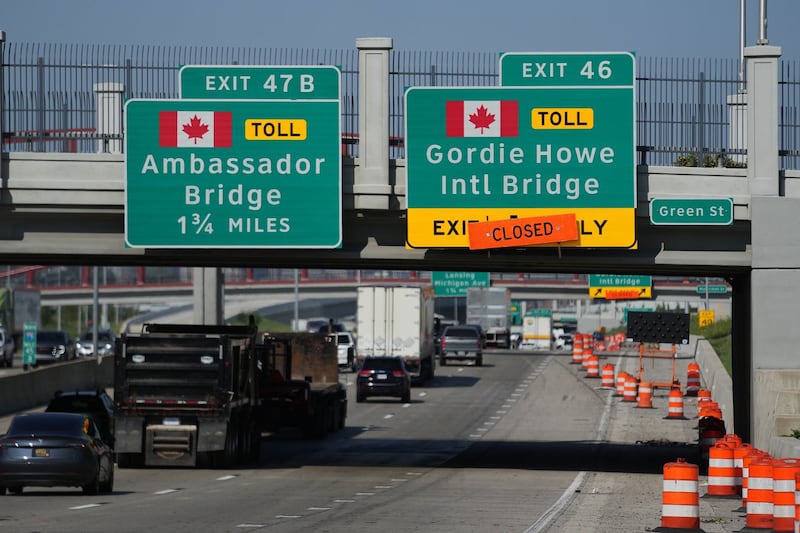
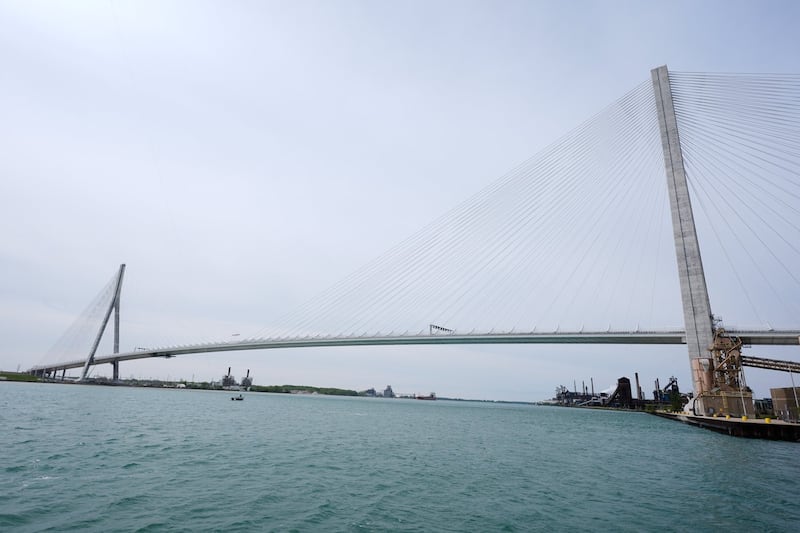
Gordie Howe was famous for being tough on the ice. The Canadian NHL legend didn’t pick fights. But he never backed down from one either and he always found a way to keep the puck moving forward, no matter how the other side played. Canada has had to channel that spirit over the newly built Windsor-Detroit bridge bearing Gordie Howe’s name. After a sticky standoff, the bridge is finally set to open on July 27.
This is good news for Canada and the United States, who do more than one trillion dollars in bilateral trade each year. The Windsor-Detroit corridor is the busiest commercial land crossing in North America. The Gordie Howe bridge will significantly reduce congestion, speed up commutes for local workers, and get goods delivered faster to consumers on both sides of the border. One study estimated that trucks will save 20 minutes per crossing and billions in transportation costs over the lifespan of the bridge. These are real benefits.
But what did Canada have to negotiate to get the bridge open?
The original bargain
In 2012, Canada and Michigan agreed to build a new publicly owned crossing. The original bargain would see Canada finance construction, land acquisition, and infrastructure on both sides of the border. In exchange, tolls collected in both directions would first repay Canada, which invested $6.4 billion to build the bridge. Only once Canada had recovered its investment would revenue sharing with Michigan begin. This was the deal, and fair enough, given that Canada took on the initial risk of financing the bridge.
However, when the Gordie Howe was ready to open earlier this year, the Trump administration intervened. The U.S. president himself complained that the original agreement was unacceptable and threatened to keep the bridge closed until the U.S. received better terms.
This put Canadian negotiators in a tough spot. They could either hold the line while a finished $6.4-billion asset sat idle or find a workable compromise that would allow Canada to start collecting revenue to repay the financing it had advanced. They chose the latter. Given the alternative, it’s hard to fault them for it.
The new parallel agreement
To get the Gordie Howe bridge open, a 15-year side agreement was ironed out, governing revenue sharing between Canada and the United States. Importantly, the new deal does not replace the original agreement but rather runs parallel to it.
Based on public reporting, the revenue sharing formula works like this: take the total bridge toll revenue, subtract operating costs (e.g. staffing, maintenance, snow removal), and whatever is left is net revenue. If that number is positive, Canada keeps half, and the U.S. gets the other half, and this is before any debt repayment is deducted. If the number is negative, then there is no revenue to share.
To use a simple example: if the bridge nets $10 million in revenue in a given year, $5 million goes to a U.S. economic-development fund, and Canada applies its remaining $5 million against the financing it is owed.
In the early years, the bridge will likely yield small or negative net revenue. This will effectively limit the size of near-term payments to the U.S. However, as traffic ramps up on the new bridge, so too will toll revenues. And as toll revenues increase, those amounts will be shared with the U.S., before Canada is fully repaid for the cost of building the bridge, as had been contemplated under the original 2012 agreement. That is worth saying plainly. It is also a reasonable price for getting a $6.4-billion asset off the sidelines and into service.
An open bridge is better than a closed one
The compromise to get the Gordie Howe bridge open will no doubt be criticized. However, that criticism has to be weighed against the immediate practical alternative, which was not a better deal to open the bridge, but instead a prolonged dispute and a finished bridge remaining closed.
Had that been the case, an idle bridge would generate no revenue, reduce no congestion and deliver no new economic benefits to Canadian businesses and workers. Half the net revenue from an operating bridge beats receiving no revenue while Washington continued to block its opening. Given the options, an open Gordie Howe Bridge is better than a closed one.
There is a deeper strategic benefit as well. The side agreement sets up a new economic-development fund to invest in local infrastructure, remove bottlenecks and attract businesses on the American side of the corridor. This pro-cyclical initiative gives the U.S. a direct incentive to drive more traffic across the Gordie Howe Bridge. More traffic produces more toll revenue. More toll revenue produces more economic activity. And more economic activity is good for both countries. Canada benefits from stronger exports and faster repayment of its investment and the U.S. benefits from new investment and infrastructure. The larger message is that both countries share a greater stake in the bridge’s success.
When the first shovels broke ground on the Gordie Howe Bridge, it was called a “towering symbol of friendship.” The resolution to the bridge standoff is a reminder that co-operation is still possible, but it is a much more transactional world today. Judged against this reality, getting the new bridge open on reasonable terms, without abandoning the core of the original arrangement, was a sensible outcome.
The lesson of the Gordie Howe Bridge is that Canada can take a check, throw a check, and keep the puck moving forward. Just like its namesake.

