Warning: Graphic content
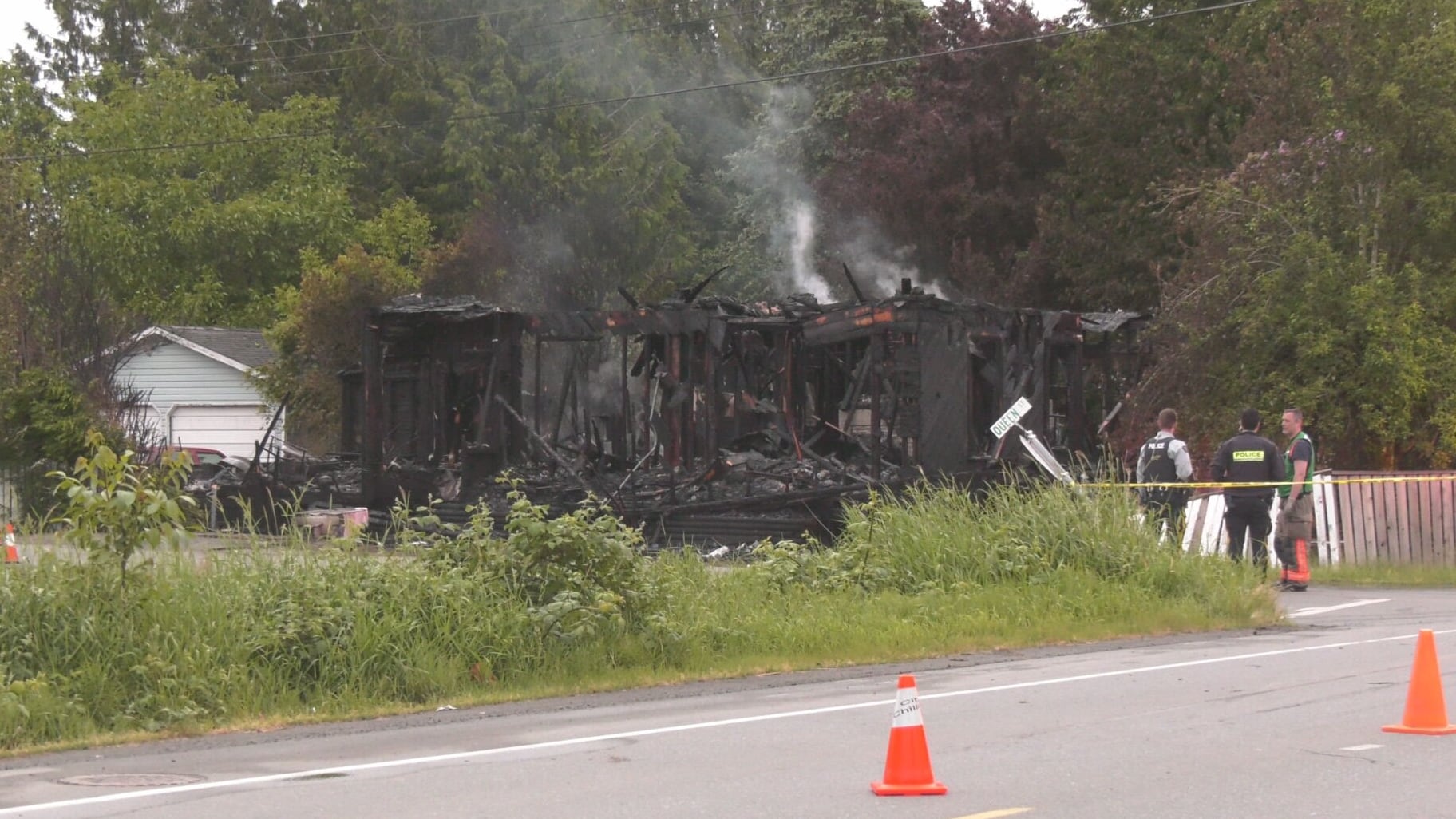
A house fire that erupted during an armed standoff in B.C.’s Lower Mainland three years ago was “intentionally” ignited by RCMP officers on scene, court documents have revealed.
The May 2023 incident began as a wellness check, after Daniel Hackl’s family and friends had spent weeks worrying about his declining mental health.
What unfolded at Hackl’s Chilliwack home was an extremely tense and dangerous confrontation—during which Hackl refused to surrender, threatened to kill the officers on scene and ultimately opened fire on them.
But the decision by law enforcement to burn the house down to bring the standoff to an end has still raised serious concerns, including from the B.C. Civil Liberties Association.
“The home was in a densely populated area,” said Latoya Farrell, policy staff counsel for the BCCLA.
“It’s beyond reckless, in my opinion.”
The circumstances
The public only learned the cause of the fire this spring, when Hackl’s case went before the B.C. Supreme Court.
He pleaded guilty to the attempted murder of police officers, and was handed the minimum sentence of four years in prison—a decision largely based on a finding that he had been in a mental-health crisis at the time.
The court heard that Emergency Response Team officers responded to the wellness check at Hackl’s home around 6:15 p.m., and “established containment using marked vehicles, lights, sirens, and loudhailer announcements.”
Authorities had been told Hackl had guns at the property.
By around 7:40 p.m., the resident had started firing shots within the house. Neighbouring homes were evacuated, and officers made a determination that “inaction would endanger lives,” according to the decision.
Two officers began approaching the property shortly after 8 p.m., and Hackl shot at them.
No one was hurt, but the court heard one bullet flew past an officer’s neck and another hit his ballistic shield—leading the RCMP to issue a lethal force order.
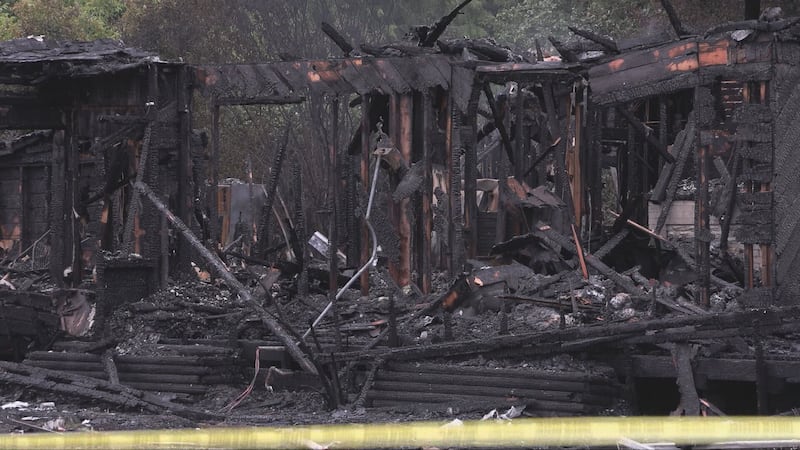
“At approximately 10:19 p.m., police approved a plan to intentionally set the residence on fire using smoke grenades to force Mr. Hackl out or to bring the standoff to a conclusion,” the decision reads.
“The goal was to remove Mr. Hackl from the residence for arrest, have a lethal confrontation with Mr. Hackl, or have Mr. Hackl perish in the fire.”
As the house burned, the suspect eventually walked outside —naked, apart from some body armour—and surrendered while laughing.
When CTV News asked how the fire started the following day, RCMP said they were unable to confirm the cause.
A concerning precedent?
The RCMP’s national headquarters said the 2023 incident was the first time officers had ever intentionally started a house fire, and that the tactic has not been used anywhere across the country since.
The B.C. Civil Liberties Association did not find that reassuring.
“Once something is done, the precedent is there,” Farrell said.
The court decision described the neighbourhood surrounding Hackl’s home as “compact,” with 31 detached homes. Farrell noted there’s also a retirement community nearby, and the area is beside the Skowkale First Nations reserve.
“Fire is dangerous. It’s unpredictable,” the lawyer said. “There were large amounts of ammunition in the home, and we all know what happens when bullets are heated.”
Starting a house fire doesn’t just pose a risk to the broader community, she added, but to the officers on scene as well.
Given the number of high-profile past incidents in which wellness checks ended with the use of deadly force, Farrell also wondered whether the admittedly difficult situation could have been resolved differently.
“There’s no question that being a police officer can be a dangerous job, but that doesn’t give them carte blanche,” Farrell added.
“It’s quite shocking to think that this was done.”
RCMP defends officers’ actions
When contacted by CTV News, the B.C. RCMP stood behind the decision to set Hackl’s house ablaze.
In a statement, Staff Sgt. Kris Clark said the officers on scene had exhausted all “reasonable and available” de-escalation options, including the use of crisis negotiators, before the plan was set in motion.
“As with all critical incidents, police response was directed by an accredited critical incident commander, who developed and approved multiple contingency plans based on the subject’s potential actions,” Clark said.
“Where it was safe to do so, nearby residents were evacuated. Others were directed to shelter in place to reduce the risk of exposure to active gunfire.”
He could not confirm why the tactic was initially withheld from the news media.
“Generally speaking, at the outset of any investigation, particularly prior to any court proceedings, we are often limited in what we can share publicly to avoid inadvertently affecting either process,” he added.
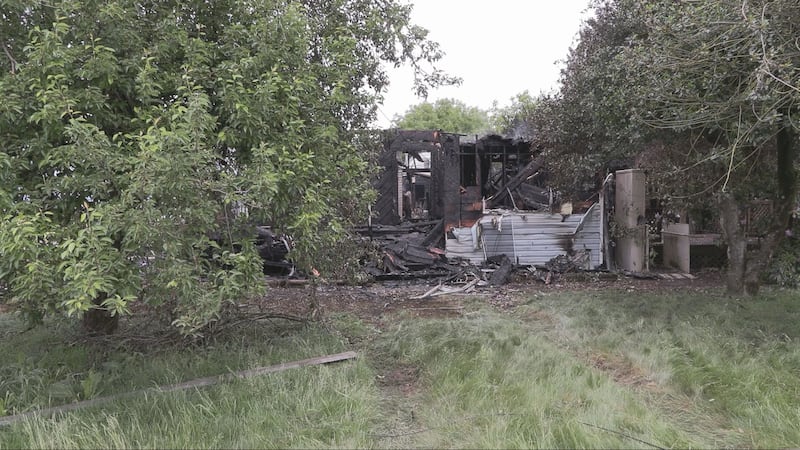
Asked whether the RCMP could be liable for the destruction of Hackl’s home, Clark said that, in general, individuals can seek compensation through the force’s National Claims Centre if a police operation results in property damage.
“All claims are assessed in accordance with established processes, and compensation is not guaranteed,” he added.
Training and review
The RCMP’s national headquarters would not comment on what specific training officers might receive, if any, related to starting fires, or the safeguards put in place should they feel the need to do so.
Sharing information on tactics and techniques could “adversely affect operational effectiveness,” as well as the safety of the public and first responders, spokesperson Andrew DiRienzo said in a statement.
DiRienzo did note that Emergency Response Team members receive specialty munitions training to employ weapons such as smoke grenades, which are not used by everyday officers.
He said igniting fires is not a “routine policing tactic,” but that officers may still “consider a range of intervention options in response to an imminent threat.”
“Critical incidents are not managed through a fixed list of pre-approved tactics,” DiRienzo said in a statement. “Rather, officers and incident commanders continually assess the totality of a situation and determine what actions are lawful, necessary, reasonable and proportionate to address the risks present at the time.”
The RCMP also said debriefings are held after all major incidents, uses of force are always subject to supervisor review, and officers’ actions can be scrutinized in the courts as well.
For anyone who believes they may have been the victim of law enforcement misconduct, Farrell pointed to the BCCLA’s new Pathways to Police Accountability toolkit, which offers guidance on everything from human rights complaints to civil lawsuits.
“There are various ways to hold the police accountable, although each option comes with its own drawbacks,” she said. “The situation always depends on the facts.”
If you or someone you know is in crisis, here are some resources that are available:
Canada Suicide Crisis Helpline (Call or text 988)
Crisis Services Canada (1-833-456-4566 or text 45645)
Kids Help Phone (1-800-668-6868)
If you need immediate assistance, call 911 or go to the nearest hospital.

