COATICOOK, Que. - The association of Canadian milk producers says it is counting on the government to defend the dairy industry in the face of the latest threat of U.S. tariffs and complaints about Canada’s supply management system.
“We remain concerned about the unpredictability and negative impacts that the revolving threats of tariffs are having on the economy and Canadian families,” the Dairy Farmers of Canada said in a statement.
The U.S. invoked Canada’s supply management system as one of the irritants justifying the 50 per cent tariffs and landing Canadian milk, whey and lactose on the Trump administration’s tariff hit list. Supply management sets quotas for Canadian dairy producers, fixes prices, but also limits dairy imports from the U.S. and other countries.
The Dairy Farmers of Canada says the dairy trade is covered by CUSMA and that the U.S. has successfully accessed Canada under that trade agreement on which U.S. President Donald Trump signed off.
“In fact, between 2019 and 2025, exports of U.S. dairy products to Canada increased significantly, rising from C$423 million in 2019 to C$1.06 billion in 2025,” said the Dairy Farmers of Canada statement. “This represents a 150 per cent increase in value over the period.”
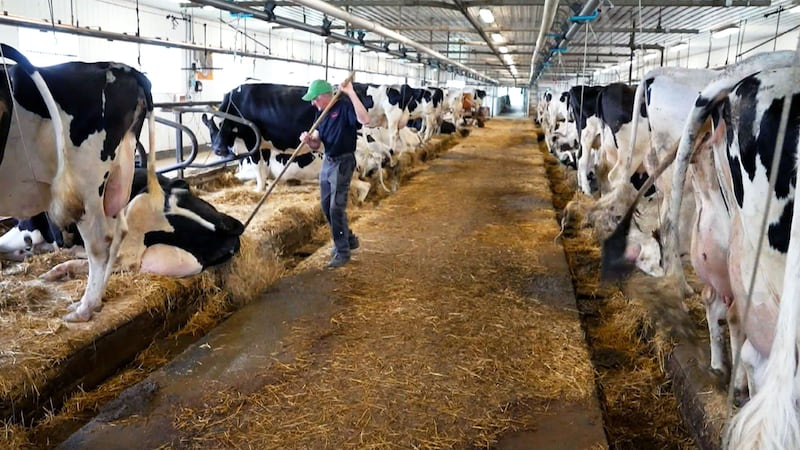
Canada is home to over 9,000 dairy farms, 45 per cent of which are in Quebec where Angus MacKinnon is a seventh generation producer. His farm in Coaticook is just over ten kilometres from the American border. He said he has been wondering when Canada’s neighbours to the south would target the dairy industry.
“We’ve been waiting on Donald Trump to come down on dairy for two years,” he said.
The U.S. President has long lashed out at Canada’s supply management system calling it is a protectionist measure which treats American farmers unfairly.
MacKinnon says this latest round of tariffs will have little impact on producers themselves in the current system.
“We are paid at the farm gate,” he said. The production is handed over to the National Milk Producers’ Federation and to distributors, which may take a hit from the tariffs.
But what has long concerned some dairy producers is that Ottawa may sacrifice the supply management system to appease the U.S. Some critics have said the system should not be a sacred cow and questioned whether the cost of keeping it in place may be too high.
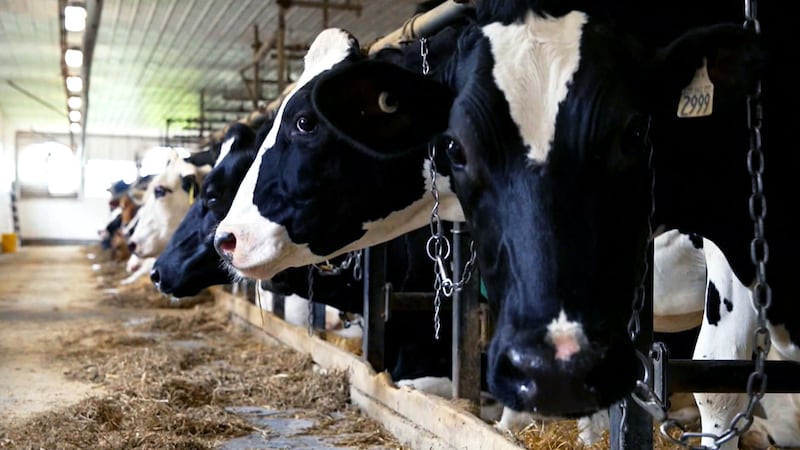
“As we remember at the last negotiations, Canadian dairy producers allowed a 4 per cent increase in U.S. imports into Canada,” said MacKinnon.
But dairy producers say Ottawa has promised that the Canadian market would not be opened any further.
“Prime Minister Mark Carney has reiterated the same scenario, and last night he said how he is there to support the farmers and the auto workers and all Canadians from coast-to-coast,” said MacKinnon. “We’re holding strong that he is going to stick to his word.”
MacKinnon says the U.S. state of Wisconsin produces as much milk as Canada as a whole. Many of the farms are family-owned and have relatively small herds. Supply management allows farmers in this country to have economic stability as they get a guaranteed price for their milk.
He also says that Canada as a nation, cannot be at the mercy of any other country for its food supply.
He also believes Trump has a clear motive to target dairy now.
“He is positioning himself because, keep in mind, middle America elected Donald Trump,” said MacKinnon. “Middle America is agriculture.”

