Five years ago, Horizon Aircraft began designing a one-of-a-kind hybrid-electric aircraft that could reach remote regions for medical and cargo missions.
Now, it has secured its biggest commercial milestone yet: a potential $600-million agreement to sell as many as 100 planes, CEO Brandon Robinson told BNN Bloomberg.
On Tuesday, the Lindsay, Ont.-based company announced it signed a letter of intent with Australia’s V-Star Powered Lift Aviation. Under the agreement, V-Star plans to buy five Cavorite X7 aircraft, with options to purchase an additional 95.
V-Star says it plans to use the aircraft to provide faster medevac and emergency response services.
“The machine is coming together so well that, I mean, people just want it,” says Robinson, a former fighter jet pilot who spent two decades with the Royal Canadian Air Force.
“We’re aiming to get into the definitive agreement on the first five quickly, and then secure the options for the next 95.”
Takes off like a helicopter, flies like a plane
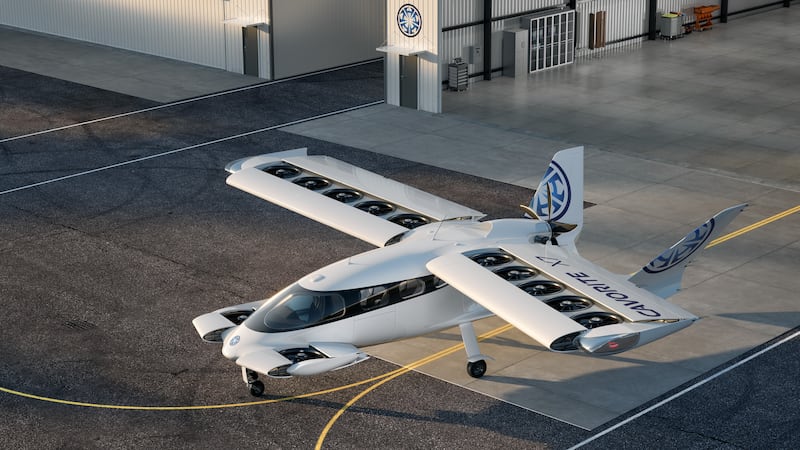
The distinguishing feature of Horizon Aircraft’s Cavorite X7 is its ability to take off and land vertically without needing a runway, a category known as vertical takeoff and landing, or VTOL.
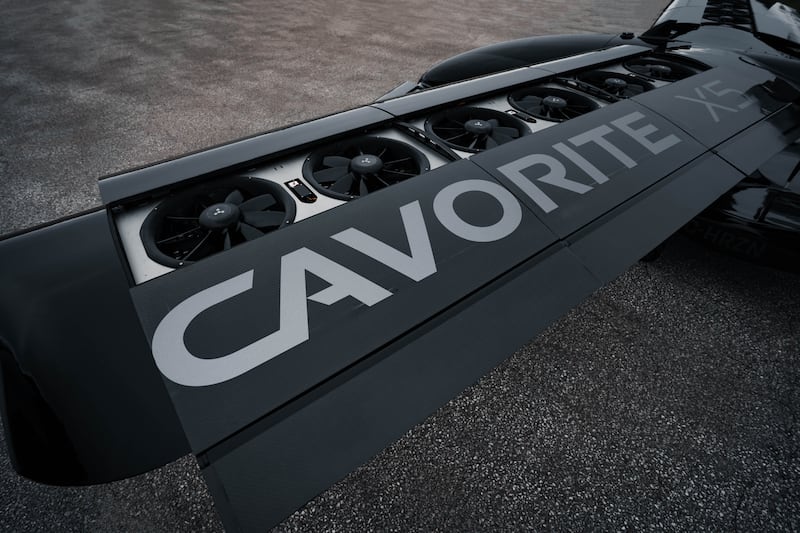
The plane uses hidden fans inside its wings to lift straight up like a helicopter, before covering them and flying forward like a conventional airplane, says Robinson. The company says it can reach 450 km/h over an 800 km range, or 1,600 km if refueled.
“Could you imagine getting somebody that’s injured on the side of the road to the hospital in half the time, saving lives, or from twice the distance in that golden hour?” says Robinson.
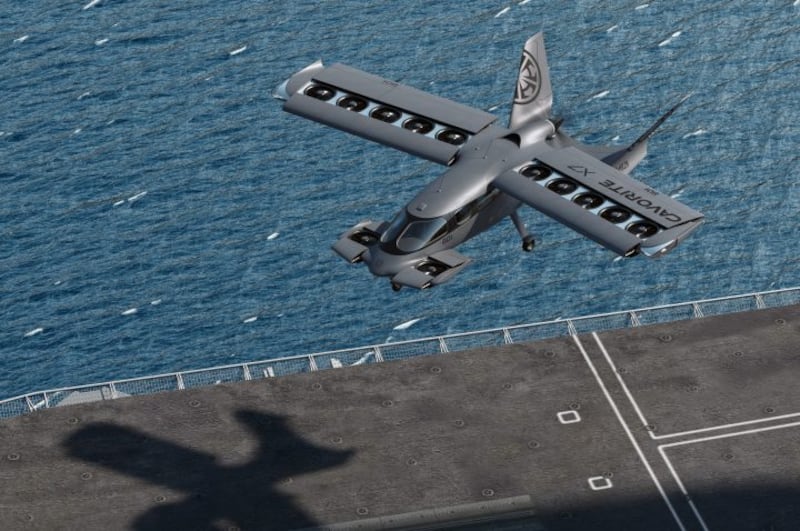
“It’s going to be an incredible medevac machine, moving organs from hospital to hospital, or critical cancer-saving drugs to either a hospital or to remote locations.”
Robinson says the plane is faster than a helicopter and about 75 per cent cheaper to operate per mile. If needed, it can also take off and land like a normal aircraft.
The Cavorite X7 can carry six passengers and one pilot, which Robinson says gives it a leading capacity in the advanced air mobility space.
“We’re pretty proud of that,” he says.
Next steps with V -Star
The company is currently assembling its first full-scale technical prototype, with Robinson saying the aircraft is expected to roll out of the hangar within the next six to nine months before flight testing begins.
Horizon’s next goal is to turn the letter of intent into a definitive agreement covering the first five aircraft.
Robinson describes V-Star as an experienced Australian regional transportation operator that has already invested in advanced aviation technology.
“They’re absolute professionals, and they’re leading the way in advanced intermobilities,” says Robinson.
‘A lot of interest’
Robinson says the company has received a lot of requests for its new aircraft, but V-Star secured the first agreement intended to guarantee early delivery.
He says the deal with V-Star is Horizon’s largest one yet. The company previously signed two other letters of intent, including one with an Indian regional mobility group and another in Chile.
Horizon has also continued to draw interest from the Canadian and U.S. governments.
The company was first awarded a U.S. Department of Defense and Air Force grant in 2022, when it was operating under its former parent company, Astro Aerospace.
Shortly after receiving the U.S. government contract, Horizon Aircraft bought itself back from Astro Aerospace and became an independent company again.
From there, it secured Canadian federal funding, including more than $3.4 million from the Natural Sciences and Engineering Research Council of Canada and a recent $2-million sustainable aviation grant, to help build its all-weather prototypes.
‘Explosive growth story’
The company has expanded rapidly over the past year, more than doubling its workforce, expanding its original facility and opening two new locations, says Robinson.
”So kind of an explosive growth story,” he says.
Robinson says the idea for the aircraft began about five years ago, when investors asked the company to develop a concept for an all-electric vertical takeoff and landing aircraft.
But after examining the technology, the team saw an opportunity to build a hybrid-electric aircraft that could travel farther, move faster and operate in bad weather.
One key advantage of the hybrid-electric aircraft, Robinson says, is that it does not depend on charging infrastructure, which could become critical after severe weather events.
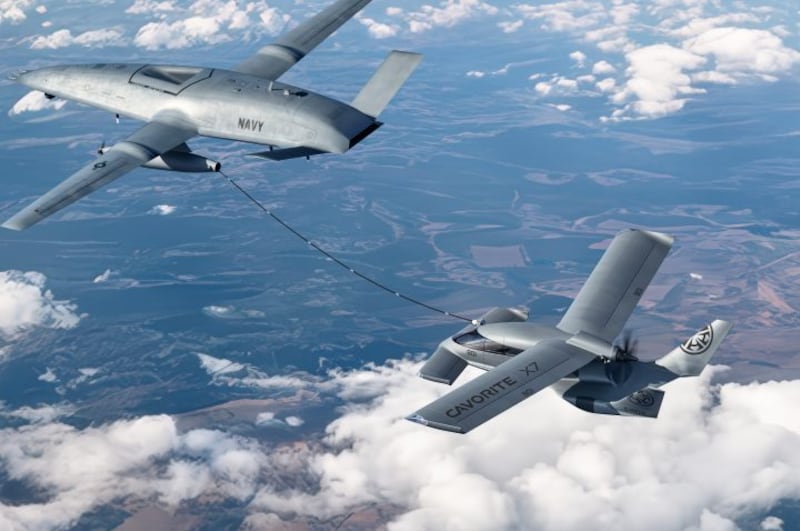
“A big storm goes through, and we can deploy these quickly and get on the ground, saving lives almost immediately,” says Robinson.
He says the company’s operational experience has helped it move quickly.
“We’re laser focused on designing a machine quickly that’s extremely safe and is laser focused on operators that can again do some amazing work,” says Robinson.

