


U.S. President Donald Trump’s tariff threats are looming over a gathering of Canada’s premiers today.
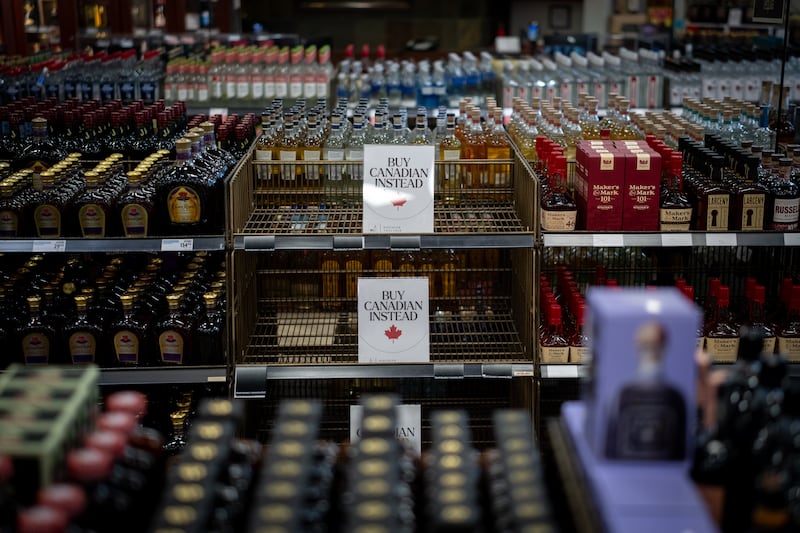
The president plans to impose 50 per cent levies on a range of Canadian goods in retaliation against various provinces’ bans on selling U.S. liquor – itself a response to Trump’s trade regime and annexation threats. The president also cited Canada’s protections on the domestic dairy industry.
- Trump tariffs: Which goods in Canada are on the list?
- Carney spoke with U.S. president Tuesday
- Trump’s tariffs target Canadian dairy sector
Unlike other tariffs imposed on Canadian goods, these duties have no exemptions for goods protected by the Canada-U.S.-Mexico Agreement on trade, better known as CUSMA. They are set to begin on Aug. 19.
Follow for key events:
Manitoba to maintain booze ban
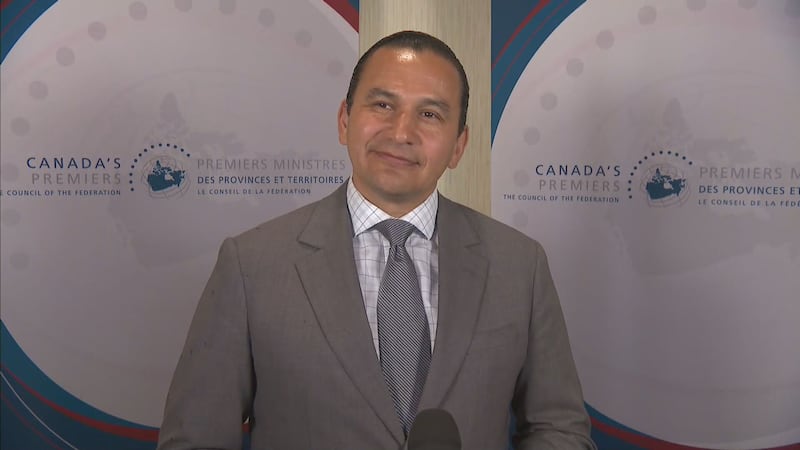
Manitoba Premier Wab Kinew told reporters Wednesday morning, “It’s clear that the booze bans are having an impact.”
“We’re going to continue using those tools that give us leverage. And the booze bans are one of those tools,” he also said.
Asked if he was open to Canada leveraging its significant energy exports to the U.S. in trade talks, Kinew said Trump’s war in Iran has already increased gas prices “more than we could ever raise by changing our exports.”
Instead, he said, Canada needs to “pick our battles,” and alluded back to the booze ban and “other measures the federal government wants to put on the table.”
Pushed to give specifics, he refused, saying he was “not going to make news on that today.”
Luca Caruso-Moro, CTVNews.ca journalist
‘National unity is important’: Kinew
Manitoba premier Wab Kinew was asked whether the separation referendum in Alberta and the rise of separatist politicians in Quebec is fraying national unity among premiers.
“There’s that old saying,” he responded. “A single arrow can be broken easily but a bundle of arrows cannot be snapped.”
“And so, national unity is important especially when we’re going up against a much larger opponent like the American economy.”
Luca Caruso-Moro, CTVNews.ca journalist
Canadian firefighters will help U.S. ‘no matter what’
Before threatening tariffs on Canada this week, Trump mused on social media that Canada should pay fees on wildfire smoke spreading from Ontario into Michigan and other U.S. states.
Smoke from those fires contributed to deteriorated air quality in several American communities. Detroit, for example, had the worst air quality in the world at one point, according to IQAir rankings.
“The United States is being unnecessarily invaded by filthy, polluted, and unhealthy air,” wrote the president, accusing Canada of “Willful Negligence.”
Manitoba Premier Wab Kinew pushed back, alluding to those who were forced to evacuate their homes in wildfire zones.
“Anybody who is making comments like that is not showing basic human decency,” said the premier.
“And I would remind our American friends that Manitoba had wildfire fighters in your country this wildfire season helping to put out American wildfires. And we’ll continue to do that no matter what the Trump administration says because that’s what decent people do.”
Luca Caruso-Moro, CTVNews.ca journalist
Affordability a priority for tariff response: expert
Canada needs to keep affordability in mind as it weighs retaliation measures against the latest round of tariffs imposed by the U.S., according to the Canadian Chamber of Commerce’s executive vice-president and chief of public policy.
“If an eye for an eye makes the whole world blind, a tariff for a tariff is going to make us all a lot poorer,” Matthew Holmes told CTV Your Morning from P.E.I.
He referenced a 2025 study by the New York Federal Reserve Bank that stated 90 per cent of the new tariffs “are going directly to consumers and families.”
“It’s costing everybody more,” he said.
He called on the government to focus efforts on renewing the CUSMA agreement which he said has continued to be respected by all three partners, despite the tariff threats.
“We need to really get behind that and try to get this new renewed deal done,” he said.
Devika Desai, CTVNews.ca journalist
Trump used depression-era law
Trump is ramping up pressure on Canada by threatening to use an obscure Great Depression-era legal tool to impose new tariffs — and it’s not clear whether there are any guardrails to rein in the president’s power.
Trump on Monday signed orders to use Section 338 of the Tariff Act of 1930 to slap 50 per cent tariffs on a wide array of Canadian goods, ranging from hockey sticks and wine to cement.
“Because Section 338 is an untested authority from the Great Depression era, we do not have a road map for how this will play out,” said Ryan Majerus, a Washington-based partner in the international trade team at the law firm King & Spalding.
United States Trade Representative Jamieson Greer has said the measure is a response to provincial bans on U.S. liquor, Canada’s supply managed dairy system and quotas on certain U.S. vehicles.
But this latest tariff threat may also put heavy pressure on Canada as the negotiations on the trilateral trade pact continue.
Prime Minister Mark Carney said Tuesday that he spoke with Trump earlier in the day and they agreed to intensify trade talks.
The Canadian Press. Read the full story here.
Details of Gordie Howe Bridge deal released
Amid conflicting messaging and questions surrounding the agreed-upon revenue sharing between Canada and the U.S., details of the deal to open the Gordie Howe International Bridge were released late Tuesday.
The official details come more than 10 days after the federal government announced the delayed bridge would open on July 27, and contrasts previous comments made by Prime Minister Mark Carney.
According to the online release, the deal is described as a “proposed agreement in principle” that runs parallel to the original Canada-Michigan Crossing Agreement signed in 2012.
The deal states that Canada will share 50 per cent of net bridge and crossing-related revenues with the U.S. for the first fifteen years.
Stephanie Ha, CTV News journalist. Read the full story here.
A timeline of Donald Trump’s trade war with Canada
Trump was elected to a second term in 2024 and it’s been a roller-coaster ever since for Canadian leaders and businesses. He has threatened, enacted, modified and delayed multiple rounds of tariffs, only to announce additional protectionist trade policies are to come.
Here’s a timeline of the key dates in Trump’s tariff journey.
November 2024
Trump pledges to impose a 25 per cent tariff on all Canadian and Mexican imports, saying they would come into force when he takes office. He says in a post on Truth Social, a social media site he owns, that the tariffs would remain until both countries stop drugs, particularly fentanyl, and people from illegally crossing American borders.
January 2025
Jan. 20 -- In an early sign of Trump’s penchant for changing timelines, he says on inauguration day that tariffs will likely come on Feb. 1 rather than taking immediate effect.
He also signs an executive order to enact an “America First Trade Policy,” calling for his trade and commerce officials to report back to him by April 1 on a sweeping review of U.S. trade policy and relationships.
February 2025
Feb. 1 -- Trump signs an order on a Saturday imposing blanket tariffs of 25 per cent on virtually all goods entering the U.S. from Canada and Mexico, and a reduced 10 per cent tariff on energy, set to take effect Feb. 4. These tariffs are variously known as the IEEPA tariffs, or fentanyl tariffs, so named for the International Emergency Economic Powers Act that Trump invoked and his justification for using them.
Later, then-prime minister Justin Trudeau outlines Canada’s planned retaliation strategy, including immediate counter-tariffs. Over the weekend, Canadian provinces start pulling American alcohol from liquor-store shelves at provincially owned distributors.
Trump later pauses the implementation of tariffs on Canadian goods for one month after Ottawa pledges action to secure the border. He does the same for Mexico.
Feb. 10 -- Trump signs a plan to institute a new set of 25 per cent tariffs on all steel and aluminum entering the U.S. starting March 12. Trump previously imposed tariffs on the metals in 2018 but later exempted Canada and Mexico. These sector-specific tariffs are separate from the previous set, and based on a different rationale.
March 2025
March 4 -- Trump’s tariffs on Canadian and Mexican goods go ahead after the month-long pause, despite hopes that border security measures Canada took could stave them off. In response, Trudeau announces broad retaliatory tariffs on U.S. food, alcohol, furniture, paper and more.
March 6 -- Dominic LeBlanc, finance minister at the time, says Ottawa will suspend its second wave of retaliatory tariffs until April 2, after Trump signed an executive order to pause some new duties on Canada and Mexico and reduce potash levies to 10 per cent.
The White House says the duties would not apply to goods compliant under the Canada-U.S.-Mexico Agreement on trade, better known as CUSMA.
March 10 -- Ontario Premier Doug Ford announces a 25 per cent surcharge on electricity exports to the U.S. Trump responds aggressively, saying he will double the rate on steel and aluminum tariffs. Ford then agrees to suspend the province’s export tax.
March 12 -- The 25 per cent tariffs on steel and aluminum take effect. Canada hits the U.S. with a second tranche of retaliation, enacting 25 per cent tariffs on $29.8 billion in U.S. goods, targeting steel and aluminum as well as other products including computers, sports equipment and cast iron goods.
March 14 -- Mark Carney succeeds Trudeau as Canada’s prime minister.
March 26 -- Trump announces 25 per cent sector-specific tariffs on automobile imports, which he says will take effect April 3. The White House says automobiles imported under CUSMA will only be taxed on the value of content not made in the United States. Vehicle parts that fall under the trade deal also escape duties.
April 2025
April 2 -- Calling it “Liberation Day,” Trump unveils 10 per cent tariffs on imports from all countries and higher rates on dozens of nations that have trade surpluses with the U.S., including 34 per cent for China and 20 per cent for the European Union. None of the new measures affect Canada or Mexico.
April 3 -- Trump’s 25 per cent auto tariffs take effect, prompting Prime Minister Mark Carney to say Canada will hit back with matching levies. Carney says Canada’s counter-tariffs will hit all vehicles that do not comply with the Canada-U.S.-Mexico Agreement, along with any non-Canadian content in compliant vehicles.
April 15 -- Ottawa says automakers that continue to manufacture vehicles in Canada will see some exemptions from retaliatory tariffs.
May 2025
May 6 -- Trump and Carney strike a mostly genial tone in their face-to-face meeting in the Oval Office, but Trump gave no indication he plans to drop tariffs in the near future.
May 28 -- The U.S. Court of International Trade strikes down Trump’s broad-based tariffs, saying he doesn’t have the authority to impose tariffs on nearly every country using the International Economic Emergency Powers Act. An appeal of the decision will later go before the U.S. Supreme Court.
The decision blocks both the “Liberation Day” duties as well as the fentanyl tariffs on Canada. A day later, a federal appeals court issues an emergency stay on the tariffs.
June 2025
June 4 -- Trump’s 50 per cent tariffs on steel and aluminum from Canada come into effect on June 4. Carney called the tariffs “unlawful and unjustified.”
June 19 -- Carney announced pending retaliatory tariffs, depending on how trade talks go. The response is panned by industry.
June 27 -- Trump announces he’s halting all trade talks because of Canada’s impending digital services tax. Two days later, the government announces it is rescinding the tax and will resume negotiations.
July 2025
July 31 -- Trump signs an executive order pushing tariffs on Canada to 35 per cent from 25 per cent, following through on a threat to raise duties if Ottawa didn’t make a trade deal.
The White House confirmed the tariffs would not hit goods compliant with CUSMA.
August 2025
Aug. 1 -- Higher duties on Canadian goods take effect. Trump’s new 50 per cent tariffs on copper imports also kick in.
Aug. 8 -- The U.S. Department of Commerce more than doubles countervailing duties on Canadian softwood lumber imports to 14.63 per cent. The increase brings the total duty level for Canadian softwood to 35.19 per cent.
Aug. 22 -- Canada announces it would drop some retaliatory tariffs on American products to match U.S. tariff exemptions for goods covered under CUSMA, effective Sept. 1.
The change came after Carney said he received assurances from Trump on a call that the move would help kick-start trade negotiations with the U.S.
Aug. 29 -- Low-value imports coming into the U.S., including from Canada, lose their duty-free status with the end of the “de minimis” rule.
September 2025
Sept. 25 -- Trump announces a raft of new tariffs on pharmaceutical drugs, kitchen cabinets and bathroom vanities, upholstered furniture and heavy trucks, starting on Oct. 1.
Sept. 30 -- Trump issues an additional 10 per cent tariff on softwood timber and lumber imports. The B.C. Lumber Trade Council says softwood lumber entering the U.S. will now see total import taxes exceeding 45 per cent.
October 2025
Oct. 7 -- Carney meets with Trump at the White House. During a meeting in the Oval Office, Trump lavishes praise on Carney and says the prime minister would leave the meetings “very happy,” but he leaves without a deal in hand.
Oct. 24 -- Trump says he is ending trade talks with Canada because of an Ontario government television advertisement pushing back on his tariffs. Ford later says he will stop running the ad after that weekend.
February 2026
Feb. 20 -- The U.S. Supreme Court concluded it was not legal for Trump to use the International Emergency Economic Powers Act, better known as IEEPA, for his “Liberation Day” tariffs and fentanyl-related duties on Canada, Mexico and China.
July 2026
July 1 -- On the final day for all three signatories of the CUSMA trade pact to extend the agreement for 16 years, United States Trade Representative Jamieson Greer says the country would not renew the agreement “in its current form.” It remains in place for now.
July 20 -- In a series of executive orders, Trump announces new 50 per cent tariff on a range of specific Canadian goods, ranging from honey to hockey sticks, to take effect in 30 days. Unlike with the fentanyl tariffs, this new round has no exception for CUSMA-compliant goods.
The Canadian Press. With files from The Associated Press

