WINNIPEG – A routine call to a conservation office led to a rare and emotional rescue this week after a pod of beluga whales became stranded in a shallow tidal pool near Churchill, Man.
On Monday, Churchill’s conservation office received a phone call from a local resident about a mysterious white object in the water covered by seagulls.
Sgt. Vitalii Skrynnyk instructed Churchill district conservation officer Owen Jones to investigate the sighting along the shores of Hudson Bay.
“I found a pod of beluga whales stuck in a tidal pool,” Jones said. “Birds were pecking at them, circling them in the air, and it was clear that they had been pecking at the belugas for quite some time, which was evident through the amount of blood that I saw on the back of some of the larger adults.”
Seven beluga whales were stranded in shallow water along the shores of Hudson Bay due to a low tide. The pod consisted of three adult females, and four young calves.
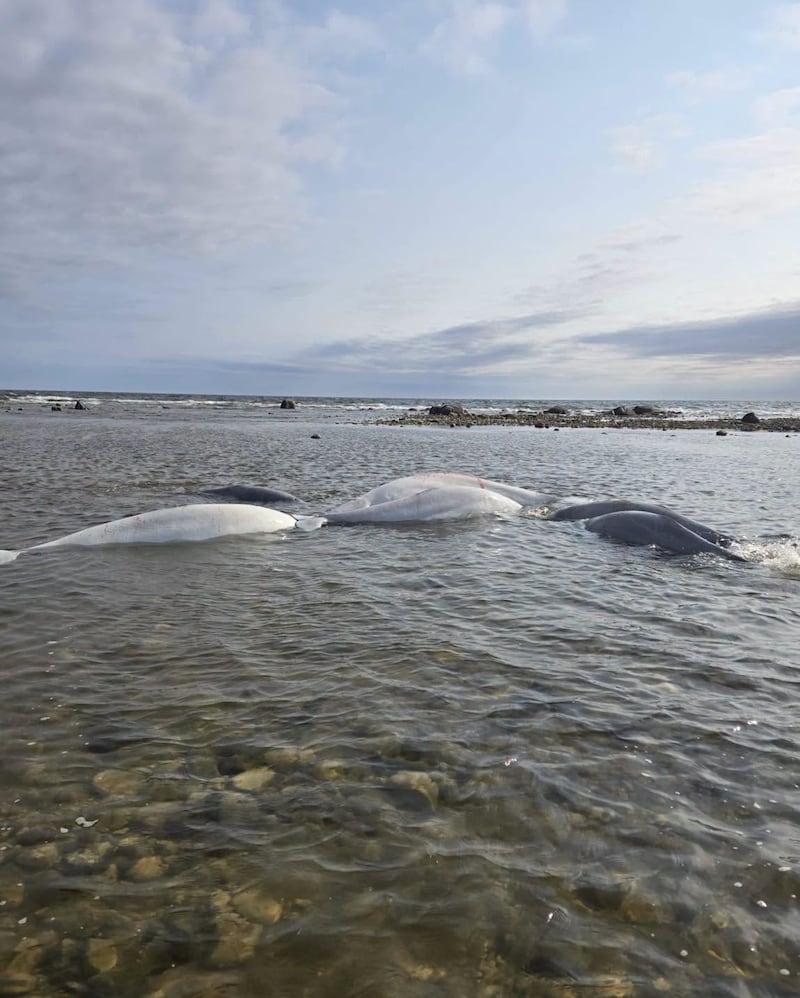
“They were in distress,” he said. “I could hear the young calves crying out, which is a very emotional sound for anyone who’s ever heard a beluga whale calf crying. It’s very similar to that of what you might expect from a human baby, it sounds very similar.”
Jones says the whales were around 50 to 60 metres from the coastline when they were discovered.
Jones and Vitalii Skrynnyk, alongside officers from the RCMP and Parks Canada, stayed with the marine mammals for several hours, and protected them from polar bears.
“Blood was present at the scene, and we know that beluga’s are part of the diet for polar bears,” Skrynnyk said. “They never miss a chance to feed on beluga whales.”
Skrynnyk checked the whales for injuries and found only minor wounds, caused by the seagulls pecking them.
“I splashed each animal with water,” Skrynnyk said. “The females were calm since the first moment until the end, but the kids were distressed.”
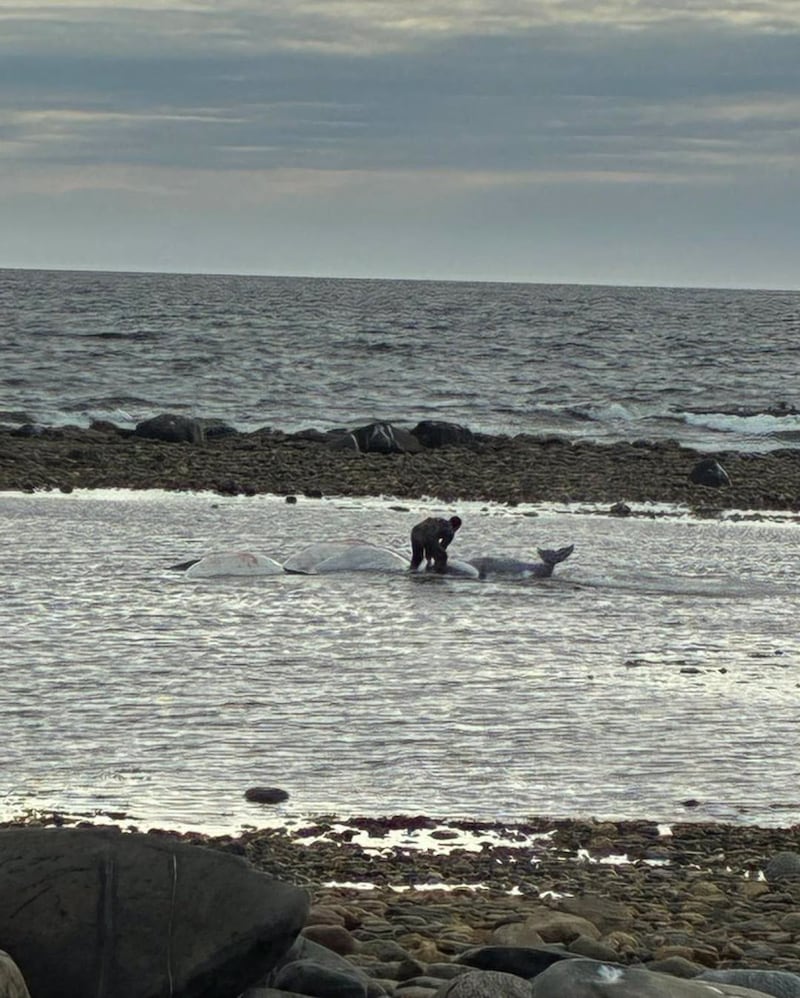
After a couple hours, the ordeal was over. The tide rose high enough for all seven beluga whales to swim away safely.
“It was very exciting,” Jones said. “Then to finally see them be able to swim and become mobile, it was amazing.”
‘Never seen anything like this before’
Around 55,000 beluga whales gather in western Hudson Bay during the summer months.
Emma Ausen, science coordinator at the Churchill Marine Observatory said she has never seen or heard of a situation like this before in central Arctic Canada.
“This is a pretty rare occurrence,” Ausen said. “It’s very interesting that something like this would happen.”

Ausen says there could be a number of reasons why something like this happened.
“Belugas are known to get closer to the shore to escape predators like killer whales, but it could be that they were potentially on the shore trying to rub up against the bottom for their seasonal molting, and they just got trapped or confused.”
She added climate change cannot be ruled out in this situation. “It’s important to be researching what’s happening with the belugas as we move through a changing environment,” Ausen said.
Both Skrynnyk and Jones haven’t been stationed in Churchill for long, but say this rescue is already one they will never forget.
“It’s great that we can help where we can and we always will,” Jones said. “But at the same time, it’s also important to remember that what was happening is just nature.”
For Skrynnyk, the experience will remain one of his most memorable moments in the field.
“Now, I know if I’m going to be asked, ‘Officer, what was your best story during your line of duty?’ and like 100 per cent it’s these whales,” Skrynnyk said.

